

10 Aug 2021, last revised 24 Sep 2025
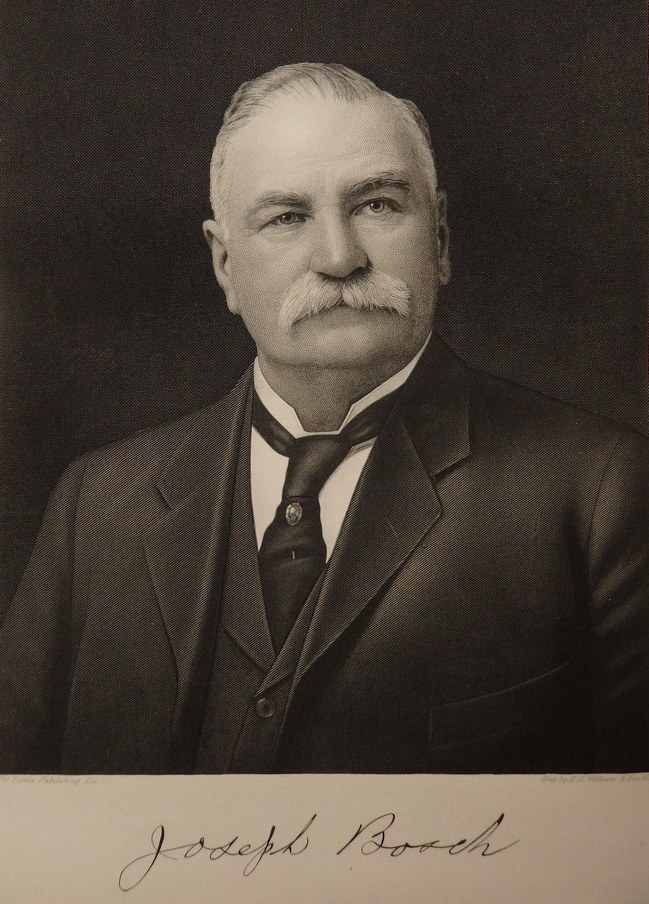
Joseph Bosch
Perhaps the most celebrated name in Copper Country brewing history is that of Joseph Bosch. Born into a family well-versed in the art of good beer making, Joseph carried on the family trade by learning the brewing business under his father. He accumulated additional knowledge and experience on his own, which eventually led him to establish a brewery in Lake Linden. This small enterprise would grow to produce preferred varieties of beer recognized throughout the Upper Peninsula for 99 years. This record would remain as a lasting tribute to Joseph Bosch and to all the people associated with the Bosch Brewing Company.
Joseph Bosch (and Company)
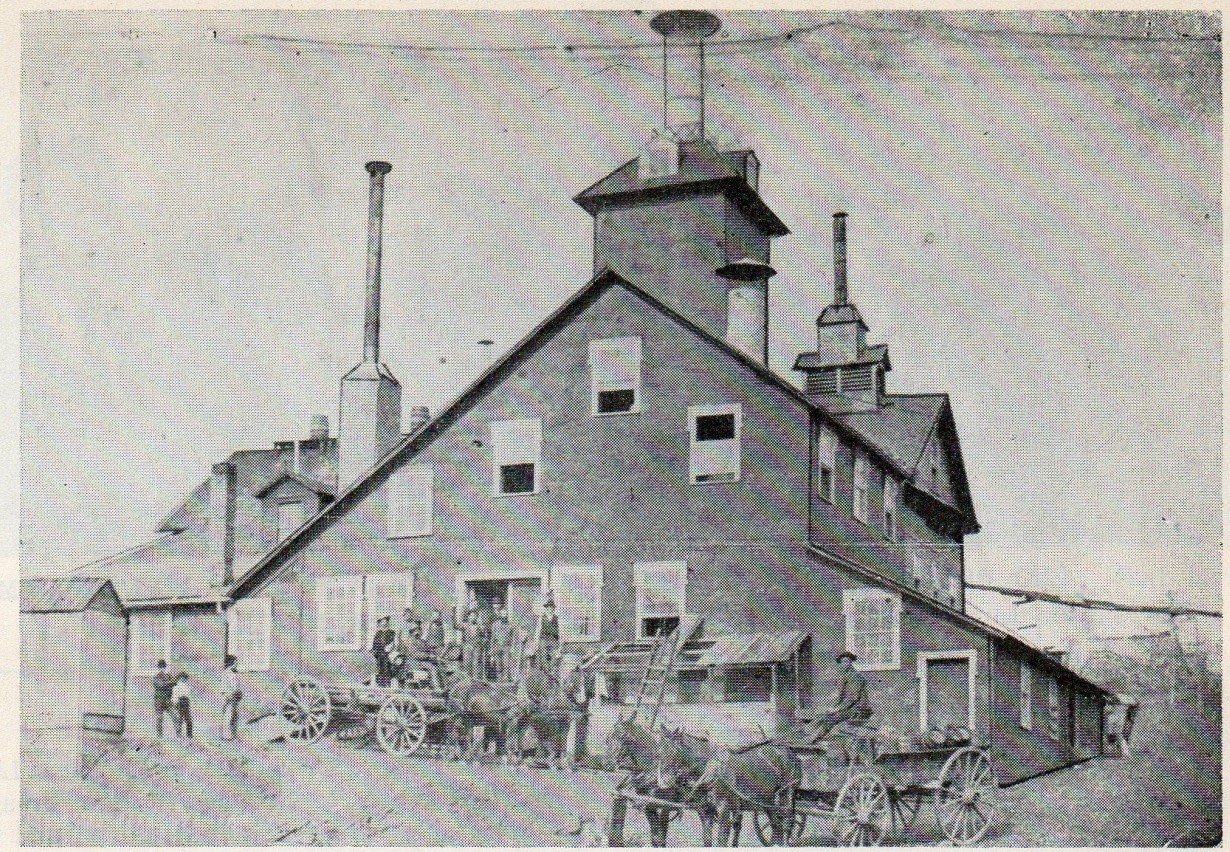
Joseph Bosch was born in Baden, Germany, on 11 Feb 1850 and immigrated to New York in 1854 with his family at the age of four (2,5). In 1862, when he was 12 years old, his family moved to Port Washington, WI, where he worked under his father in the brewing industry (2,5). In 1867, they moved to Torch Lake (5), and Joseph erected the first house in Lake Linden and worked at the Calumet & Hecla stamp mill for four years (2,3). To gain better knowledge of the brewing business, he moved to Milwaukee, WI, to work at the Schlitz brewery, and then to Cleveland, OH, and Louisville, KY (2). In 1874, Bosch returned to Lake Linden and established a small brewery (2,5).
Bosch operated the brewery on his own for the first two years (1,2) and produced 1,717 barrels of beer in his first year (1). In 1876, he partnered with Joseph Wertin & Sons of Hancock (3) and formed the firm Joseph Bosch & Co. (2). This partnership may have stemmed from Bosch being Joseph Wertin's son-in-law (2,3). The firm Wertin & Sons operated a general store in Calumet (8) and then a second store in Hancock (9). In 1877, the brewery produced 2,124 barrels of beer (15). By 1882, they were producing 4,000 barrels per year, one-fourth of which was bottled (3). Bottling likely started in 1877 or 1878, as indicated by the bottles, following the advent of pasteurization. The bottles used during this partnership bear the name TLB or TORCH LAKE BREWERY. The firm name was embossed as JOSEPH BOSCH & CO., J. BOSCH & CO., or JOS. BOSCH & CO.
First Brewery Building
Second Brewery Building - built in 1887
Bottling House
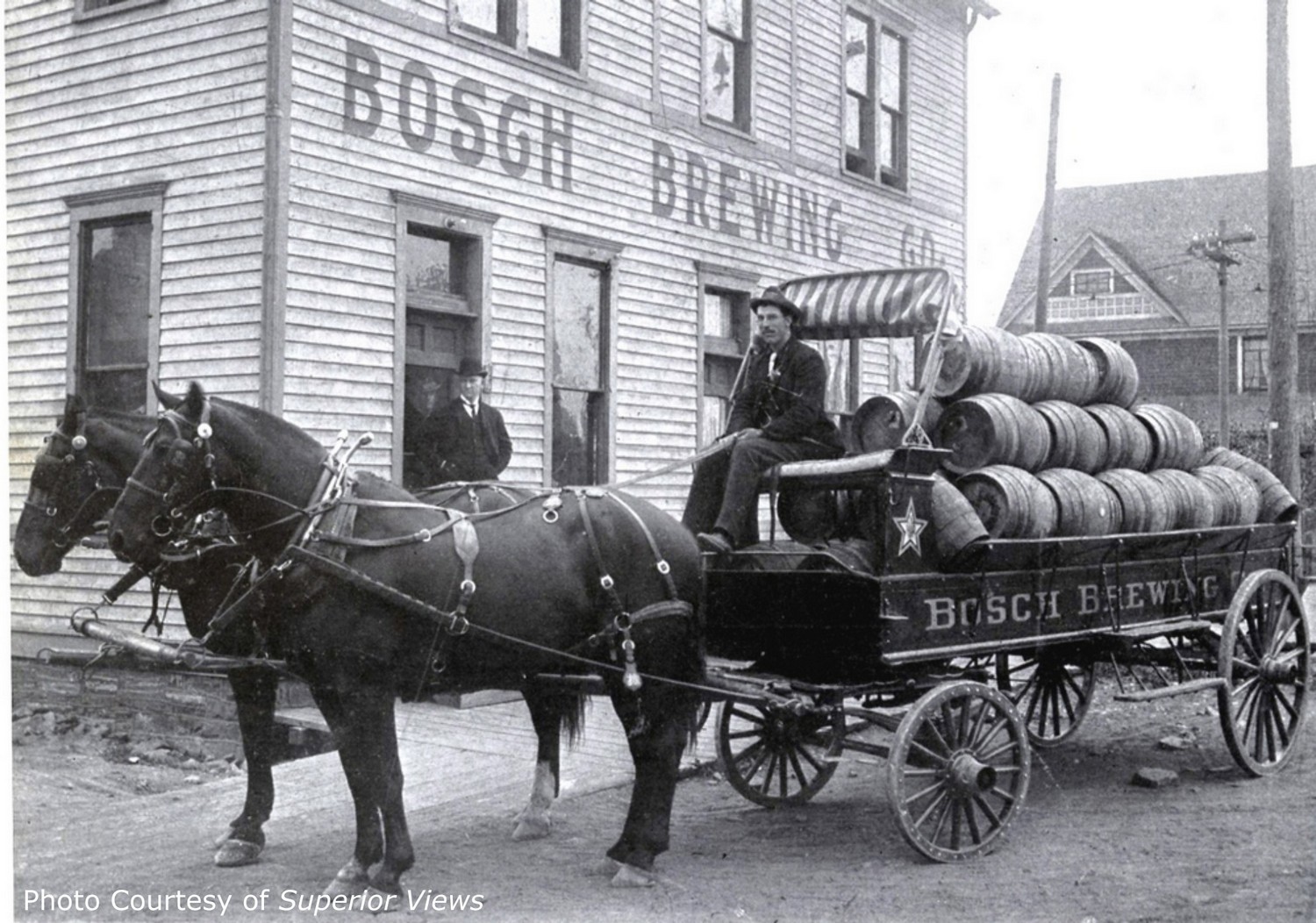
Bosch Wagon
Aside from brewing, Joseph Bosch was a prominent member of the community. He helped to organize the First National Bank of Lake Linden in 1888 and then became its president (2). He became a partner in a general merchandise store in Lake Linden, which was purchased from D. W. Sutter in 1885 (5). He served as mayor of Lake Linden for four years (5). He was known to have a charitable disposition, giving his time freely to worthy enterprises, extending a helping hand to the needy (2), and contributing to the development of Lake Linden and neighboring towns (5). He was elected president of the Upper Peninsula Brewers Association in 1905 (35).
Early Growth and Rebuilding
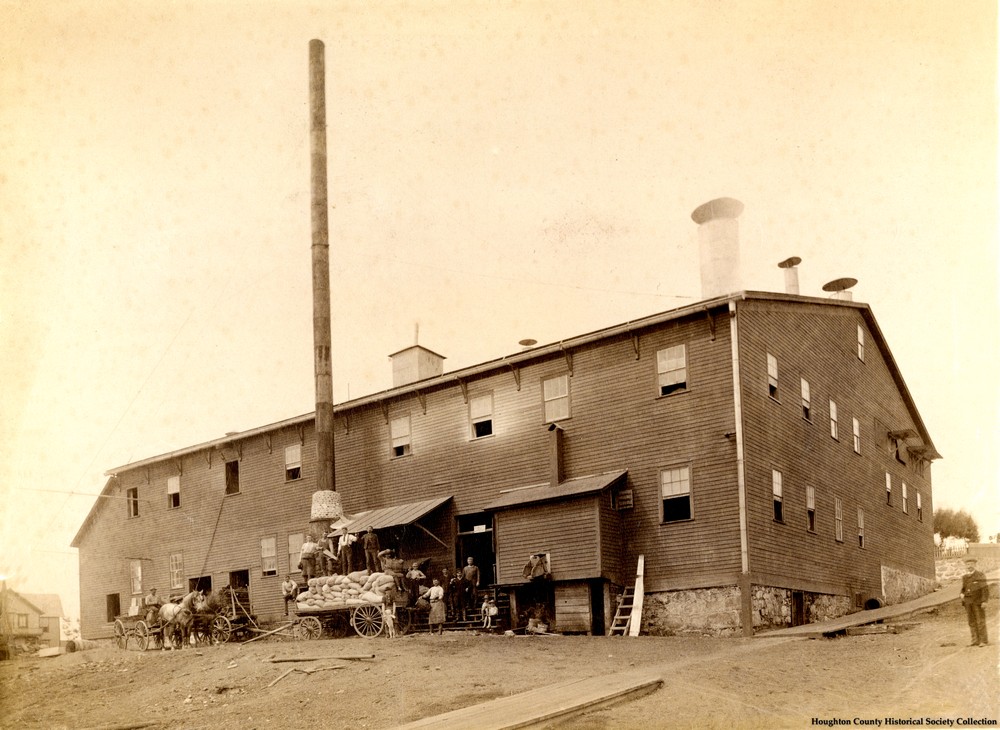
In 1886, the plant was enlarged to meet growing demand (1). A 790-ft-deep artesian well was bored, and its water, claimed to treat kidney, liver, and stomach troubles, was used in brewing (1). On 20 May 1887, fire, which started at Neumann & Trelease's store (28), destroyed nearly all of Lake Linden, including every building belonging to the firm (1), but the artesian well survived (27). The brewery was rebuilt and started selling beer again by Oct 1887 (1). In 1889, the brewery's production ranked 11th within the state of Michigan (29). The Sanborn map shows the brewery on the southeast corner of Center St. and Schoolcraft St.
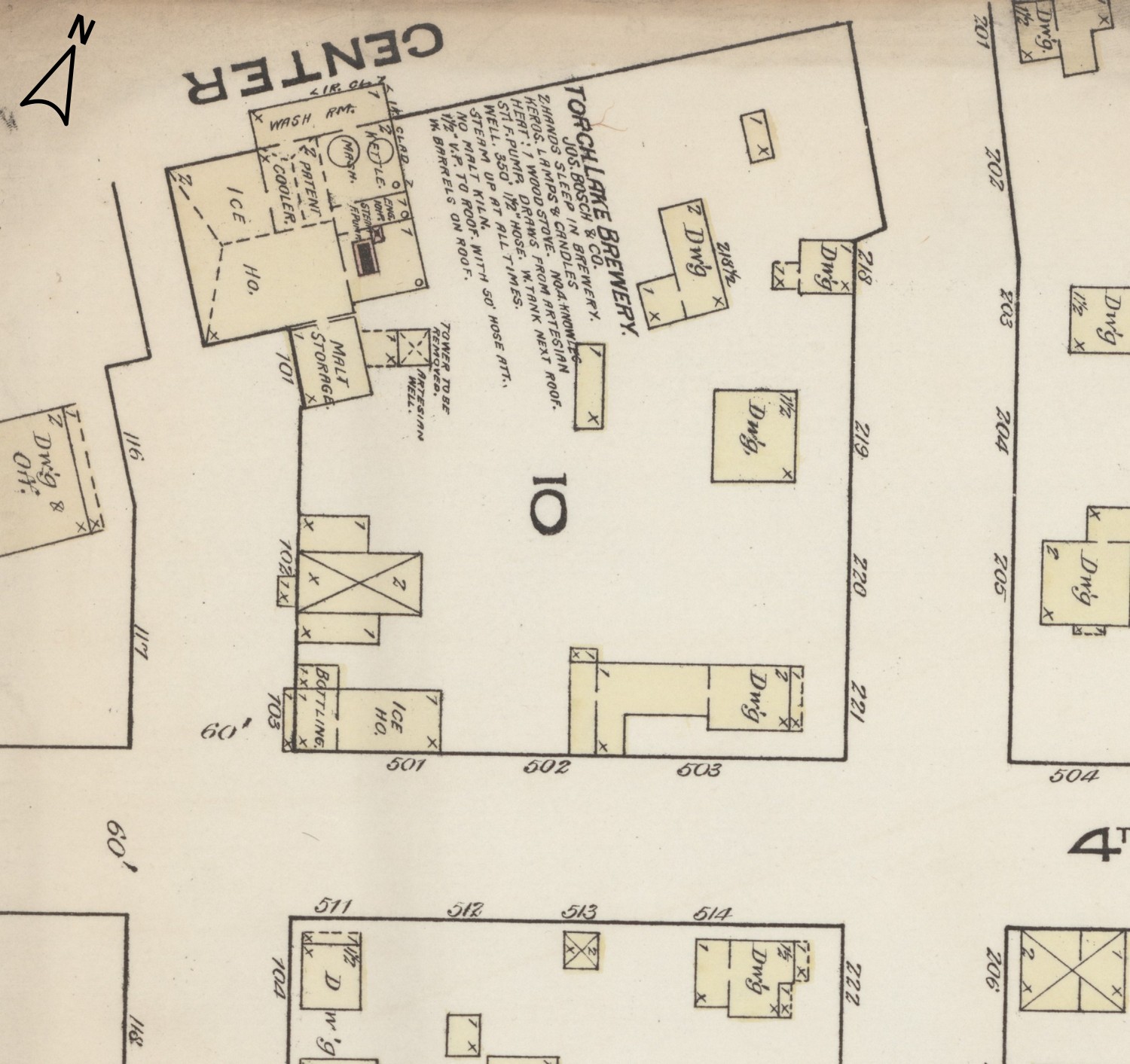
Sanborn map – Sep 1885 (pre-fire)
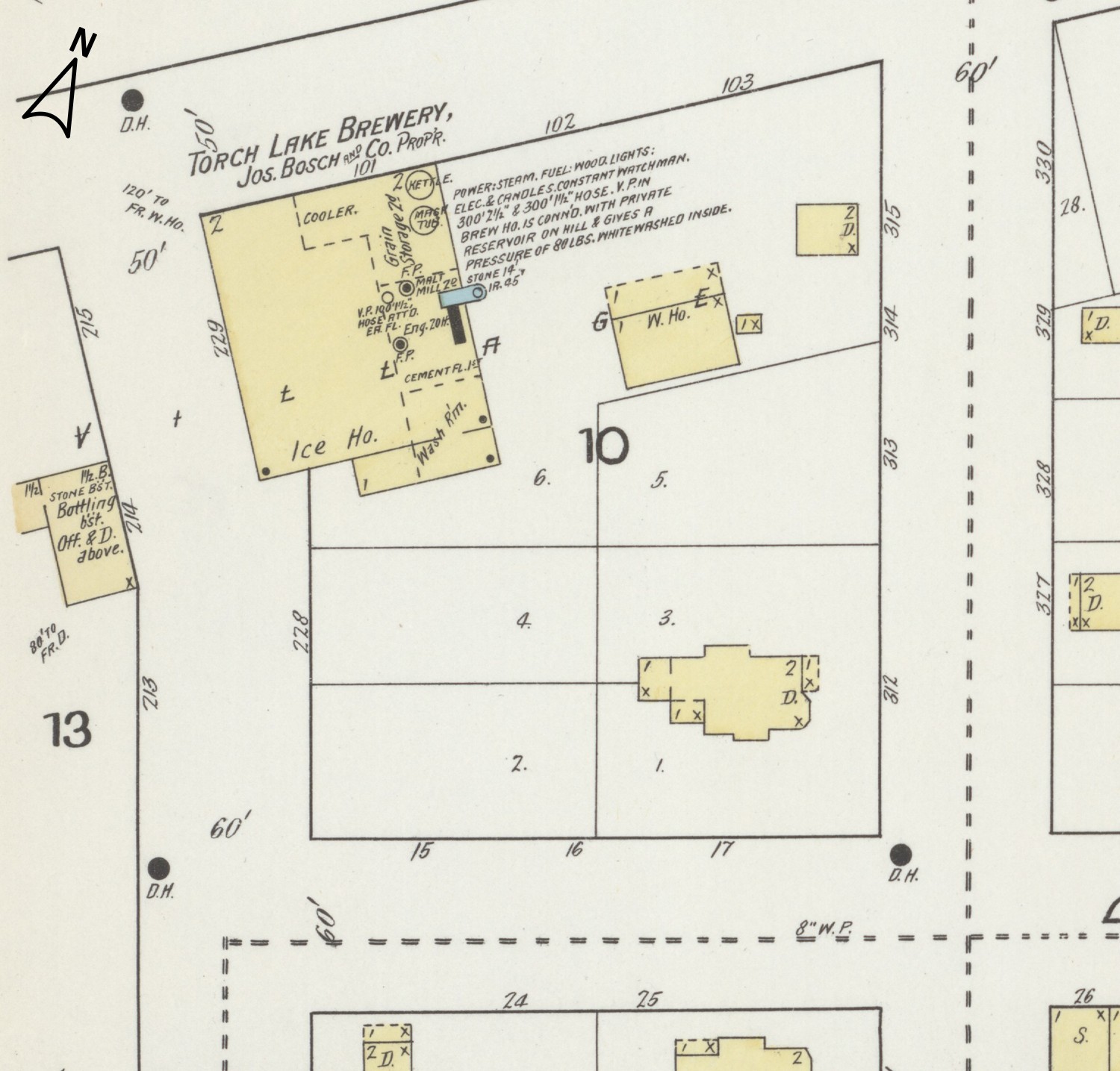
Sanborn map – Sep 1893 (post-fire)
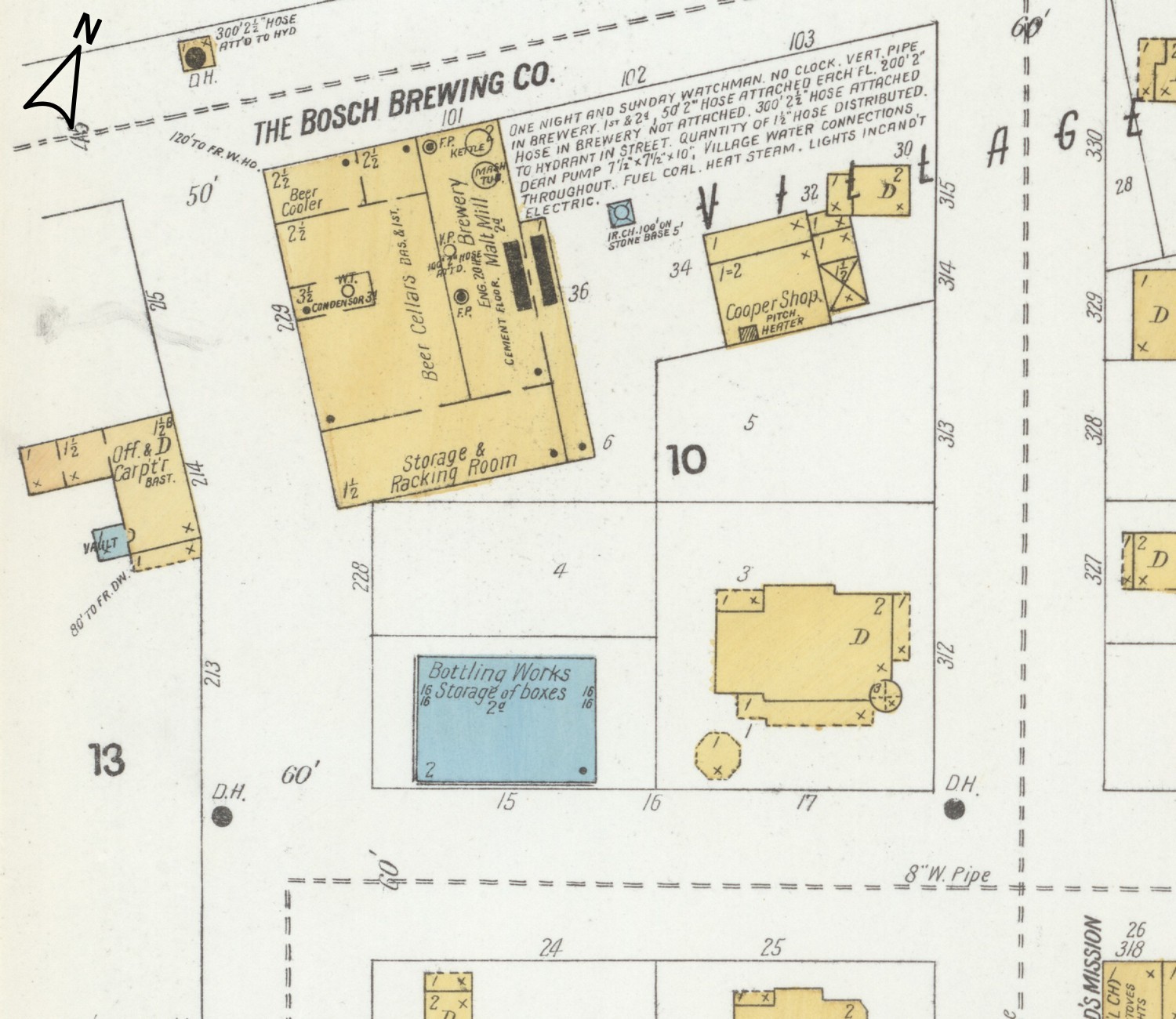
Sanborn map – Jul 1900
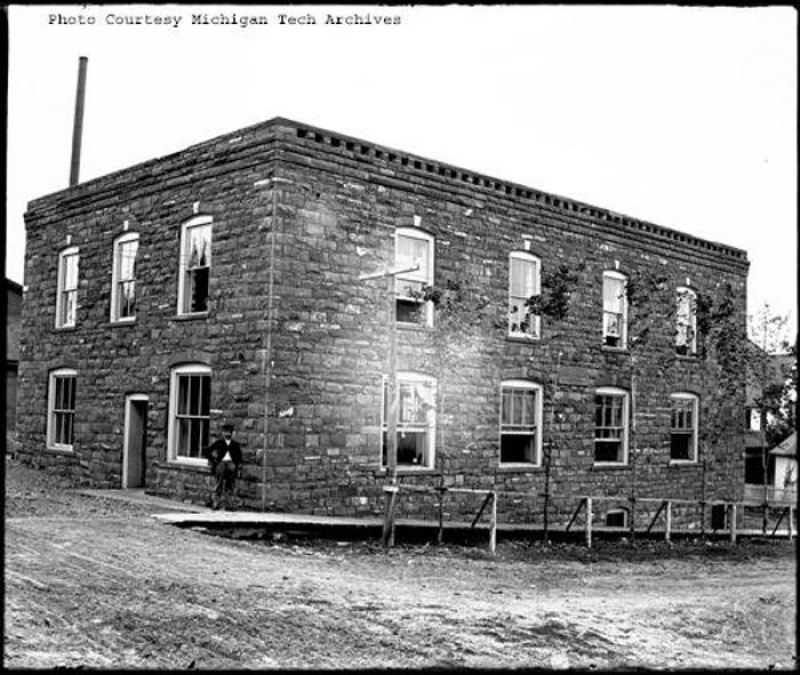
In May 1891, Bosch had plans to wire the brewery, bottling works, and office for electric lights (18). In 1892, the brewery expanded with new kettles and mash tubs and a refrigerator that maintained the desired temperature for fermentation and storage, thus eliminating the need for ice (1). The improvements doubled the storage capacity of the brewery (22). In Aug 1896, a new bottling works was near completion (30). It was constructed of Portage Lake sandstone, and the floor was caulked and waterproof (30). It was equipped with a patent bottle cleaning machine with a capacity of 3,000 bottles per hour and a steam corker or sealer (30). This building is shown on the 1900 Sanborn map.
The Bosch Brewing Co.
George Wertin died in 1890 (7). After Joseph Wertin Sr. died in 1893 (1), Bosch purchased his interest and that of Joseph Wertin Jr. (2). On 01 Mar 1894, Bosch formed a stock company, the Bosch Brewing Co., in which he maintained controlling interest and served as president (1,2,5,26). The bottles reflected this transition with the embossing changed to BOSCH BREWING CO. / LAKE LINDEN, MICH. from about 1895.
Beer Brands and Styles
In Jan 1892, the newspaper stated, ""Superior Stock" is the name given a special product of the Torch Lake Brewery--and those who should know say it is most appropriately named" (45), suggesting that this brand name originated at about that time. Previously, the beer was referred to as "Torch Lake beer" (e.g., 61). The company released Bavarian beer in Jan-Feb 1892 (19) and, about a month later, changed its name to Ulmer to distinguish it from the Bavarian beers of other breweries (16,20). The company then released Export beer in Feb-Mar 1892 as a low-alcohol beer brewed from only malt and hops (21). Bock beer, a seasonal style of beer made from selected malt and imported hops, was first marketed in Apr-May 1892 (17).
In Nov 1892, the company claimed that a few competitors imitated their labels sufficiently to deceive some customers into believing they were purchasing "Torch Lake Beer" (23). In late Nov 1892, they announced that all their bottles would now bear a trademark, as shown in the advertisement (24).

Newspaper ad – Jul 1892
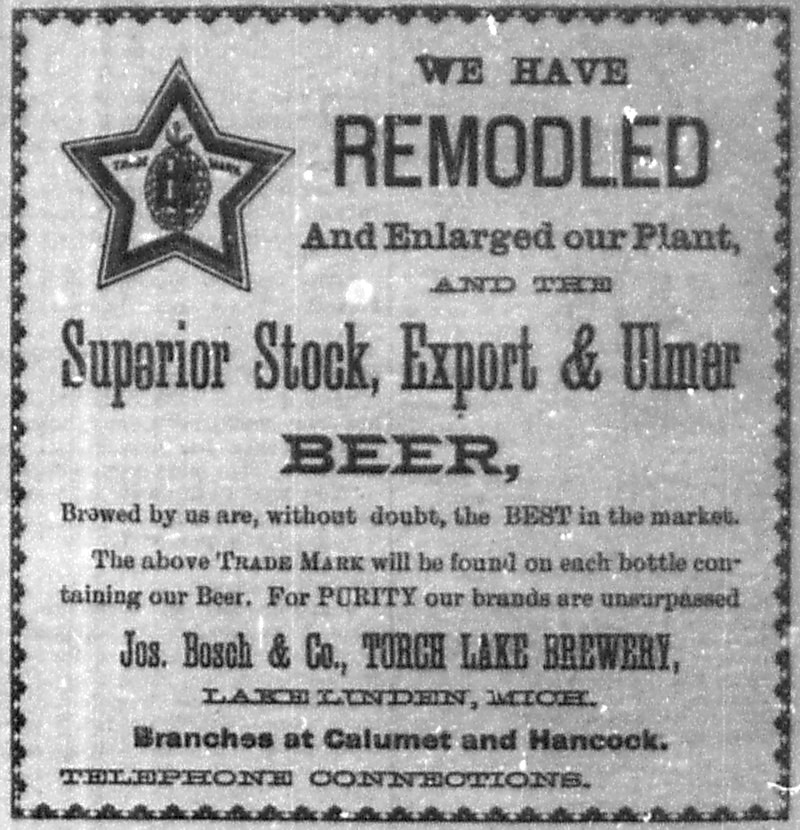
Newspaper ad – Nov 1892
The company pamphlet described the three brands produced by 1899 (1):
"Superior Stock", a beer second to none, is brewed from the choicest imported hops and malt especially manufactured for this Company. The "Ulmer" is a rich, dark and heavy beer, brewed after the Bavarian process. The "Export" is a mild, light beer, but highly nutritious.
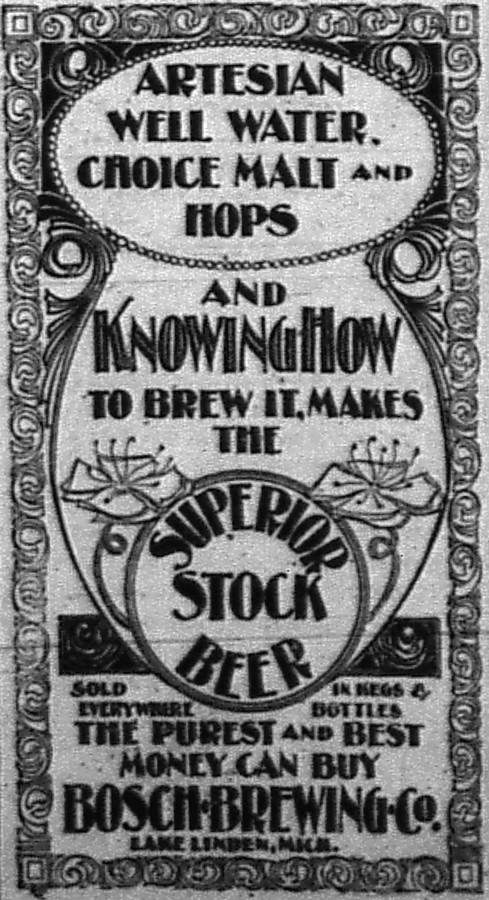
Newspaper ad – Oct 1899

Newspaper ad – Jan 1893
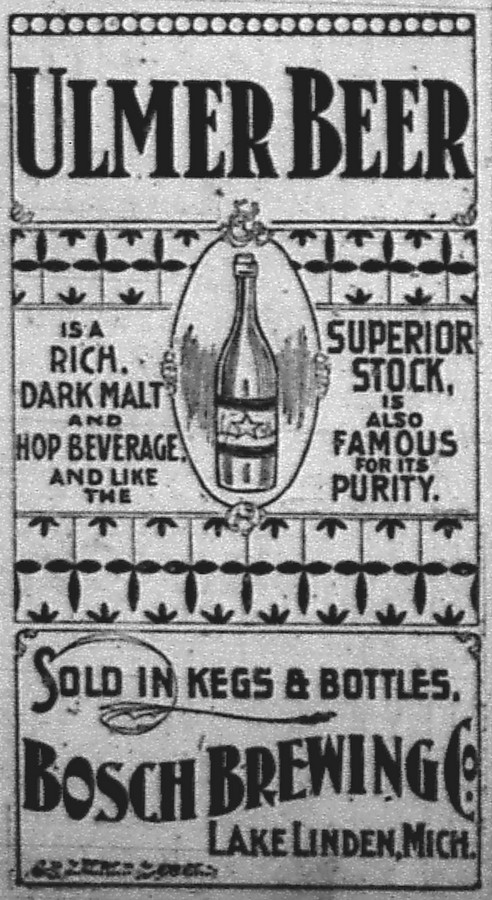
Newspaper ad – Jun 1899
The company stated that bottling was the most substantial aspect that extended its reach (1). Superior Stock and Ulmer were sold in kegs and bottles, while Export was sold only in bottles (1). In Jun 1893, the company announced that Superior Stock could now be purchased in pint bottles, with a 24-bottle case selling for $1.25 (25). By 1899, the company bottled 1,063,452 bottles and thousands of kegs of its number one beer, Superior Stock (1). The company had branches and storehouses in Hancock, Calumet, Ishpeming, Eagle Harbor, and Baraga (1). In Dec 1896, the newspaper described "a new device", the crown cap, which Bosch was using to seal bottles of Superior Stock (65). In the late 1890s, the embossing on the bottles changed to the script Bosch design. In 1902, annual production was about 20,000 barrels (10).
In Dec 1899, the company launched Gilt Edge and marketed it in "clear white bottles", probably referring to their aqua bottles. In May 1902, the company started to sell Porter in bottles and claimed it equaled any imported brand (34). In Jan 1903, the company listed four varieties in a Daily Mining Gazette ad: Superior Stock, Gilt Edge, Ulmer, and Porter, but not Export.
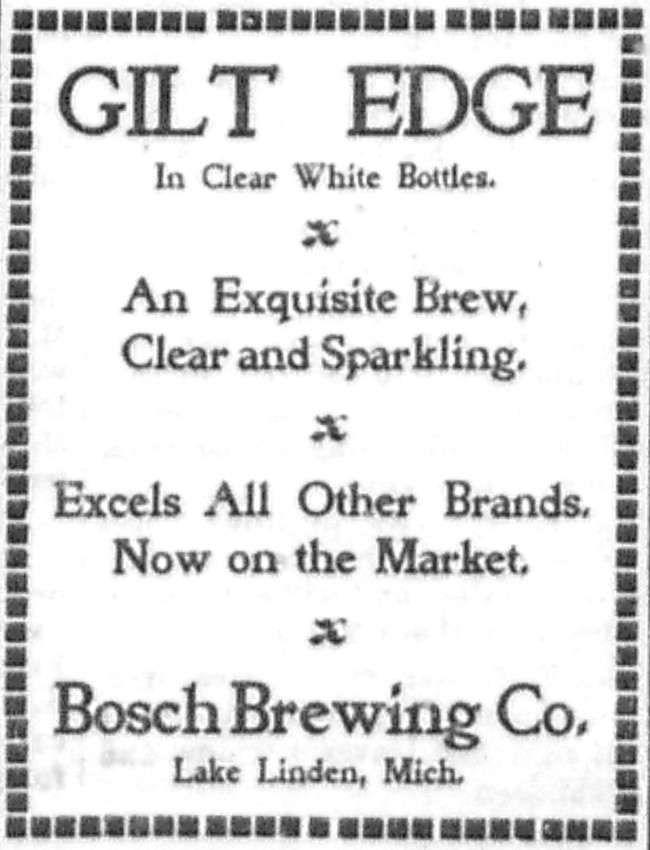
Newspaper ad – Dec 1899
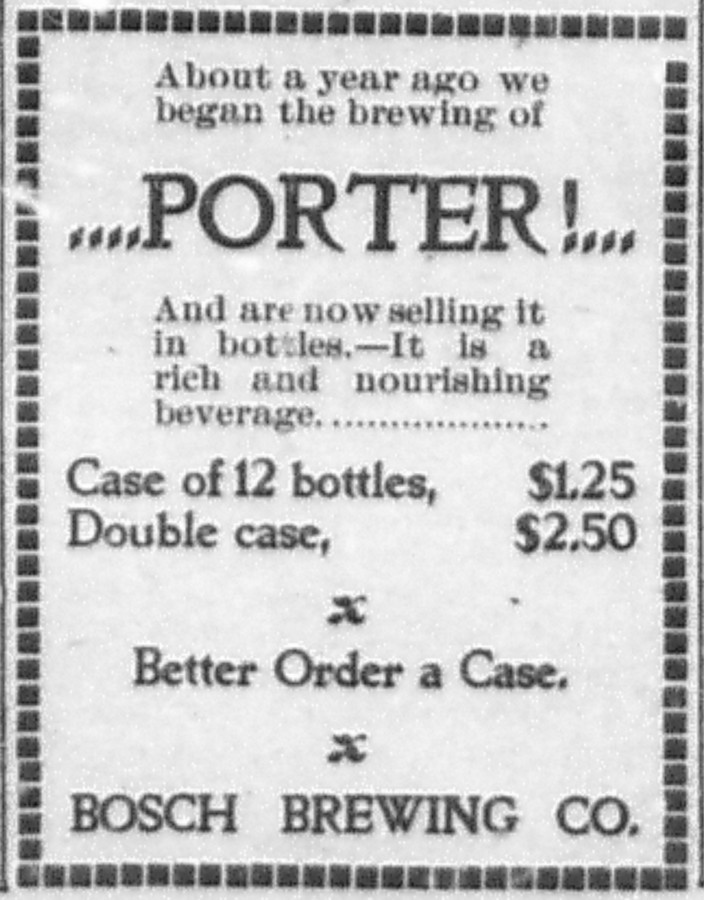
Newspaper ad – Jun 1902
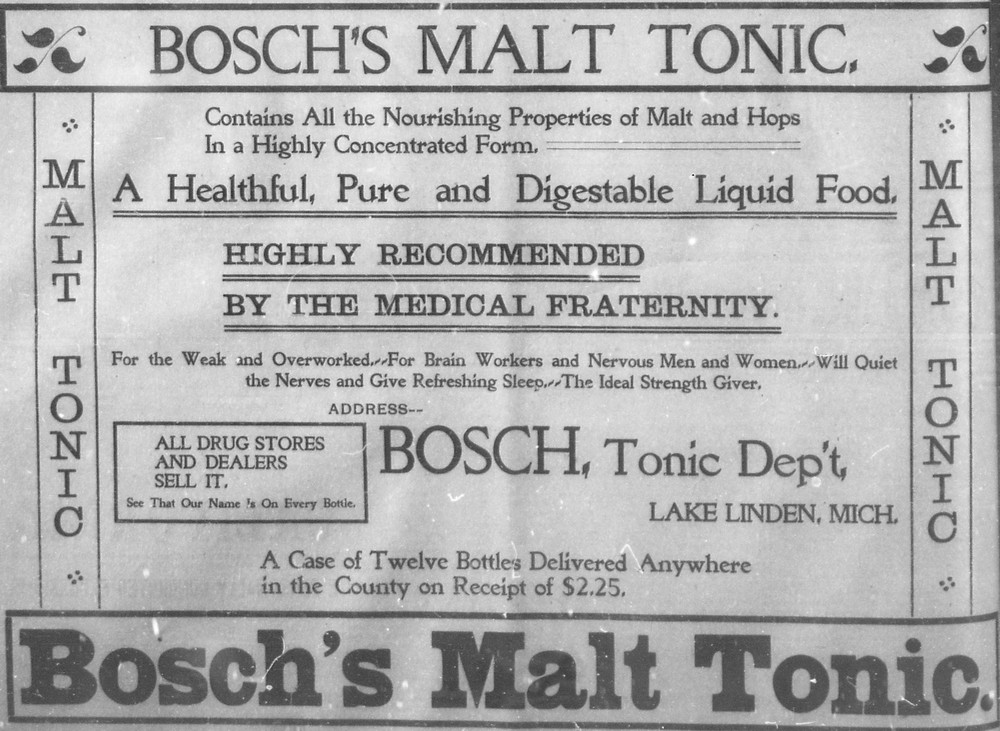
Newspaper ad – Feb 1903
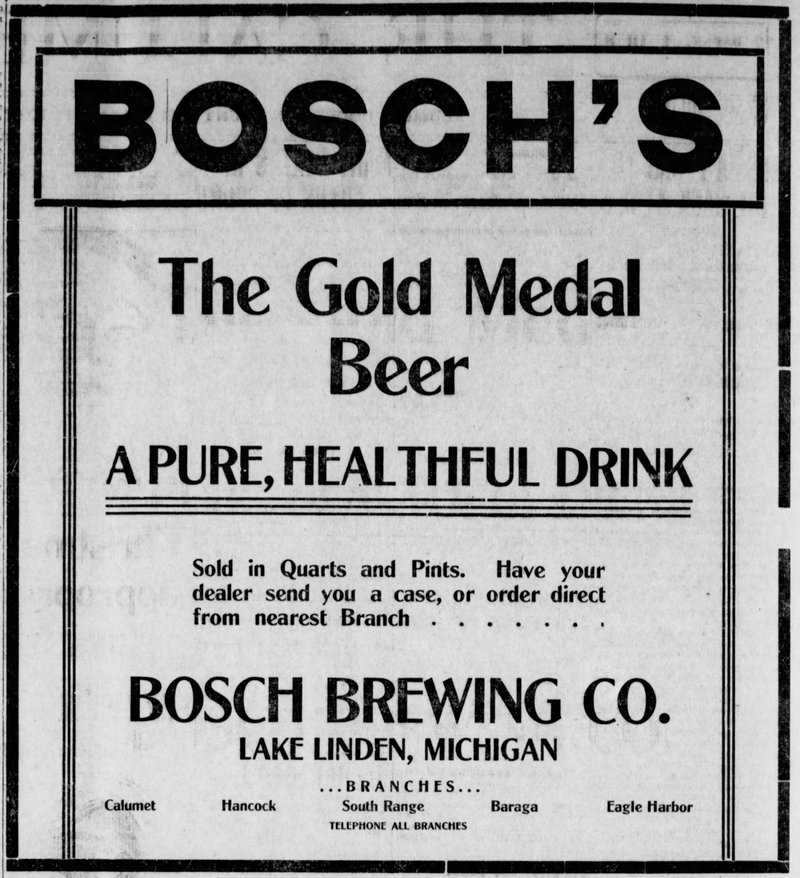
Newspaper ad – Dec 1911
Gilt Edge won a gold medal at the 1911 International Exposition at Antwerp, Belgium (62). Bosch then advertised its beer as "The Gold Medal Beer", with the medal being "for purity and highest quality" (63,64). At this time, Bosch had branches in Calumet, Hancock, South Range, Baraga, and Foley & Smith in Eagle Harbor (63,64).
Brewery and Bottling Works Renovations
The company continued to renovate the brewery over the years as business grew. In Apr 1900, the company was installing a new ice-making machine, which required 9,000 ft of pipe (41). In Nov 1901, ten new vats were being installed (32). In Apr 1902, a new concrete floor was being laid in the cellar where new tanks would be installed (33). In Nov 1905, an addition was being built to house a new boiler with a new 26,000-gallon tank (36). The boiler would be used to generate electricity to power the brewery (36). In Jan 1906, the company installed a new generator that would drive a 25-ton motor, supply water to power other machinery, and generate electricity to light the plant (37). They also installed new steam feed pumps to supply the boiler with water and received a new ice machine (37). Three months later, the new electrical system powered by the generator was nearly in full operation (38). All machinery at the plant was then run by electricity (38). They were also installing an improved private telephone system for employees and an automatic oiling device for the machinery (38). In Nov 1907, they installed a new soaking tank and barrel washer, a new malt mill, and a new grain elevator (44).
The company also renovated its bottling works. In Jan 1900, the company received a new bottle washer with a capacity of 1,000 bottles per hour (39). A new bottle labeling machine was put in operation in Jan 1901 (40). It automatically labeled the bottles and dated the labels, with a capacity of 30-40 bottles per minute (40). By Jun 1902, the company had a pipeline to transport beer from the tanks in the brewery to the bottling works (42). The pipeline and pipes from a large ice machine traveled through a tunnel that was 6 ft high, 4 ft wide, and 80 ft long (42). This new system allowed the beer to be bottled directly from the storage tanks while maintaining temperature and preventing exposure to the atmosphere (42). The old system involved transporting beer in barrels to the bottling works (42). In Mar 1907, the company installed a Volz bottle soaking machine, which was one of the most modern of its kind and would save on labor (43). In Aug 1907, Bosch installed an automatic bottle filling machine from the Bishop & Babcock Co. that could fill 72-pint bottles or 48-quart bottles per minute without workers touching the bottles (31). In Nov 1907, the bottling works was fitted with a conveyor system to transport cases of returned bottles to the basement, bottles to the soaking machine, empty cases to an elevator and up to the bottling department, and filled cases to teamsters (44). With such continual improvements, Bosch maintained one of the most up-to-date operations in the Upper Peninsula (37).
The brewery and its bottling works had 24 employees in 1905 (12) and 44 in 1913 (13). This growth in equipment and labor helps explain how Bosch sustained large-scale production before prohibition interrupted operations.
Prohibition Hits Michigan
State prohibition commenced on 01 May 1918 (46). Before the state went dry, the company installed new machinery and began manufacturing a non-intoxicating Gilt Edge that would be ready to market on May 01 (47). The company was now called the "Bosch Co." (47), and it was listed as manufacturing "soft drinks" (14). Despite positive reception of the new product (47,48), the company quickly suspended operations (4). National prohibition commenced on 17 Jan 1920 (60).
Post-Prohibition Revival
President Roosevelt signed a bill on 22 Mar 1933 to legalize the sale of beer and wine with 3.2% alcohol by weight, effective 06 Apr 1933 in states without state prohibition laws (49,50). On 27 Apr 1933, Governor Comstock signed a bill legalizing the sale, manufacture, possession, and transportation of beer and wine with 3.2% alcohol in Michigan (51). People could immediately import such beverages from other states, but sales were not permitted without a license, and beer could not be manufactured without a permit (51). On 02 May 1933, the Bosch Co. was among the first eight breweries in the state to be issued a license to manufacture beer, which they could begin after receiving a federal permit (52). In the meantime, beer sales commenced in Michigan on 11 May 1933 (53), with beer being shipped in from nearby states (54).
Bosch was the first brewery in the Copper Country to resume brewing, which it did on 11 May 1933 at the Scheuermann brewery in Houghton (55). The company started reconditioning the plant the previous summer in anticipation of a prohibition amendment (55). The Scheuermann plant would be the only plant operated by the company (55), meaning that the Lake Linden plant was not resurrected. Thus, ABM bottles and wooden cases labeled with HOUGHTON date to post-prohibition. The plant operated 24 hours a day, producing two batches a day (55). Capacity was 10,000 barrels a year (55). The beer would require about eight weeks to properly age (55). The bottling plant, updated with the latest equipment, was expected to start operating in late Jun (56). The beer, which ads indicated was Superior Stock, was expected to be on the market on Jul 01 (55). National prohibition ended on 05 Dec 1933 (60), and state prohibition ended on 16 Dec 1933, lifting the alcohol limit on beer (59). Bosch released additional brands, including Ulmer in Oct 1933 (57) and Gilt Edge in Jul 1934 (58).
Joseph Bosch died on 09 Jan 1937 at the age of 86 (4) and was buried in Mount Calvary Cemetery, Lake Linden (6). His business continued to operate in Houghton, with peak sales of 100,000 barrels per year occurring from 1955 to 1961 (11). Sales then dwindled to only 22,000 barrels in 1972 (11). The brewery closed on 28 Sep 1973, marking 99 years of existence (4). It suffered from higher grain prices, high taxes, and shrinking patronage and couldn't compete with regional giants like Pabst, Stroh, and Anheuser-Busch (4,11).
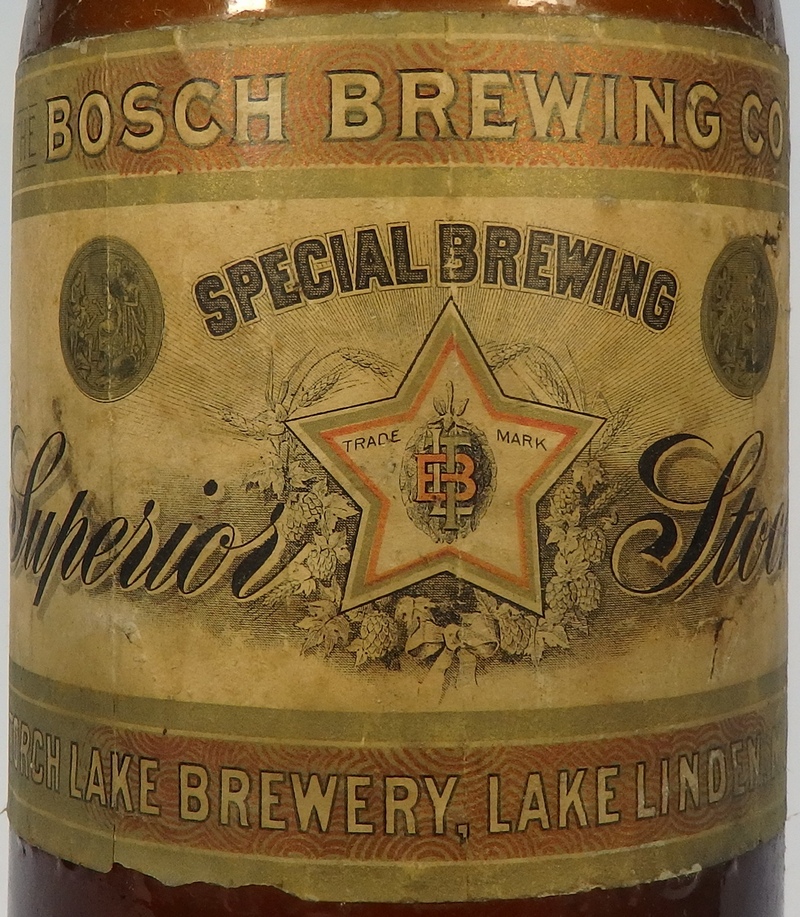
Superior Stock label
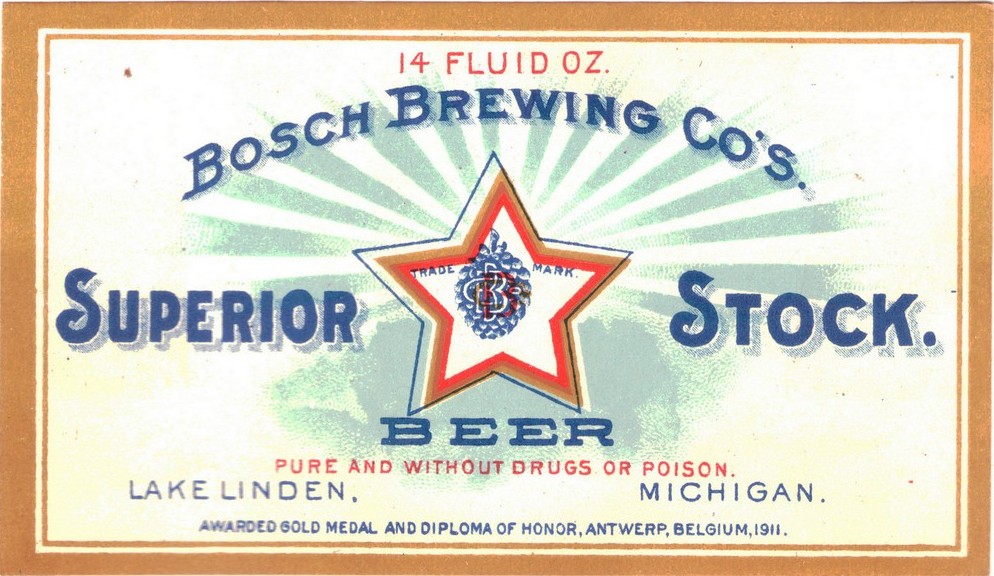
Superior Stock label
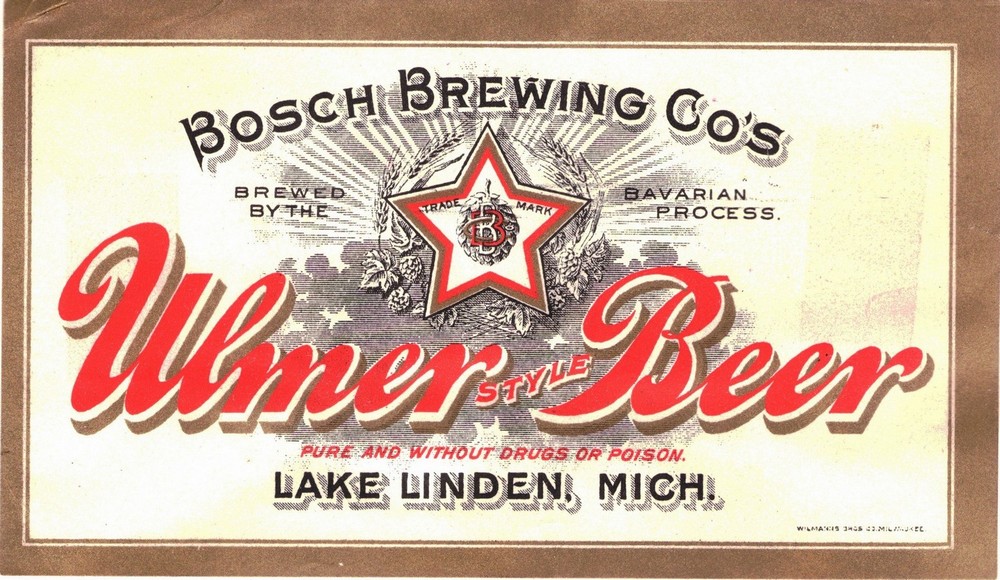
Ulmer label
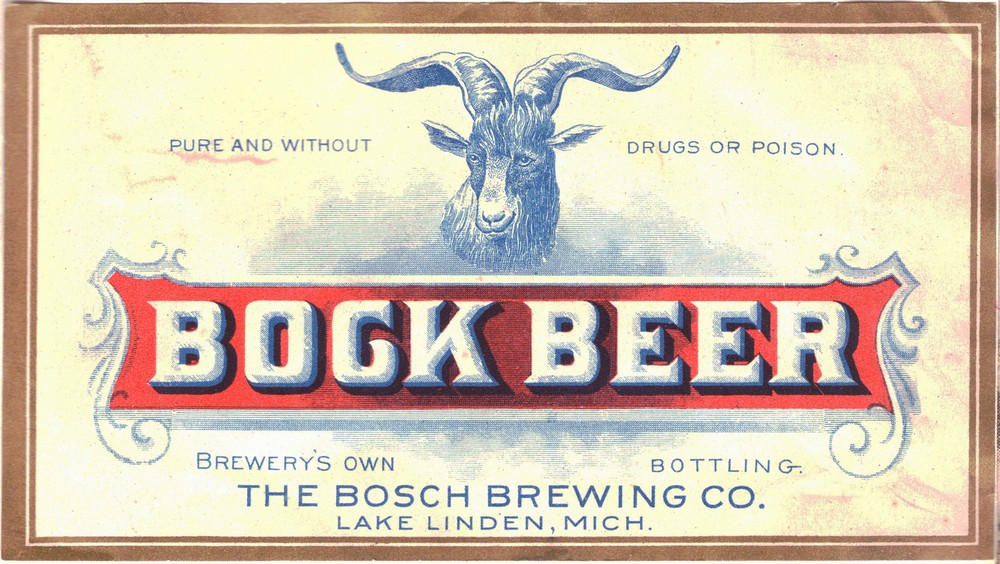
Bock label
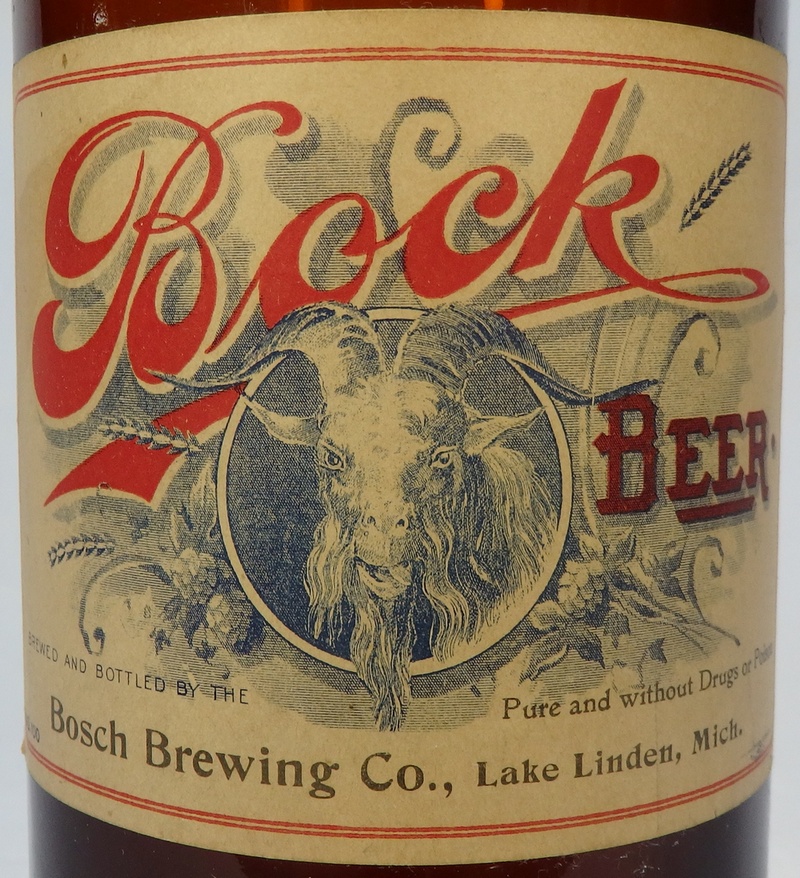
Bock label
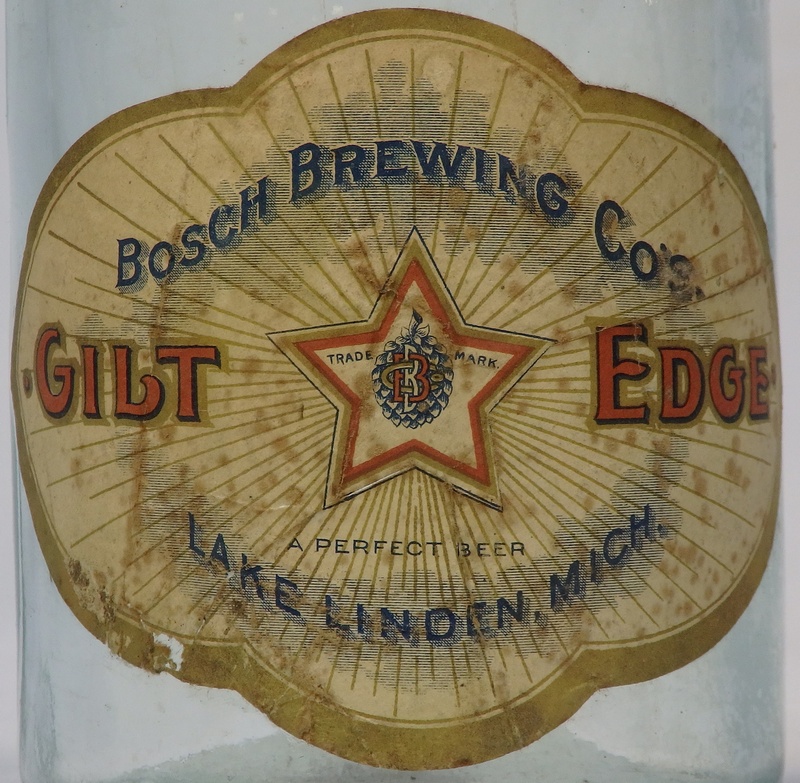
Gilt Edge label
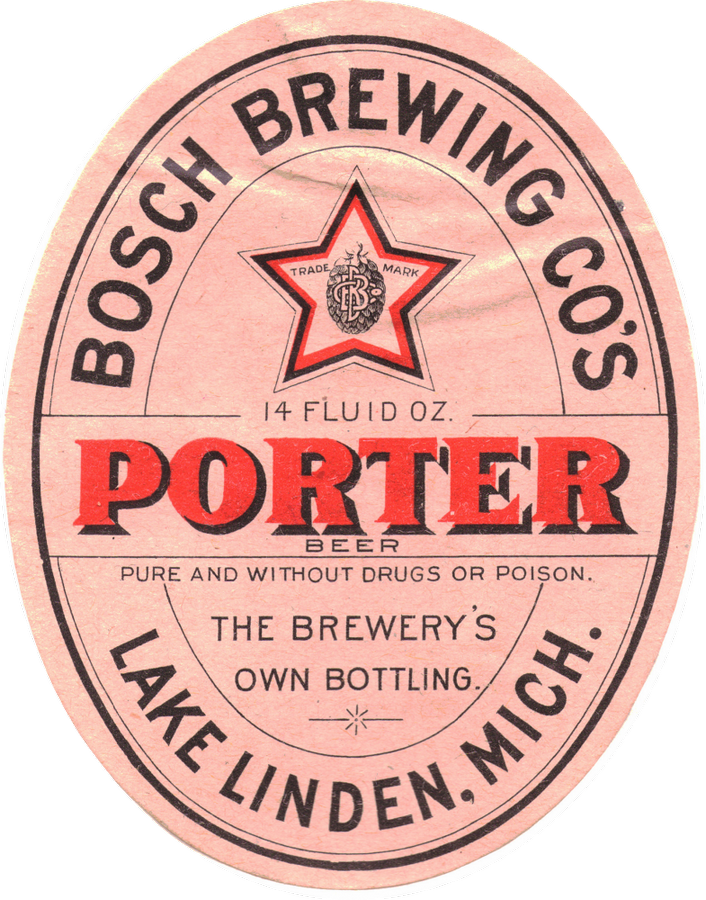
Porter label
Citations
- Bosch Brewing Co. (1899). Compliments of The Bosch Brewing Co.: Bottlers and Brewers of Fine Lager Beer, Lake Linden, Michigan. Mining Journal Print, Marquette, MI. (company pamphlet)
- Biographical Publishing Company. (1903). Biographical Record: Houghton, Baraga and Marquette Counties, Michigan. Biographical Publishing Company. Chicago, IL.
- The Western Historical Company. (1883). The History of the Upper Peninsula of Michigan. The Western Historical Company. Chicago, IL.
- Monette, C. J. (1978). Joseph Bosch and the Bosch Brewing Company. Welden H. Curtin. Lake Linden, MI.
- Sawyer, A. L. (1911). A History of the Northern Peninsula of Michigan and its People. The Lewis Publishing Company. Chicago, IL.
- Find a Grave. (2016, Jul 23). Joseph Bosch. Retrieved Aug 2021. www.findagrave.com/memorial/167328156/joseph-bosch
- Find a Grave. (2018, Oct 10). George Wertin. Retrieved Oct 2021. www.findagrave.com/memorial/193883878/george-wertin
- R. L. Polk & Co. (1877). Michigan State Gazetteer and Business Directory 1877. R. L. Polk & Co. Detroit, MI.
- R. L. Polk & Co. (1879). Michigan State Gazetteer and Business Directory 1879. The Detroit Free Press Company. Detroit, MI.
- H. S. Rich & Co. (1903). One Hundred Years of Brewing. H. S. Rich & Co., Publishers. Chicago and New York.
- Kent, E. (1973, Oct 03). Brewery closes after 99 years. Michigan Tech Lode. p. 8-9.
- Bureau of Labor and Industrial Statistics. (1906). State of Michigan Twenty-Third Annual Report of the Bureau of Labor and Industrial Statistics Including the Thirteenth Annual Report of State Inspection of Factories. Wynkoop Hallenbeck Crawford Co., State Printers. Lansing, MI.
- Michigan Bureau of Labor and Industrial Statistics. (1914). Thirty-First Annual Report of the Department of Labor of the State of Michigan. Wynkoop Hallenbeck Crawford Co., State Printers. Lansing, MI.
- State of Michigan Department of Labor. (1919). Thirty-Sixth Annual Report of the Department of Labor of the State of Michigan. Fort Wayne Printing Co. Fort Wayne, Indiana.
- Amount of lager beer made and sold in this district last year. (1879, Jul 24). Portage Lake Mining Gazette (Houghton, MI). p. 3.
- Our merchants. (1892, Mar 03). Michigan Copper Journal (Hancock, MI). p. 5.
- [Untitled]. (1892, Apr 28). Michigan Copper Journal (Hancock, MI). p. 1.
- Local jottings. (1891, May 19). Torch Lake Times (Lake Linden, MI). p. 3.
- [Untitled]. (1892, Feb 02). Torch Lake Times (Lake Linden, MI). p. 3.
- Have changed the name. (1892, Mar 01). Torch Lake Times (Lake Linden, MI). p. 3.
- [Untitled]. (1892, Mar 01). Torch Lake Times (Lake Linden, MI). p. 3.
- [Untitled]. (1892, Aug 30). Torch Lake Times (Lake Linden, MI). p. 3.
- Imitation is the sincerest flattery. (1892, Nov 01). Torch Lake Times (Lake Linden, MI). p. 3.
- [Untitled]. (1892, Nov 29). Torch Lake Times (Lake Linden, MI). p. 3.
- [Untitled]. (1893, Jun 13). The Native Copper Times (Lake Linden, MI). p. 3.
- [Untitled]. (1894, Feb 27). The Native Copper Times (Lake Linden, MI). p. 3.
- [Untitled]. (1887, Jun 07). Torch Lake Times (Lake Linden, MI). p. 2.
- Lake Linden's calamity. (1887, May 24). Torch Lake Times (Lake Linden, MI). p. 2.
- The Torch Lake Brewery. (1889, Jul 02). Torch Lake Times (Lake Linden, MI). p. 3.
- Second to none. (1896, Aug 11). The Native Copper Times (Lake Linden, MI). p. 3.
- Bottle filler is sanitary. (1907, Aug 03). The Copper Country Evening News (Calumet, MI). p. 4.
- Improvements. (1901, Nov 06). The Copper Country Evening News (Calumet, MI). p. 7.
- Improvements. (1902, Apr 11). The Copper Country Evening News (Calumet, MI). p. 7.
- Porter in bottles. (1902, May 20). The Copper Country Evening News (Calumet, MI). p. 5.
- Officers elected. (1905, Sep 08). The Copper Country Evening News (Calumet, MI). p. 2.
- New addition to the Bosch brewing plant. (1905, Nov 13). The Copper Country Evening News (Calumet, MI). p. 3.
- Bosch Brewing Co. installs machinery. (1906, Jan 22). The Copper Country Evening News (Calumet, MI). p. 3.
- Bosch Brewing Company's machinery. (1906, Apr 02). The Copper Country Evening News (Calumet, MI). p. 3.
- Lake Linden-Grover briefs. (1900, Jan 18). The Daily Mining Gazette (Houghton, MI). p. 7.
- Bottle labeling machine. (1901, Jan 23). The Daily Mining Gazette (Houghton, MI). p. 7.
- News notes from the Lake Lindens. (1900, Apr 09). The Daily Mining Gazette (Houghton, MI). p. 7.
- New contrivance for bottling beer. (1902, Jun 27). The Daily Mining Gazette (Houghton, MI). p. 7.
- More machinery. (1907, Mar 02). The Evening Journal (Hancock, MI). p. 7.
- Modern machinery in Bosh brewery here. (1907, Nov 17). The Daily Mining Gazette (Houghton, MI). p. 12.
- [Untitled]. (1892, Jan 19). Torch Lake Times (Lake Linden, MI). p. 3.
- National and state prohibition. (1919, Feb 14). The L'Anse Sentinel (L'Anse, MI). p. 8.
- Manufacturing new product. (1918, May 03). The Daily Mining Gazette (Houghton, MI). p. 7.
- New drink is popular. (1918, May 03). The Calumet News (Calumet, MI). p. 3.
- Roosevelt O.K. put on beer bill. (1933, Mar 23). The Daily Mining Gazette (Houghton, MI). p. 1.
- Provisions of U.S. beer bill. (1933, Mar 23). The Daily Mining Gazette (Houghton, MI). p. 5.
- Cameras record end of 15 years of prohibition. (1933, Apr 28). The Daily Mining Gazette (Houghton, MI). p. 1.
- Shilson, G. T. (1933, May 03). State board licenses 8 breweries. The Daily Mining Gazette (Houghton, MI). p. 1.
- Beer will be sold here on Thursday; licenses sought. (1933, May 06). The Daily Mining Gazette (Houghton, MI). p. 8.
- Nearby states ship beer into Michigan. (1933, May 05). The Evening Copper Journal (Hancock, MI). p. 1.
- Bosch beer, made in Copper Country, to be ready July 1. (1933, May 14). The Daily Mining Gazette (Houghton, MI). p. 12.
- Bosch beer will be on market for "Houghton Day". (1933, Jun 18). The Daily Mining Gazette (Houghton, MI). p. 12.
- Bosch Brewing Co. (1933, Oct 24). [Advertisement for Bosch Ulmer beer] The Daily Mining Gazette (Houghton, MI). p. 2.
- Bosch Brewing Co. (1934, Jul 19). [Advertisement for Gilt Edge beer] The Evening Copper Journal (Hancock, MI). p. 14.
- 15-year-old prohibition reign ends. (1933, Dec 16). The Daily Mining Gazette (Houghton, MI). p. 1.
- Prohibition in the United States. (2024, Dec 27). In Wikipedia. wikipedia.org/wiki/Prohibition_in_the_United_States
- Keweenaw Jottings. (1890, May 08). The Calumet and Red Jacket News (Calumet, MI). p. 2.
- Gold medal awarded to Gilt Edge product. (1911, Nov 21). The Daily Mining Gazette (Houghton, MI). p. 7.
- Bosch Brewing Co. (1911, Dec 22). Bosch's the gold medal beer [Advertisement] The Calumet News (Calumet, MI). p. 2.
- Bosch Brewing Co. (1911, Dec 22). A gold medal and diploma [Advertisement] The Keweenaw Miner (Mohawk, MI). p. 4.
- [Untitled]. (1896, Dec 12). The Copper Country Evening News (Calumet, MI). p. 4.
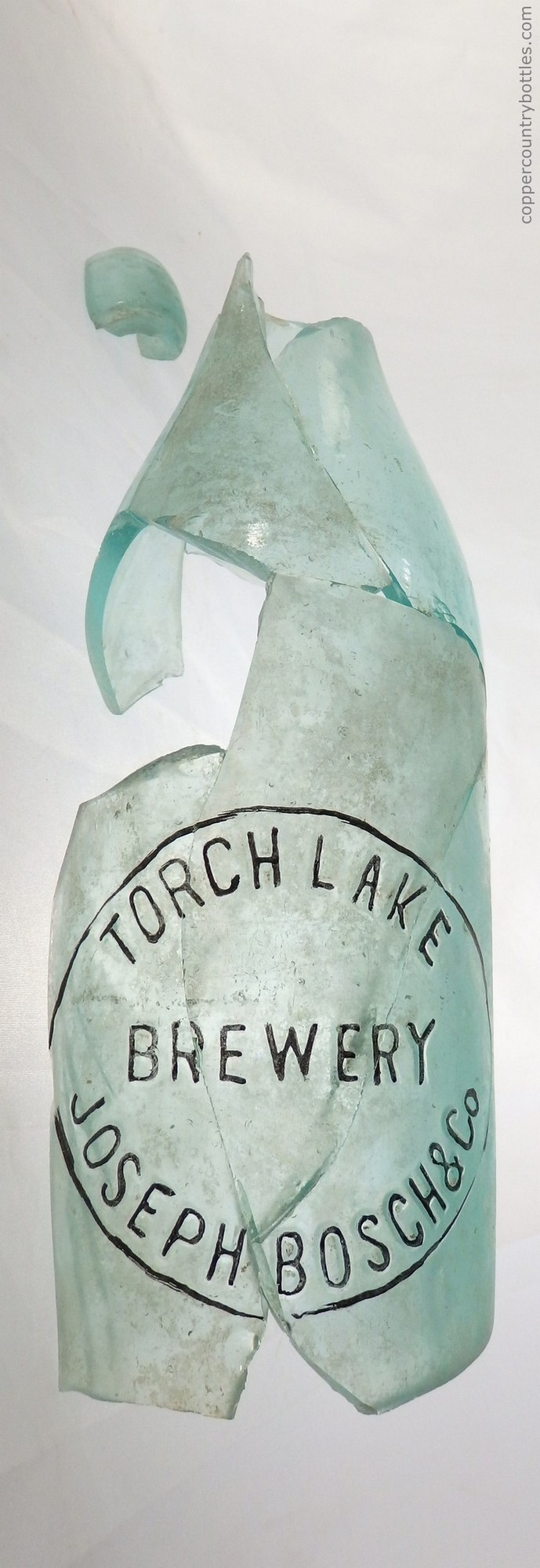
color: aqua
top: lightning stopper - applied
base: ?
maker's mark: [unknown]
other marks: [unknown]
date: 1877–1878
rarity: no known whole example
- JOSEPH spelled out
- lowercase O in Co
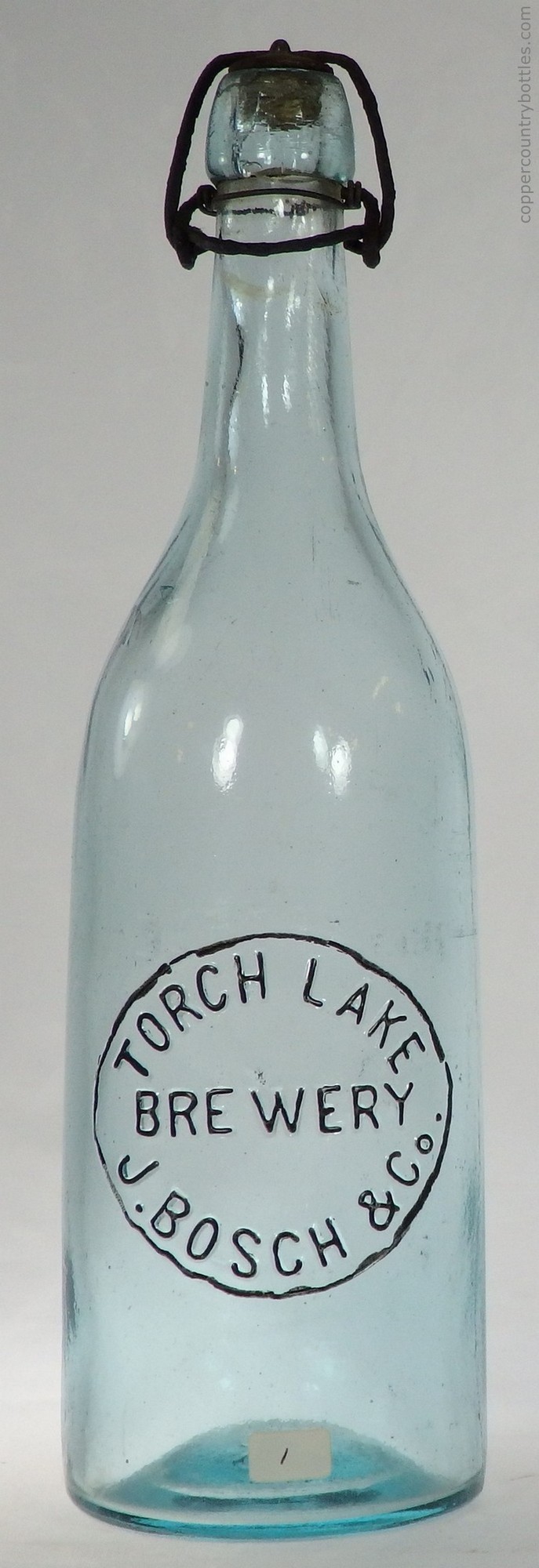
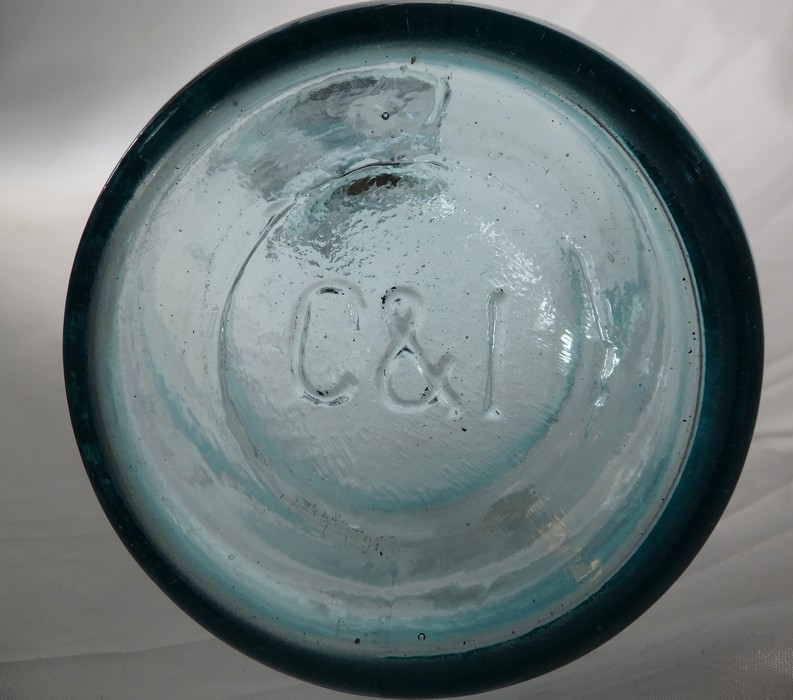
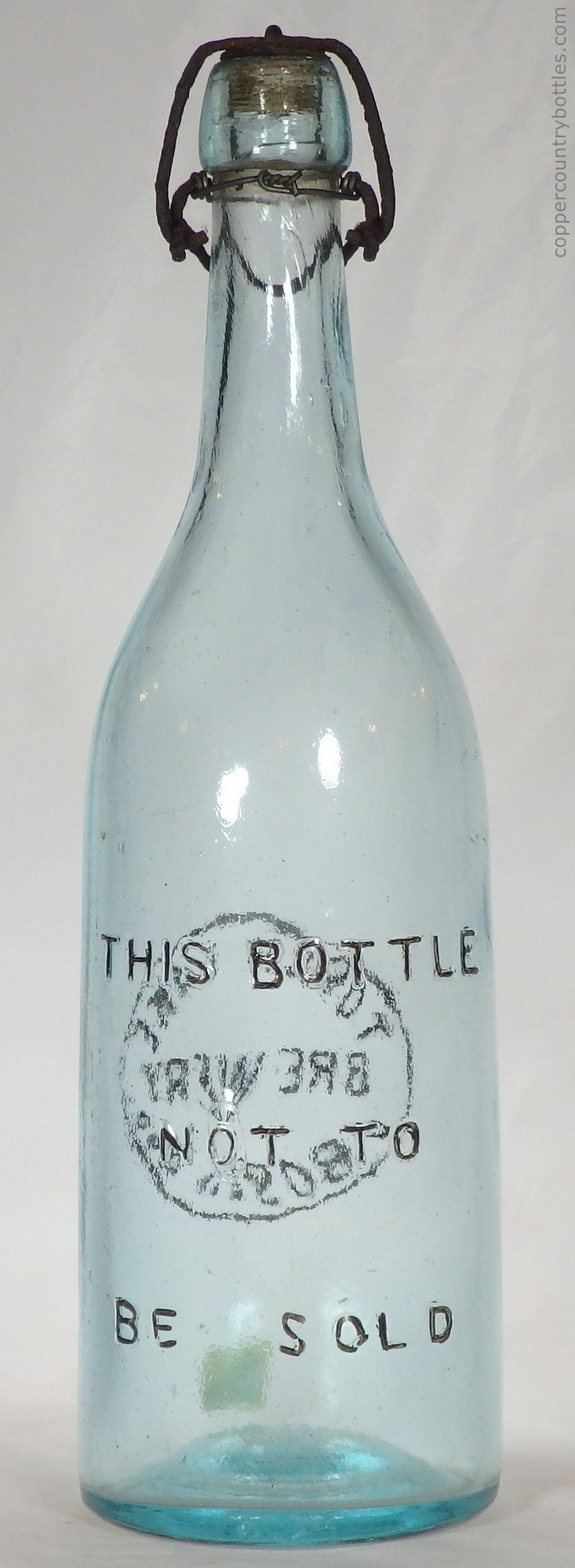
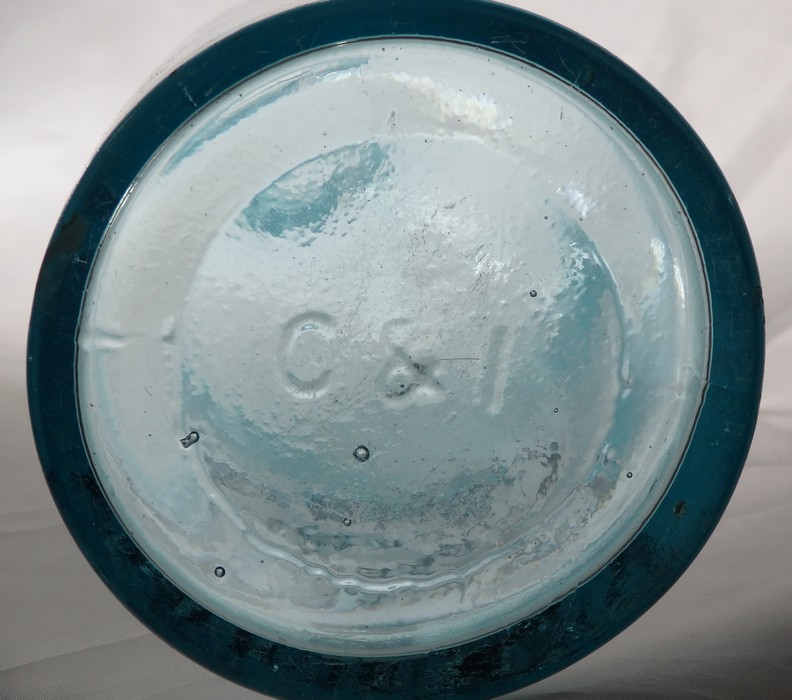
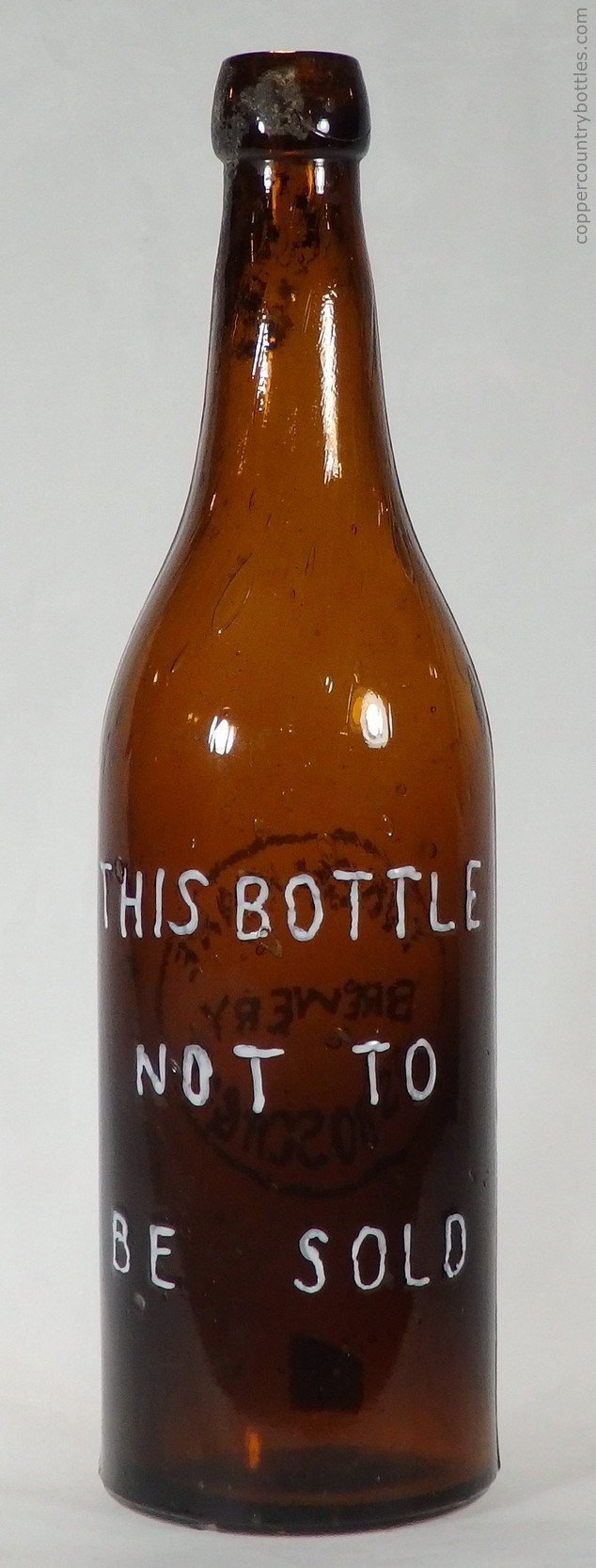
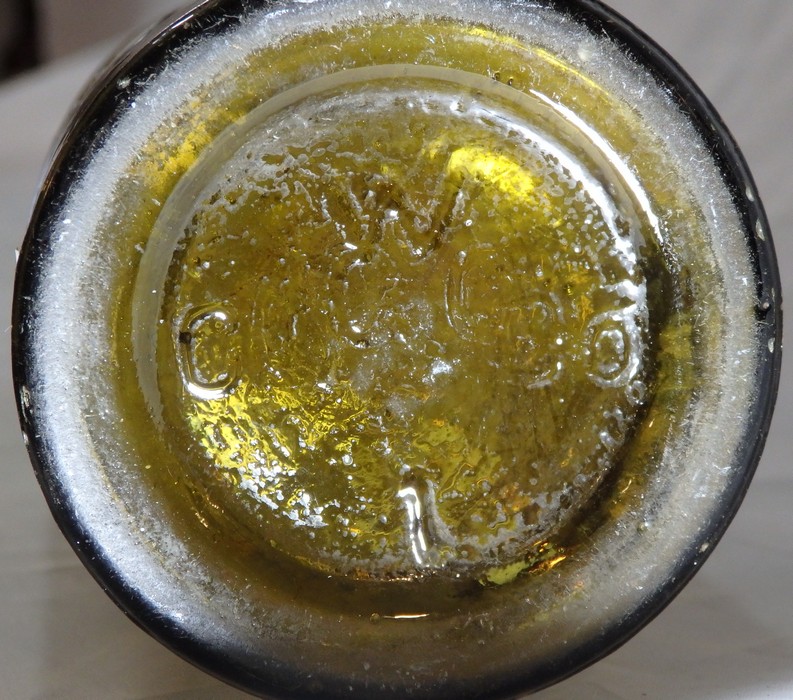
color: aqua top: lightning stopper - applied
base: post-bottom
maker's mark: C & I (base)
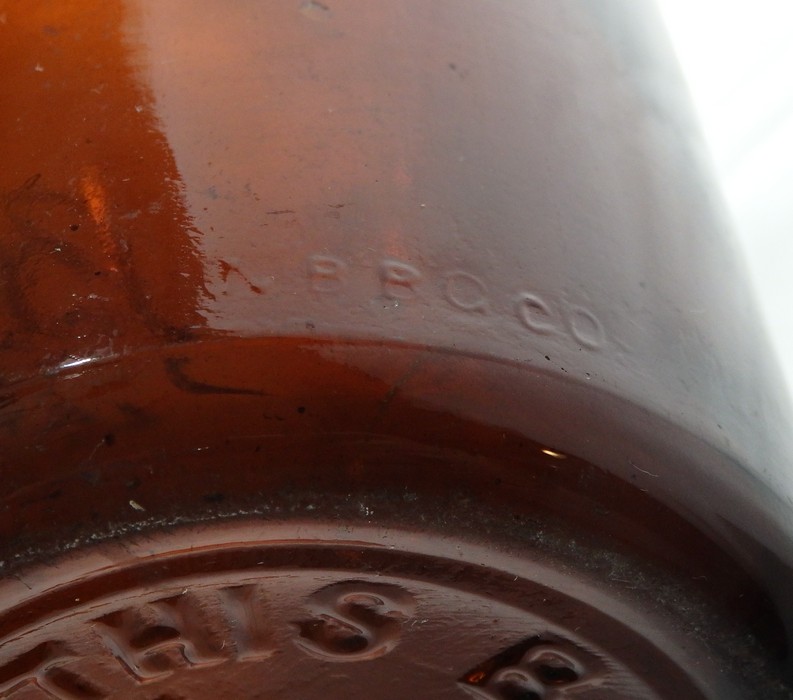
other marks: THIS BOTTLE NOT TO BE SOLD (back)
date: c. 1878
rarity: extremely rare
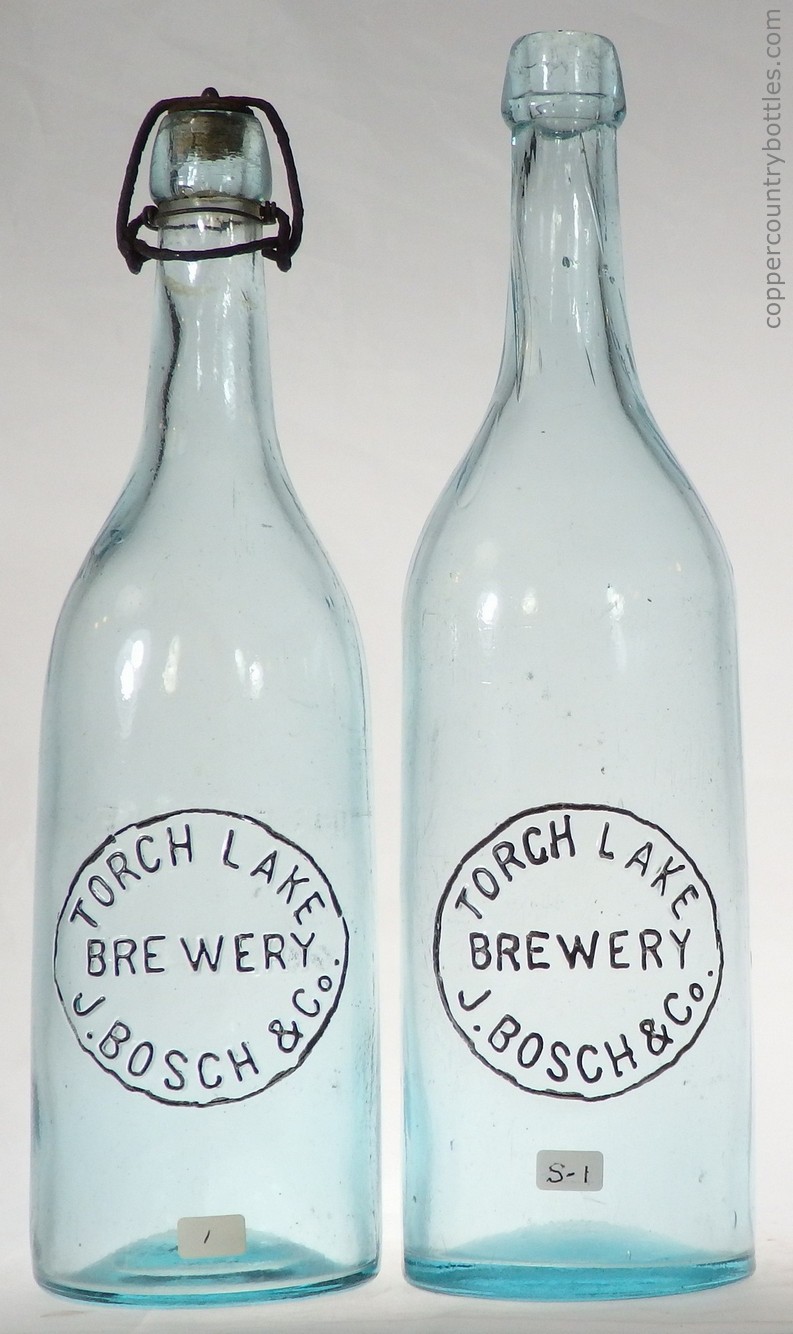
- small plate with Joseph abbreviated as J.
- same plate for 1, 1a, s2
- mold has short body
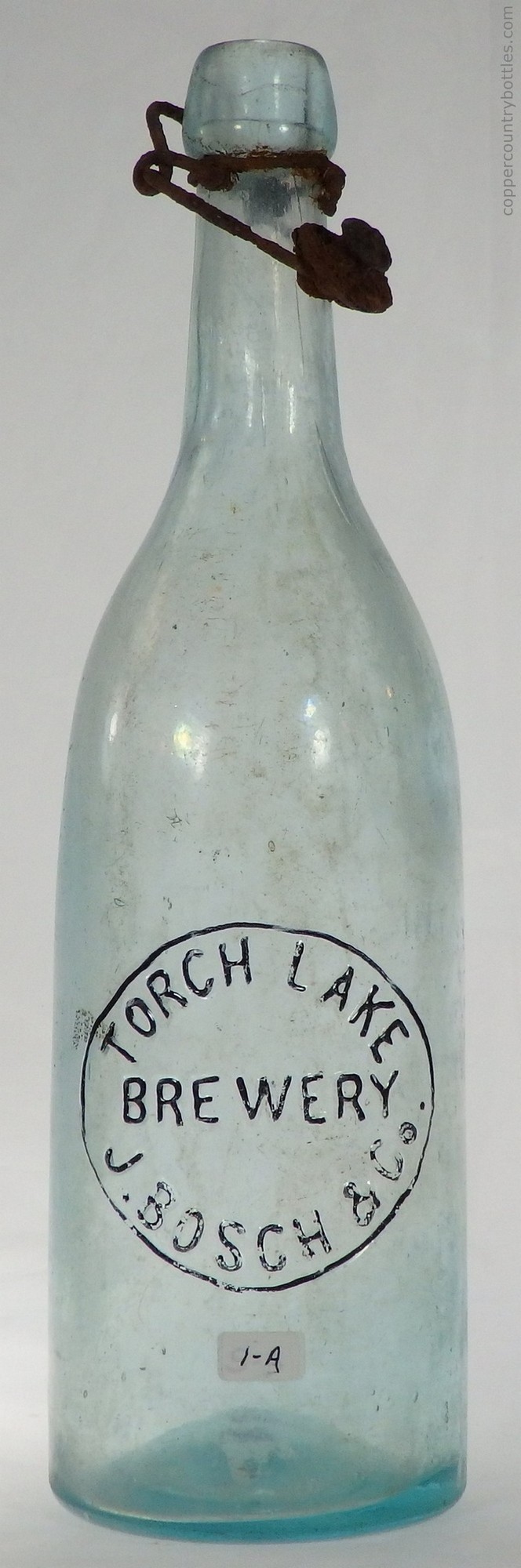
- same plate for 1, 1a, s2
- different maker's mark
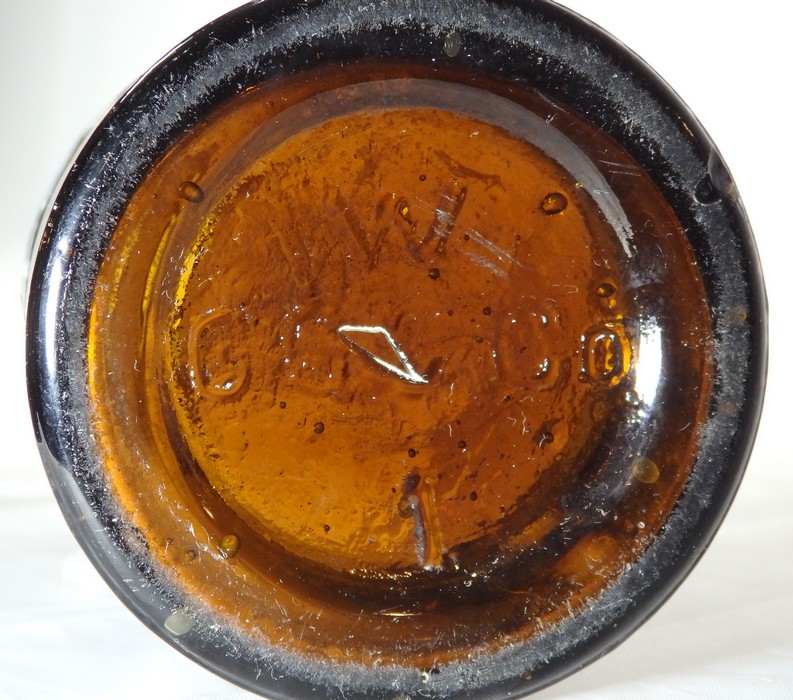
- Maker's mark image is from a different example.
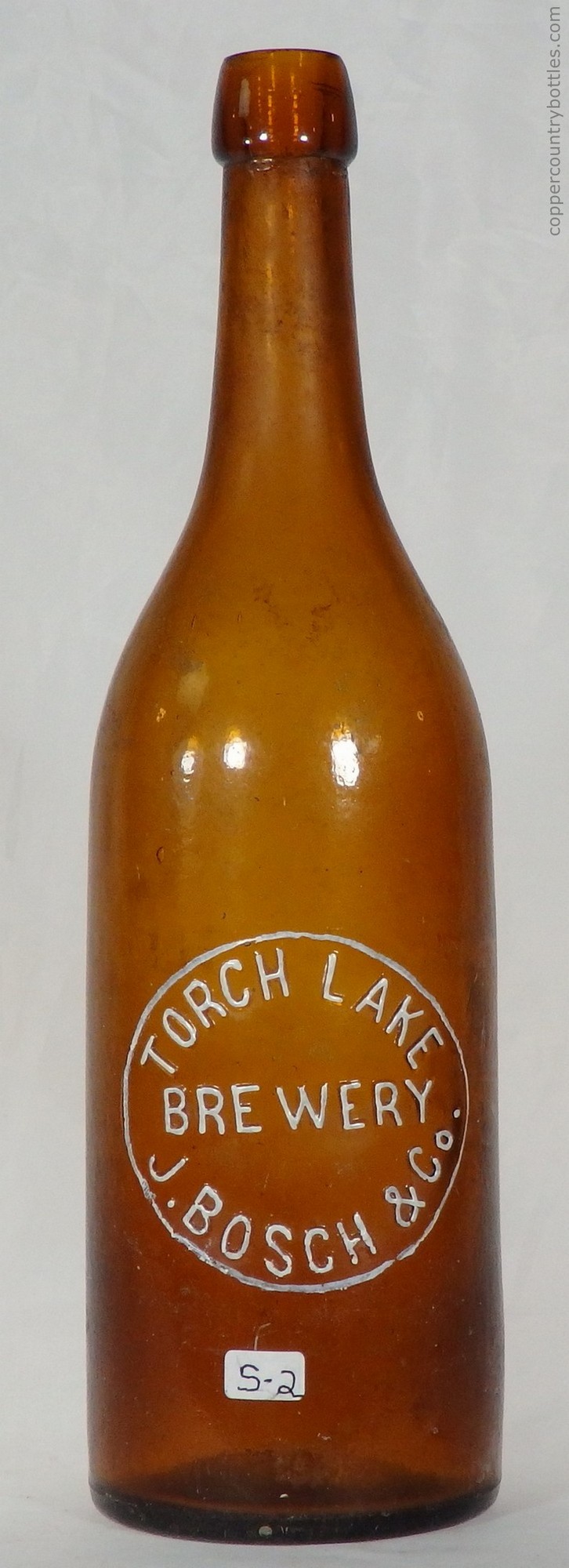
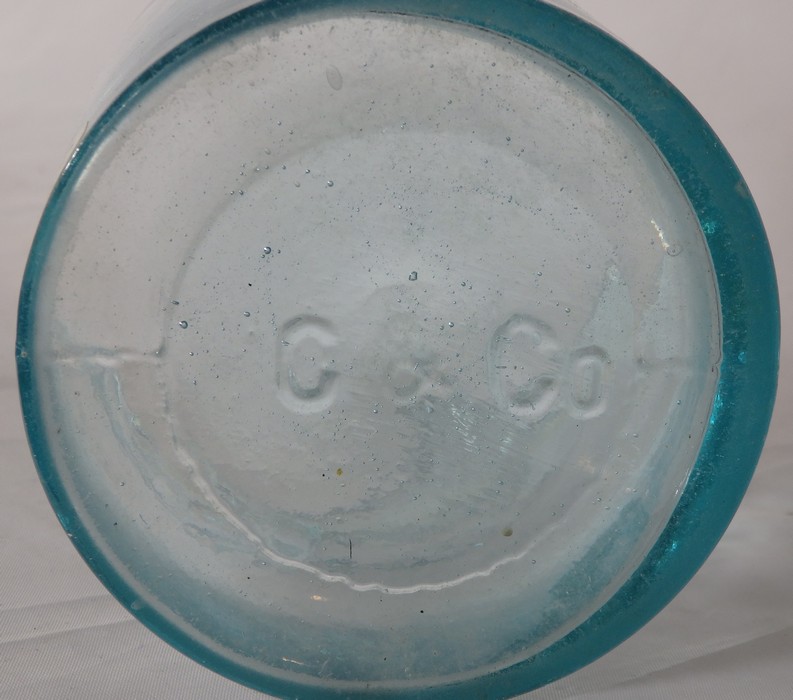
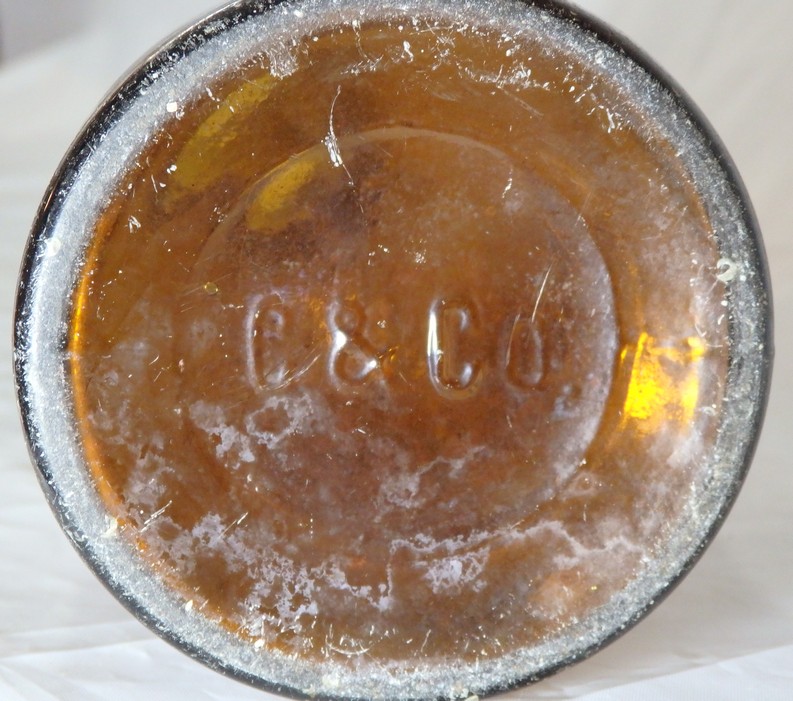
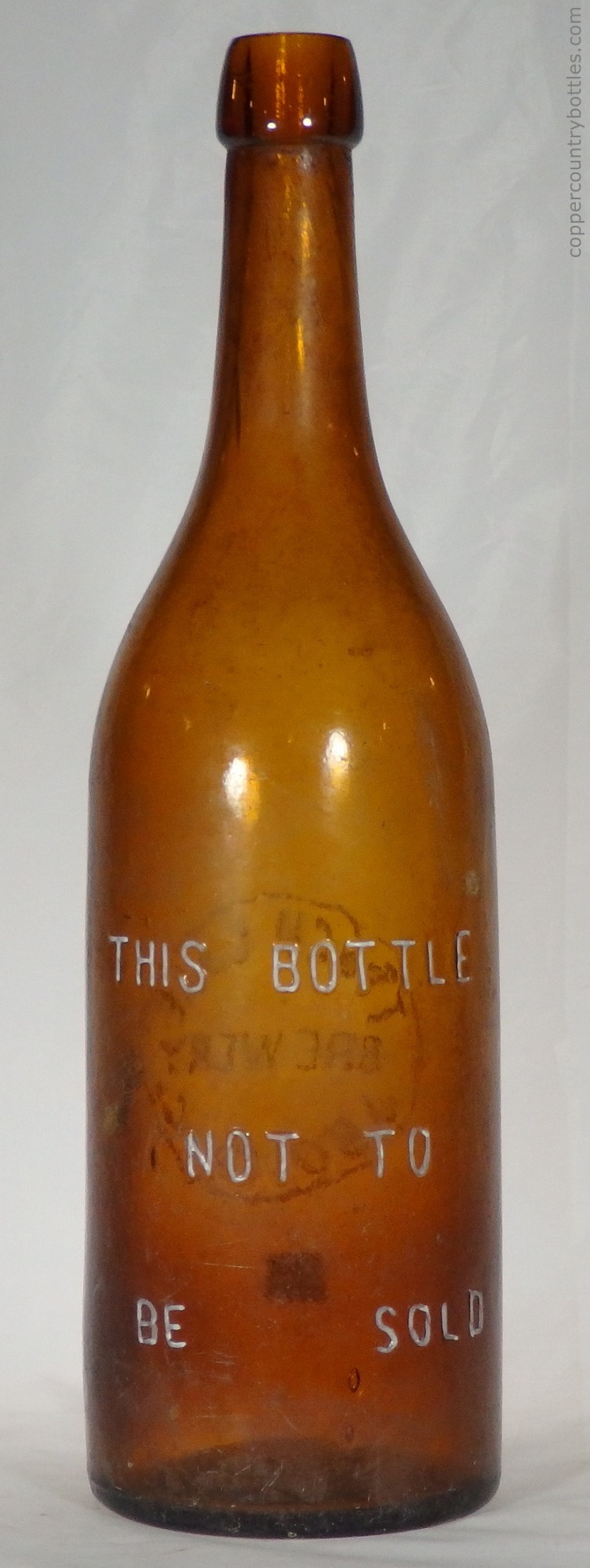
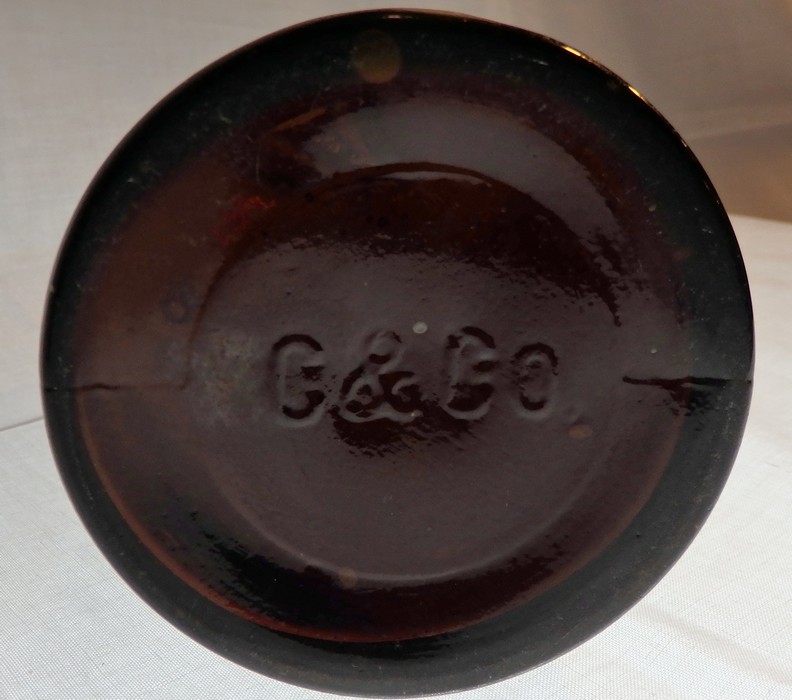
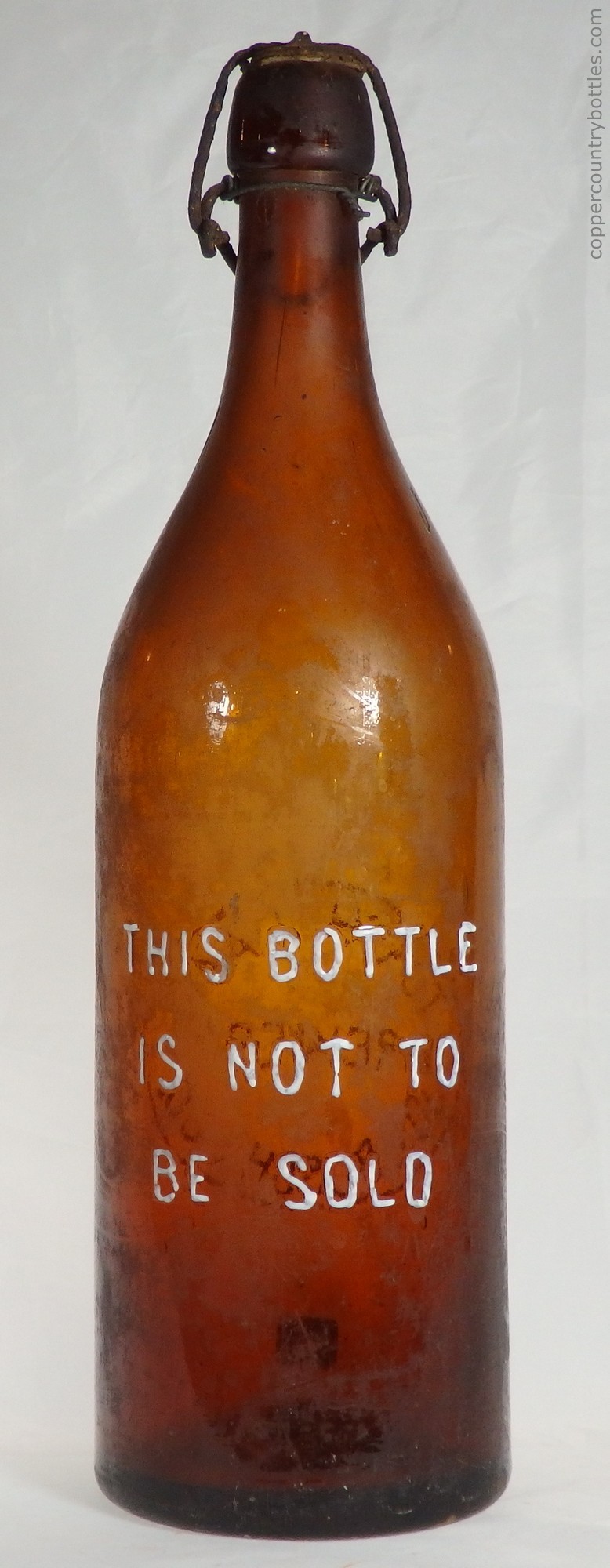
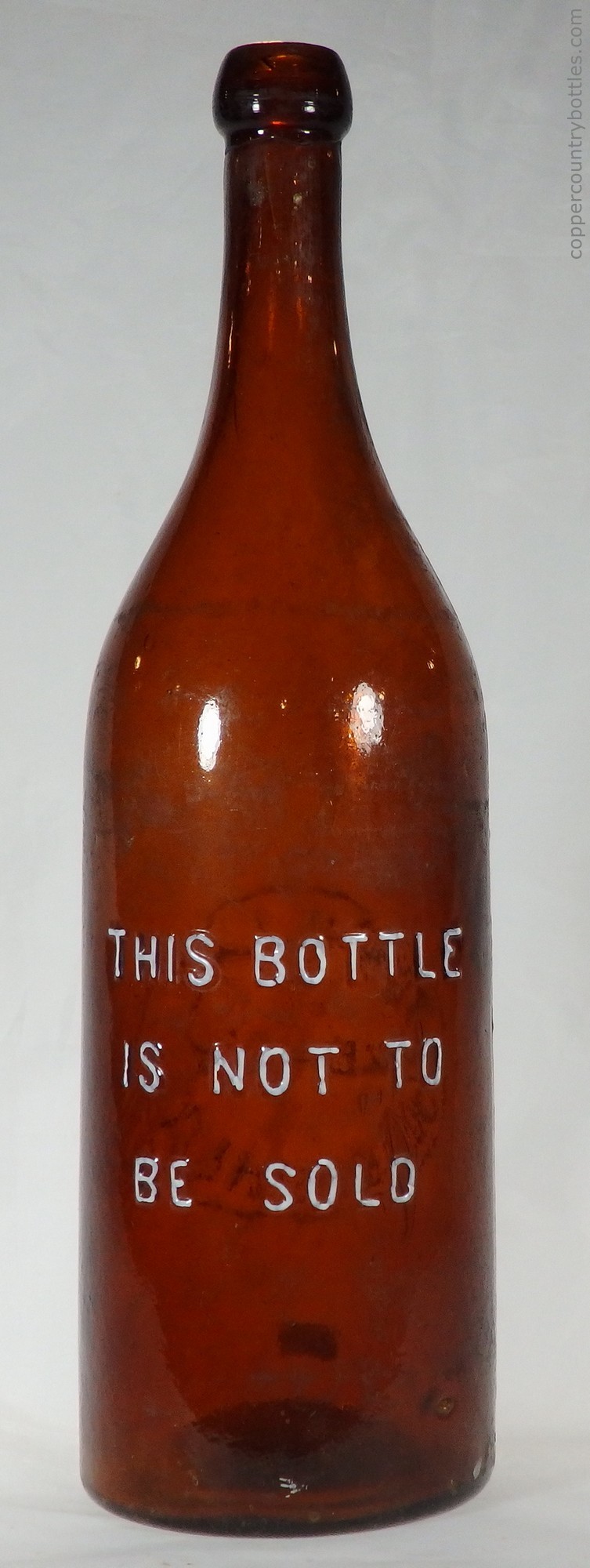
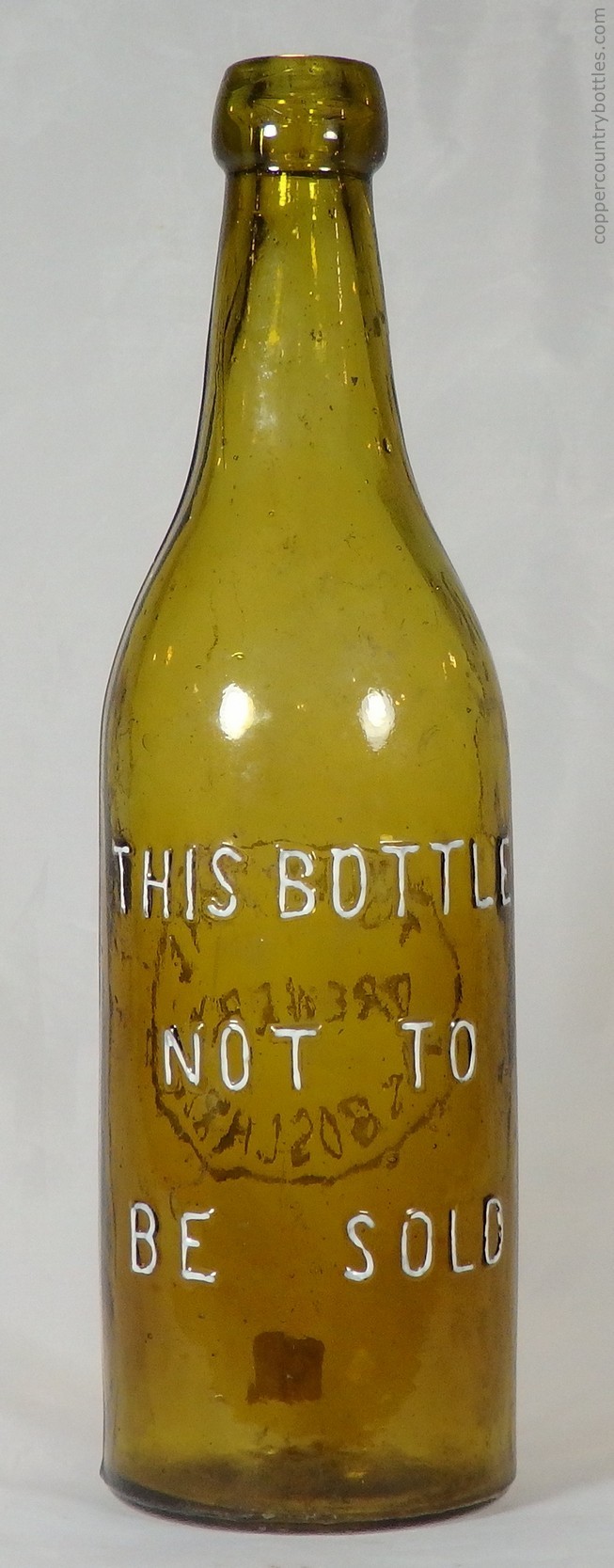
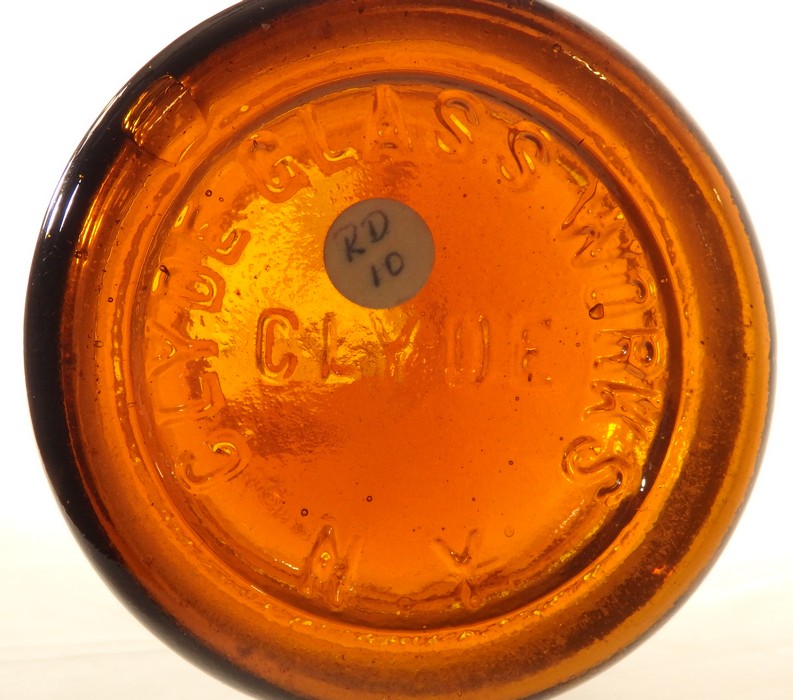
color: amber
top: lightning stopper - applied
base: post-bottom
maker's mark: C & Co. (base)
other marks: THIS BOTTLE NOT TO BE SOLD (back)
date: 1878 to early 1880s
rarity: extremely rare
- same plate for 1, 1a, s2
- mold has short body compared to 2 (see comparison)

color: aqua
top: lightning stopper - applied
base: post-bottom
maker's mark: C & I (base)
other marks: [none]
date: c. 1878
rarity: extremely rare
- different plate
- narrower space between H in BOSCH and &
- "." after Co below lower margin of Y in BREWERY
- same plate for s1 and 2
- mold has tall body compared to 1 (see comparison)
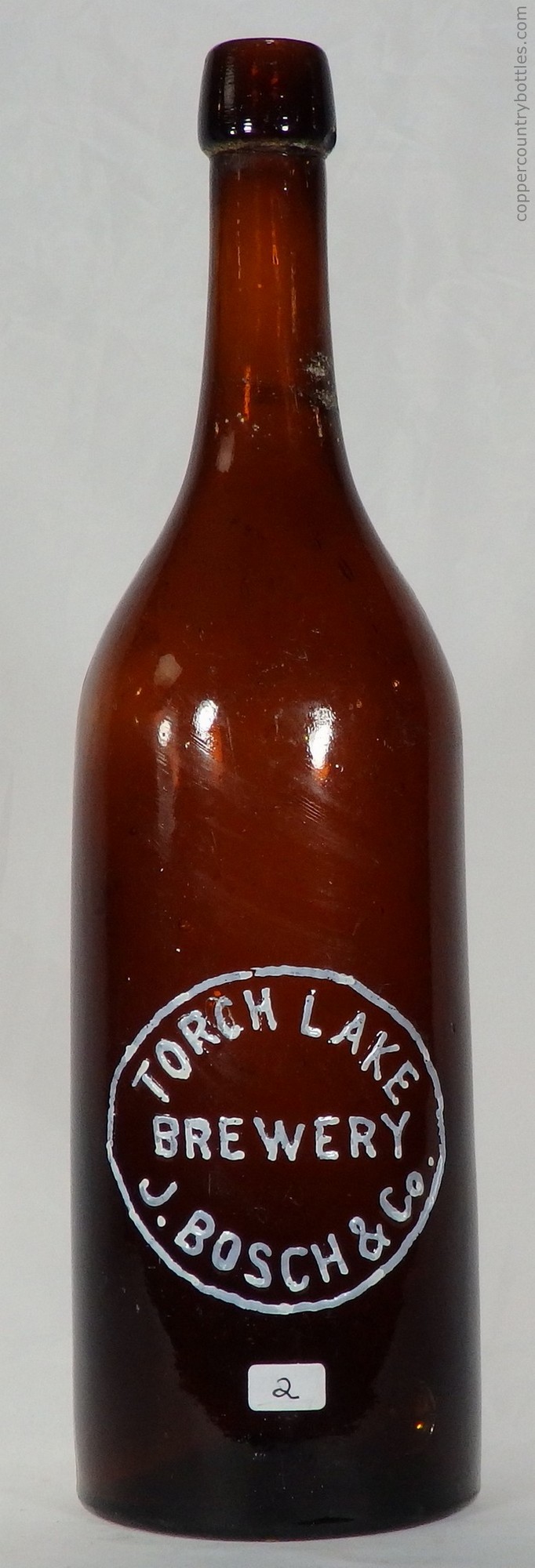
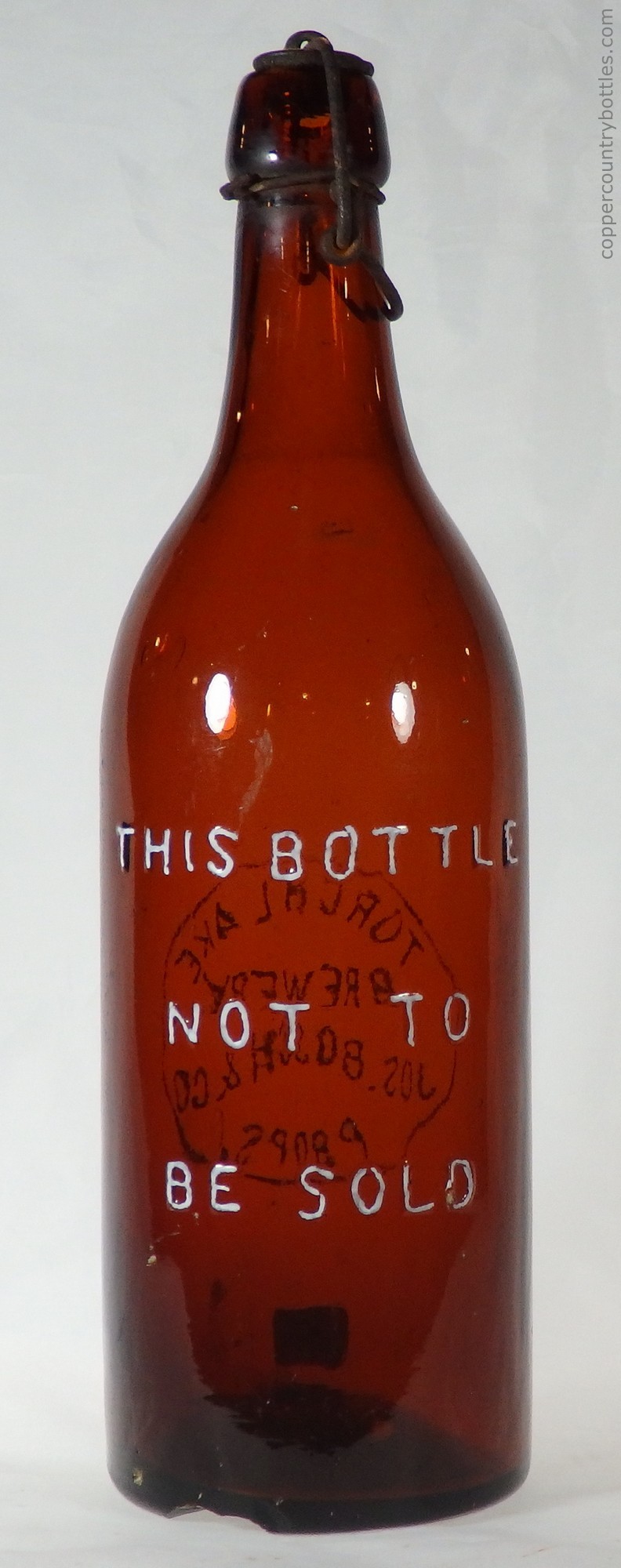
color: amber
top: lightning stopper - applied
base: post-bottom
maker's mark: C & Co. (base)
other marks: [none]
date: 1878 to early 1880s
rarity: extremely rare
- same plate for s1 and 2
- mold has tall body
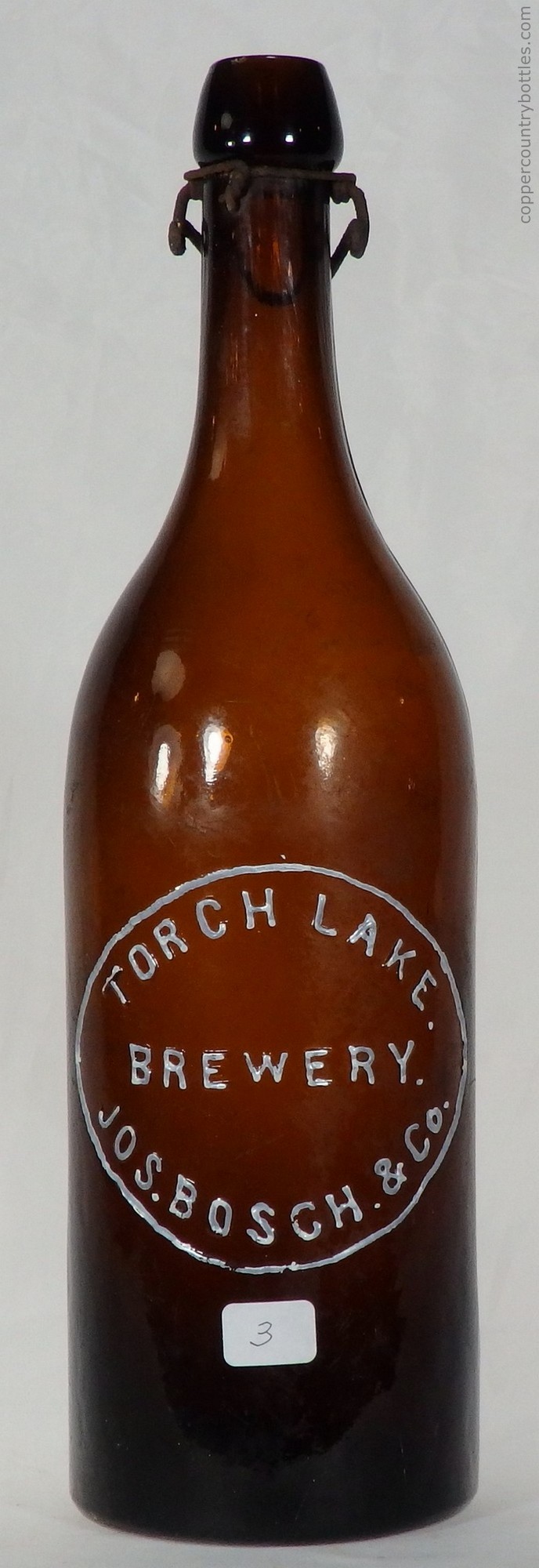
color: amber
top: lightning stopper - applied
base: post-bottom
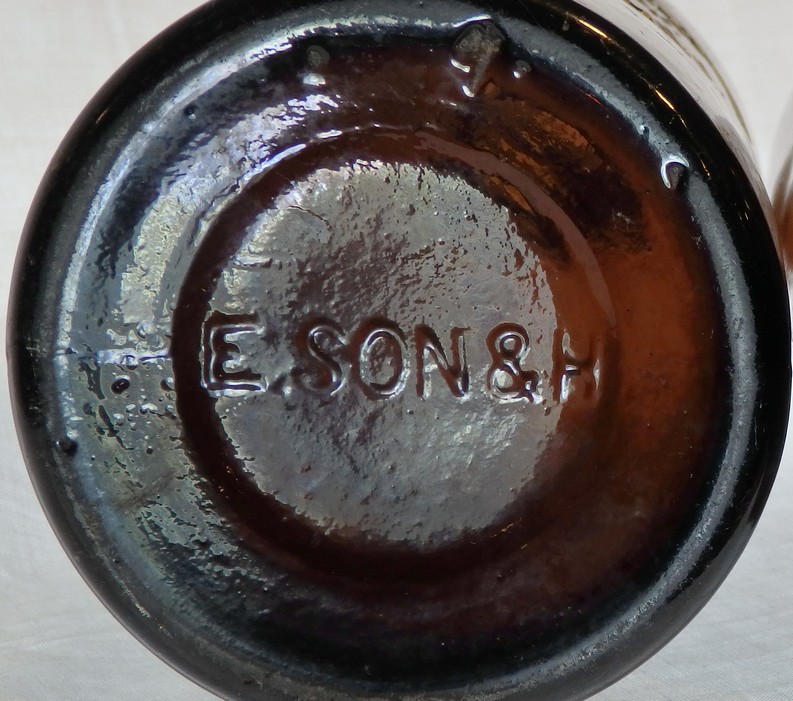
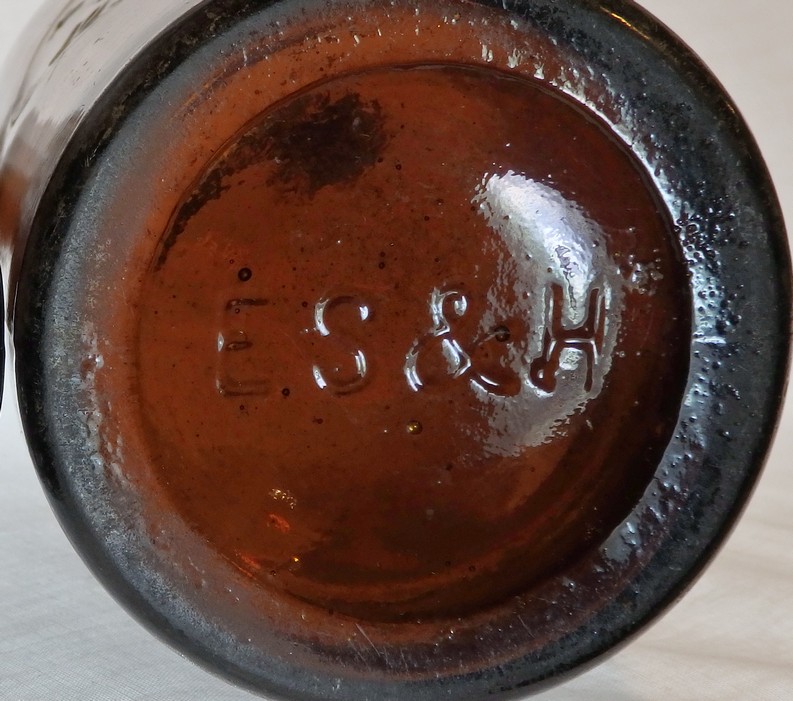
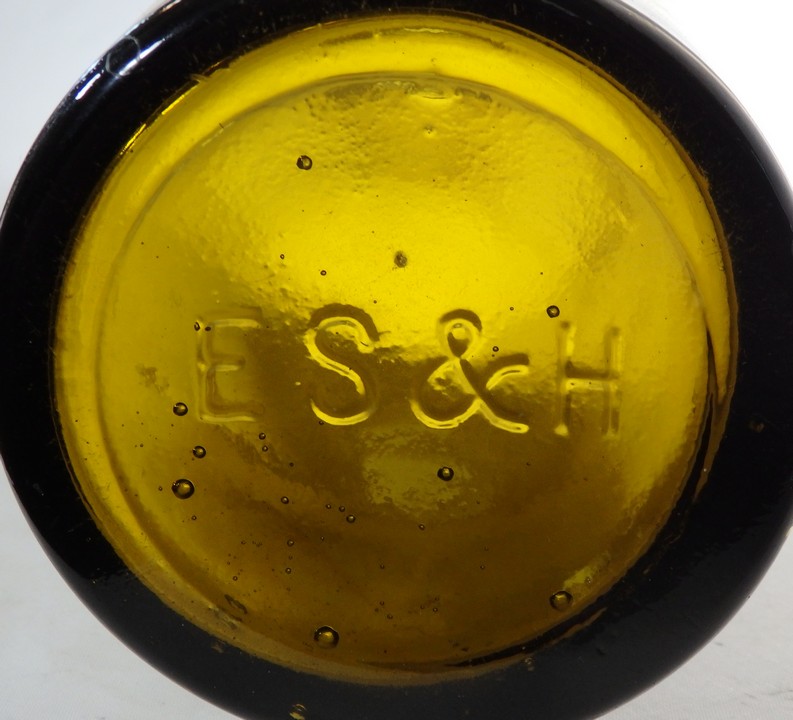
maker's mark: E. SON & H (base)
other marks: [none]
date: mid-1880s
rarity: extremely rare
- different plate
- larger plate with Joseph abbreviated as JOS.
- lowercase o in Co.
- punctuation after LAKE, BREWERY, and BOSCH
- mold has tall body
- same plate for 3, 3a, 3b, 3c
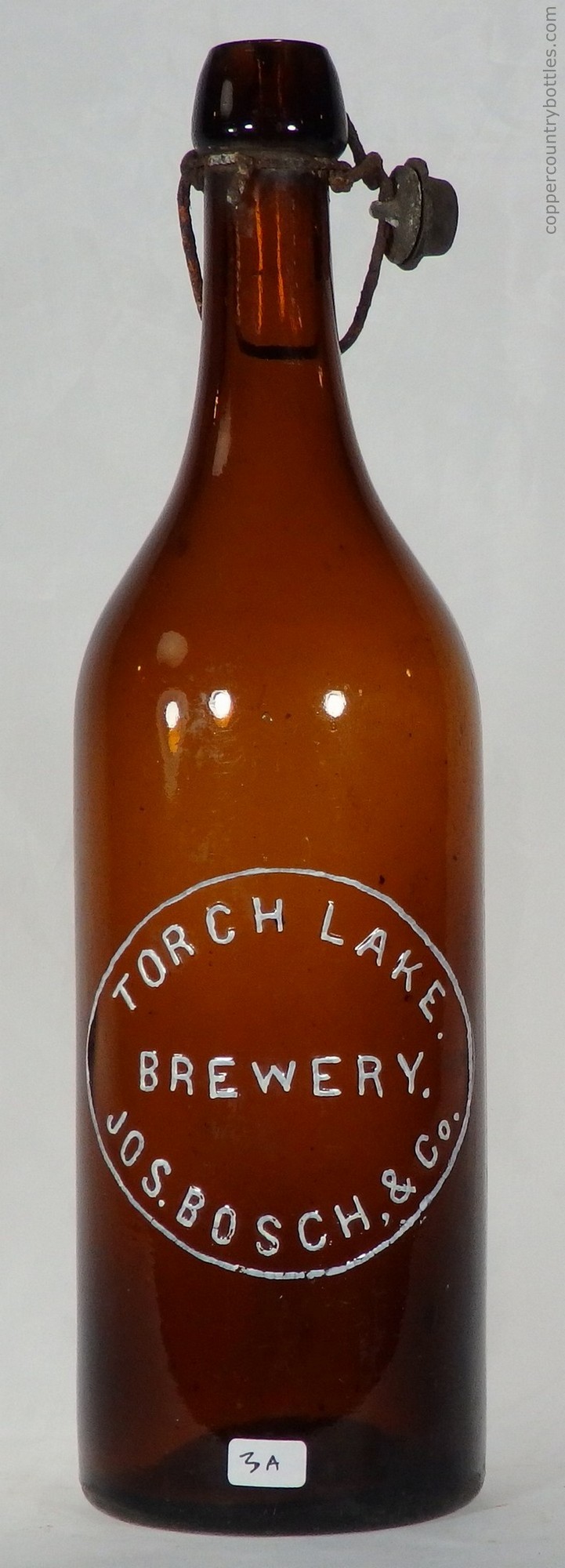
- same plate as 3 but "." after BOSCH was modified into ","
- plate slightly lower on mold
- different maker's mark
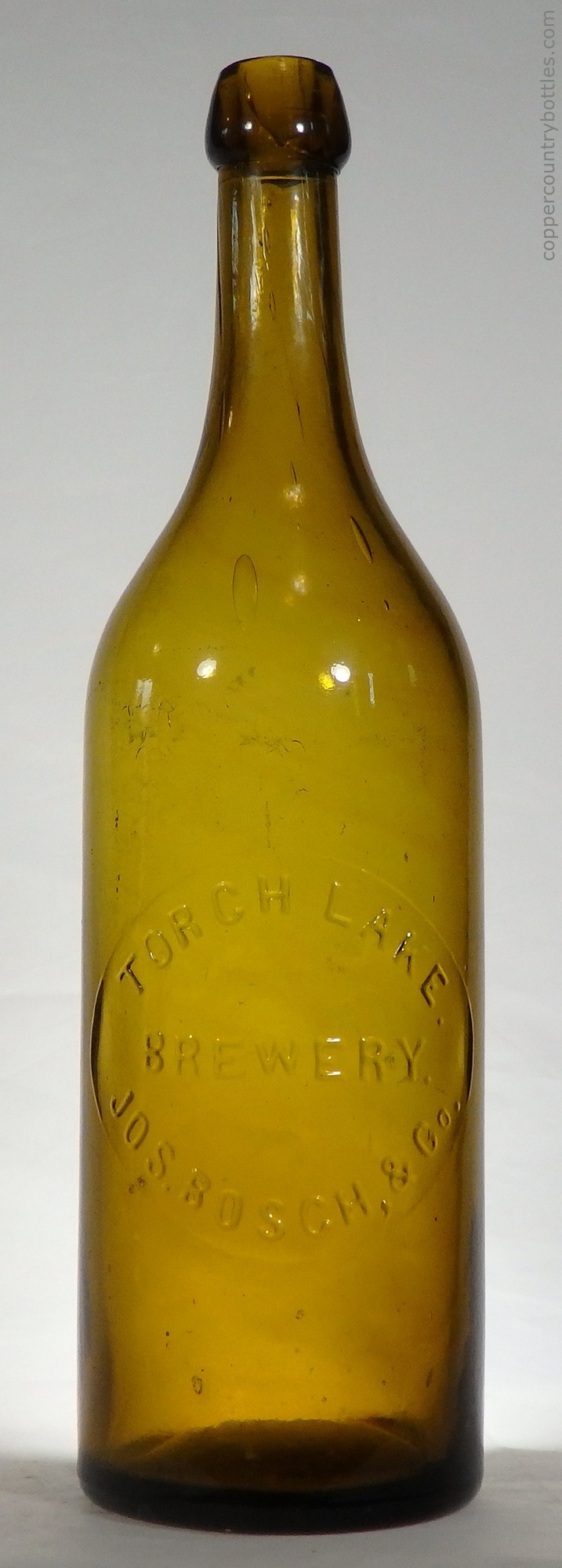
- same modified plate
- color variant of 3a
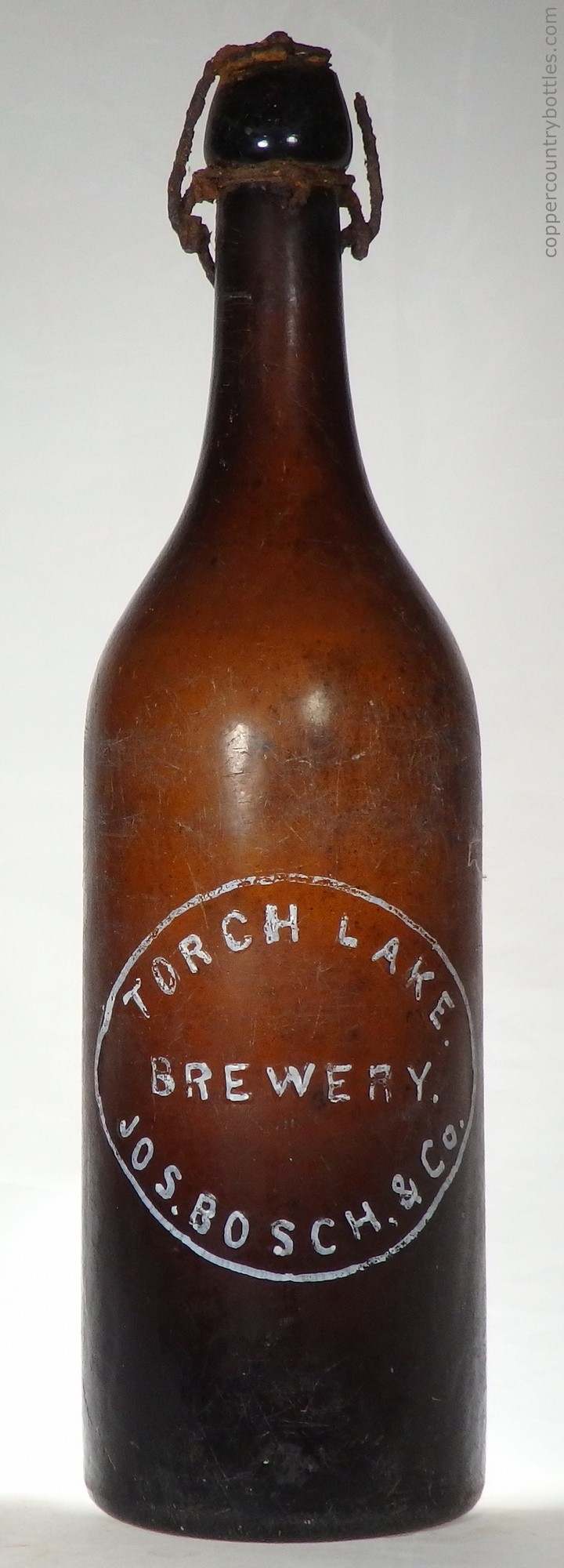
- same modified plate
- generic mark on back
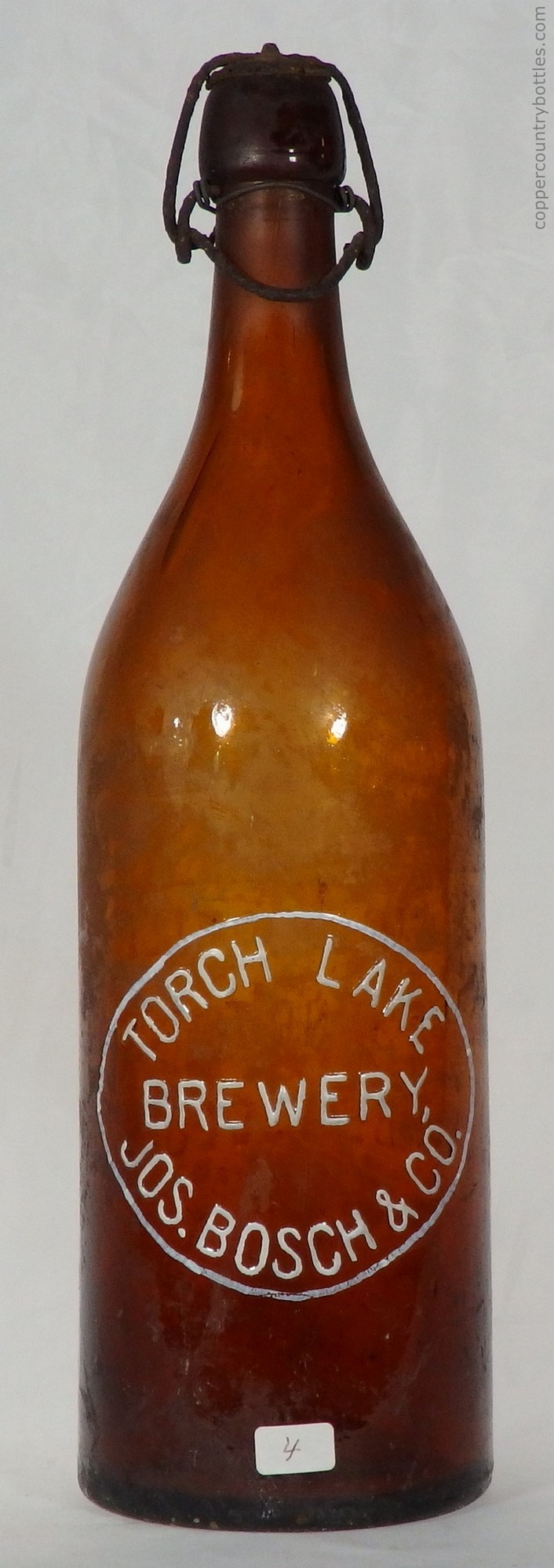
color: amber
top: lightning stopper - applied
base: post-bottom
maker's mark: [none]
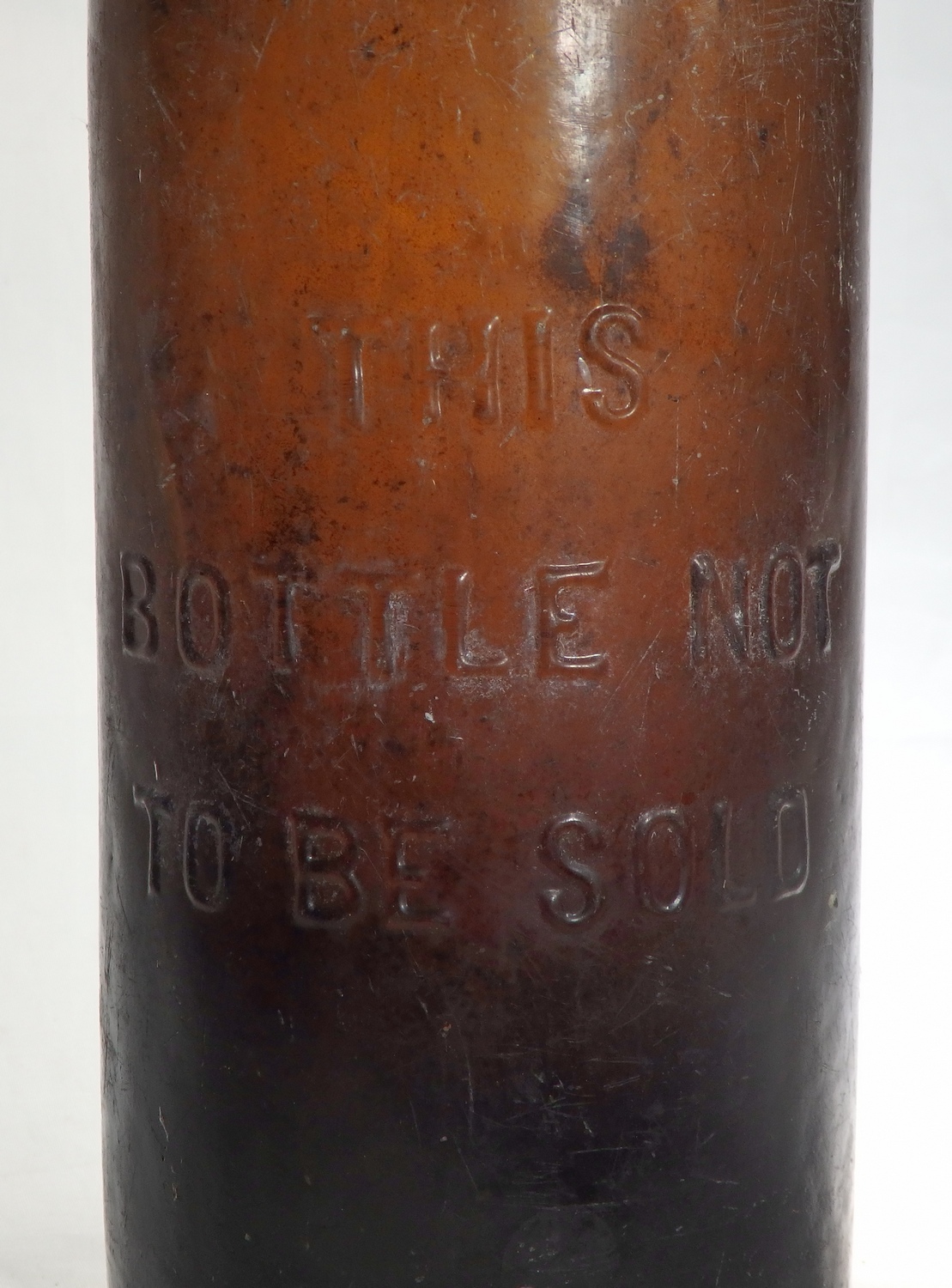
other marks: THIS BOTTLE IS NOT TO BE SOLD (back)
date: late 1880s
rarity: rare
- different plate from 3
- uppercase O in CO.
- "," after BREWERY
- same plate for 4, 7, and 7a
- mold has a tall body
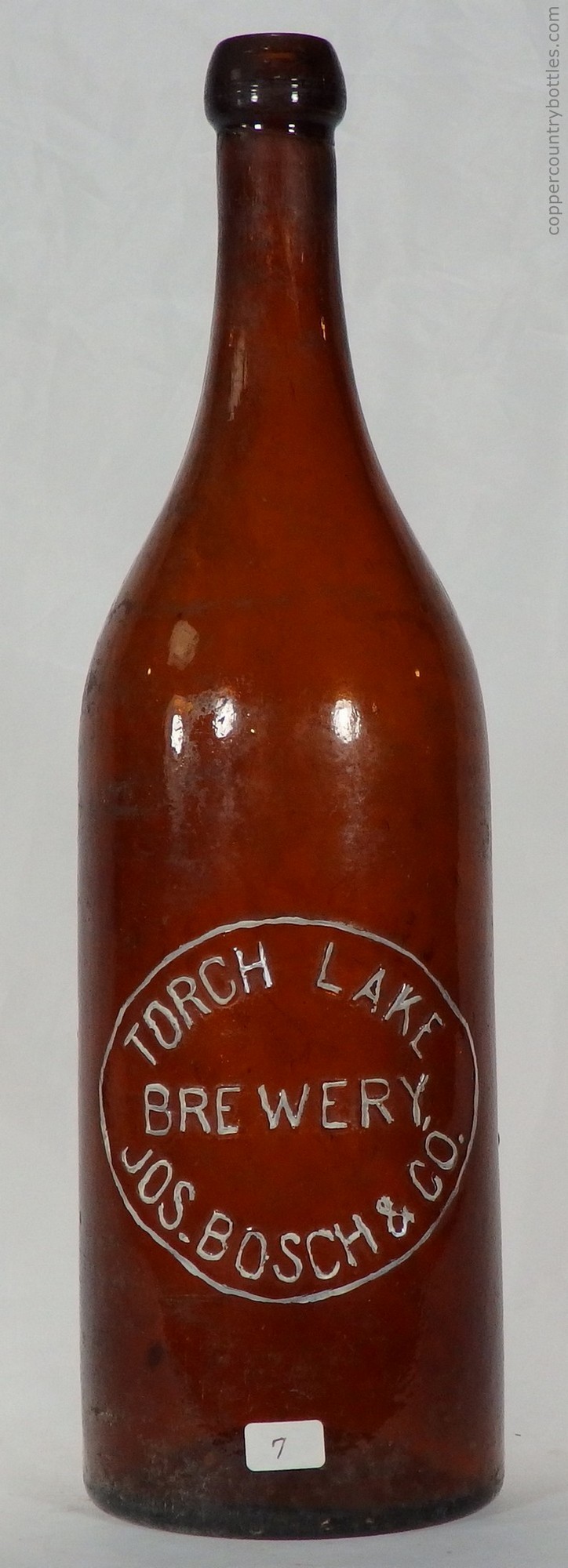
color: amber
top: Baltimore loop seal - applied
base: post-bottom
maker's mark: [none]
other marks: THIS BOTTLE IS NOT TO BE SOLD (back)
date: late 1880s
rarity: rare
- same plate for 4, 7, and 7a
- different top from 4
- mold has tall body
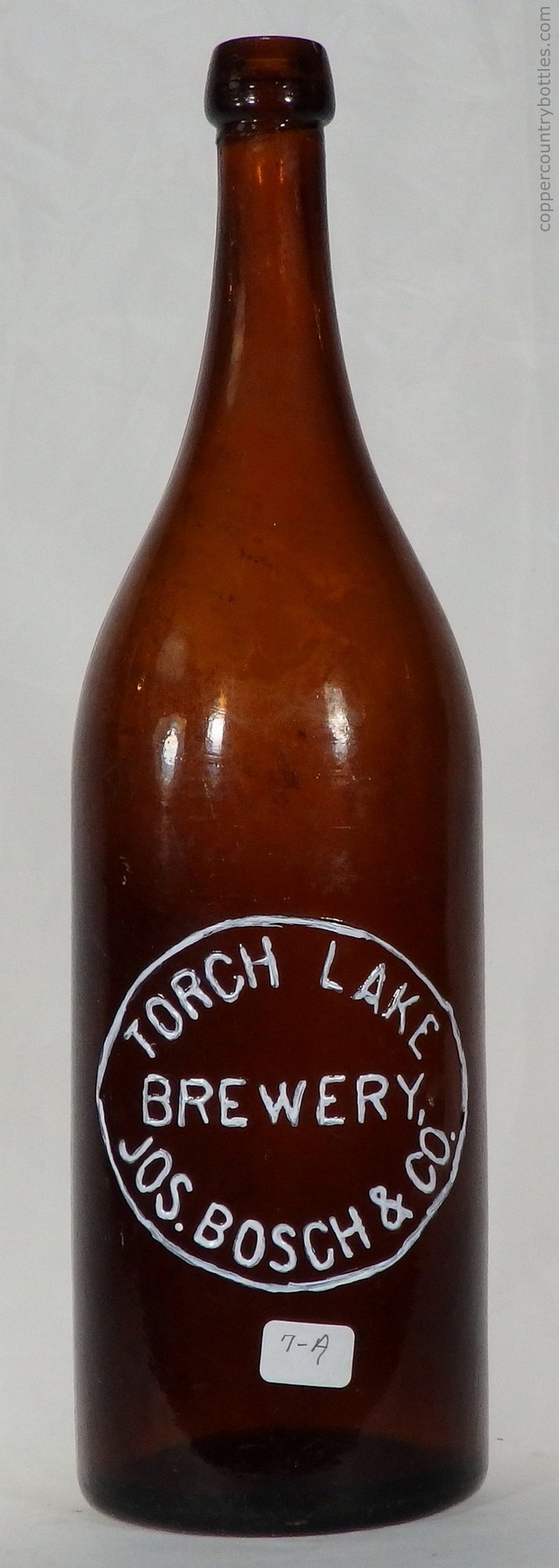
other marks: [none]
rarity: rare
- same plate for 4, 7, and 7a
- no generic mark
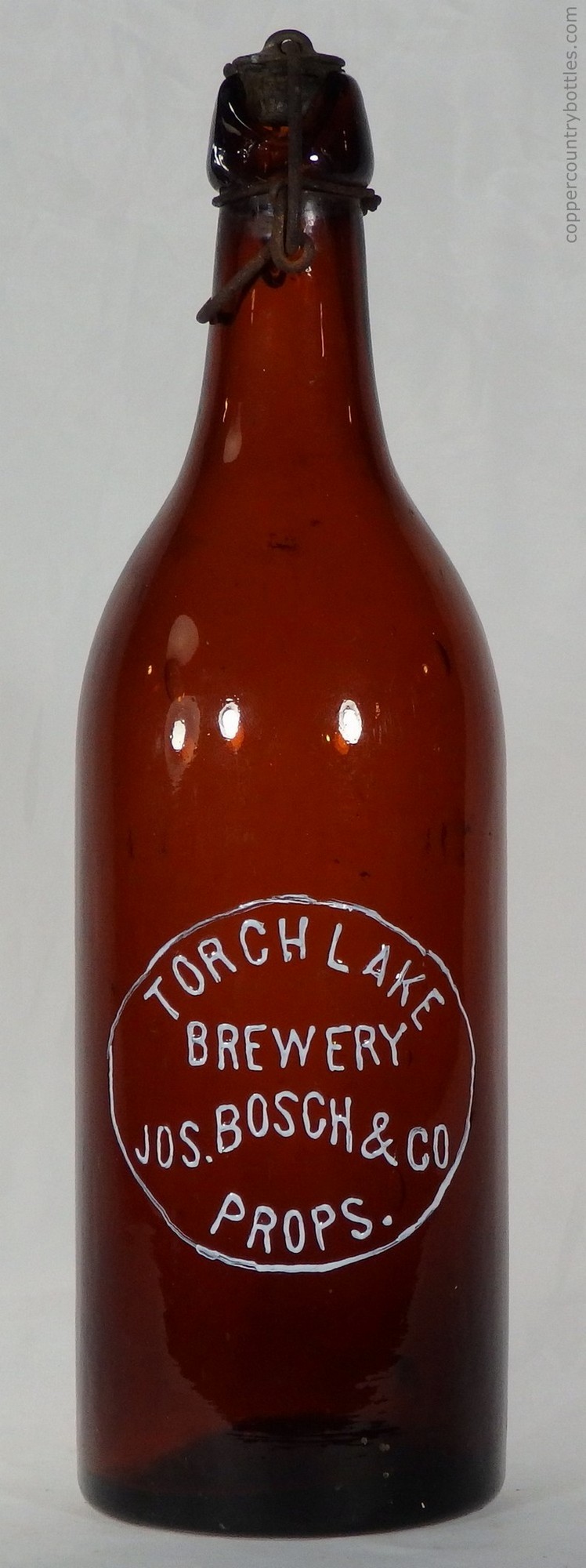
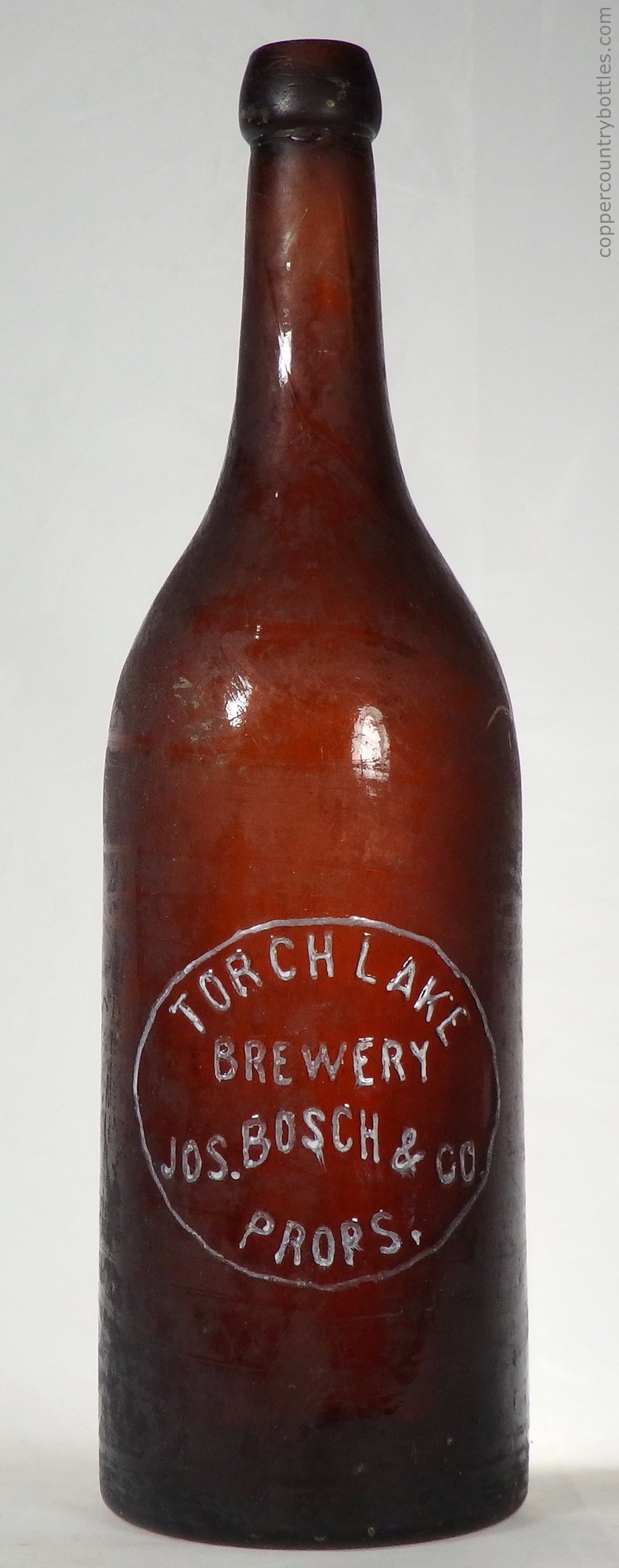
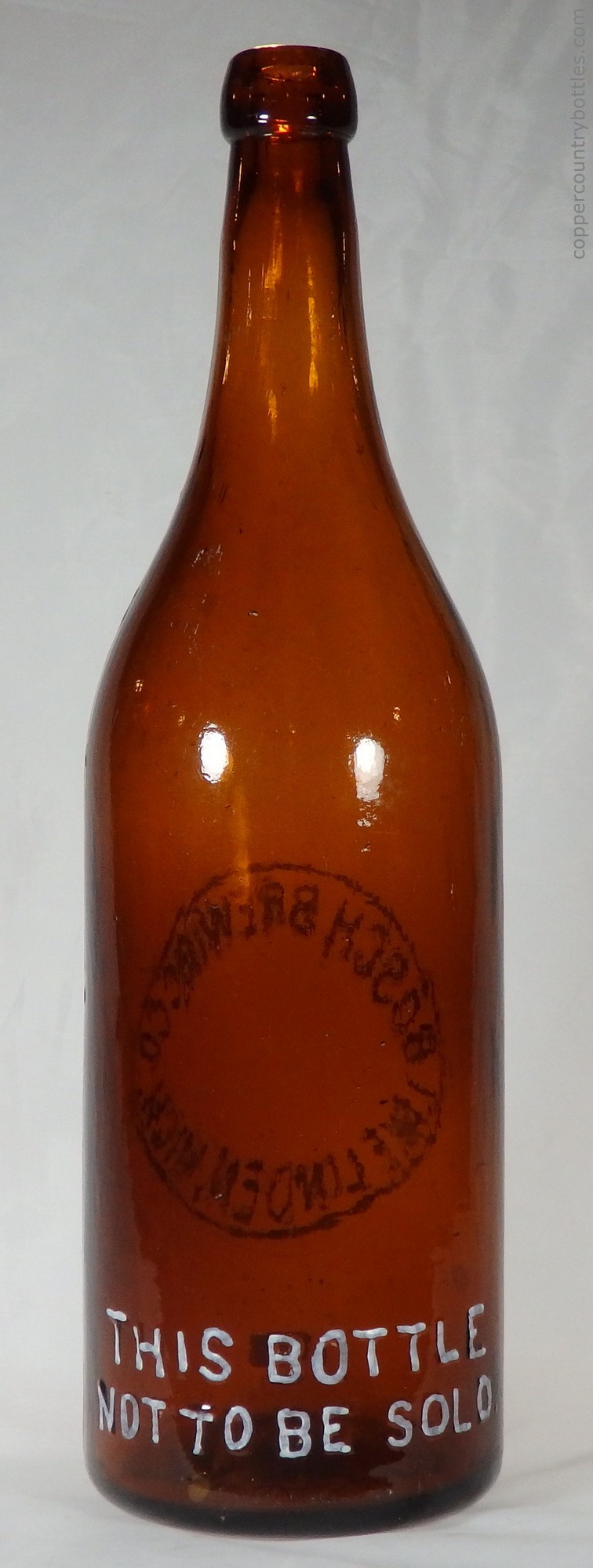
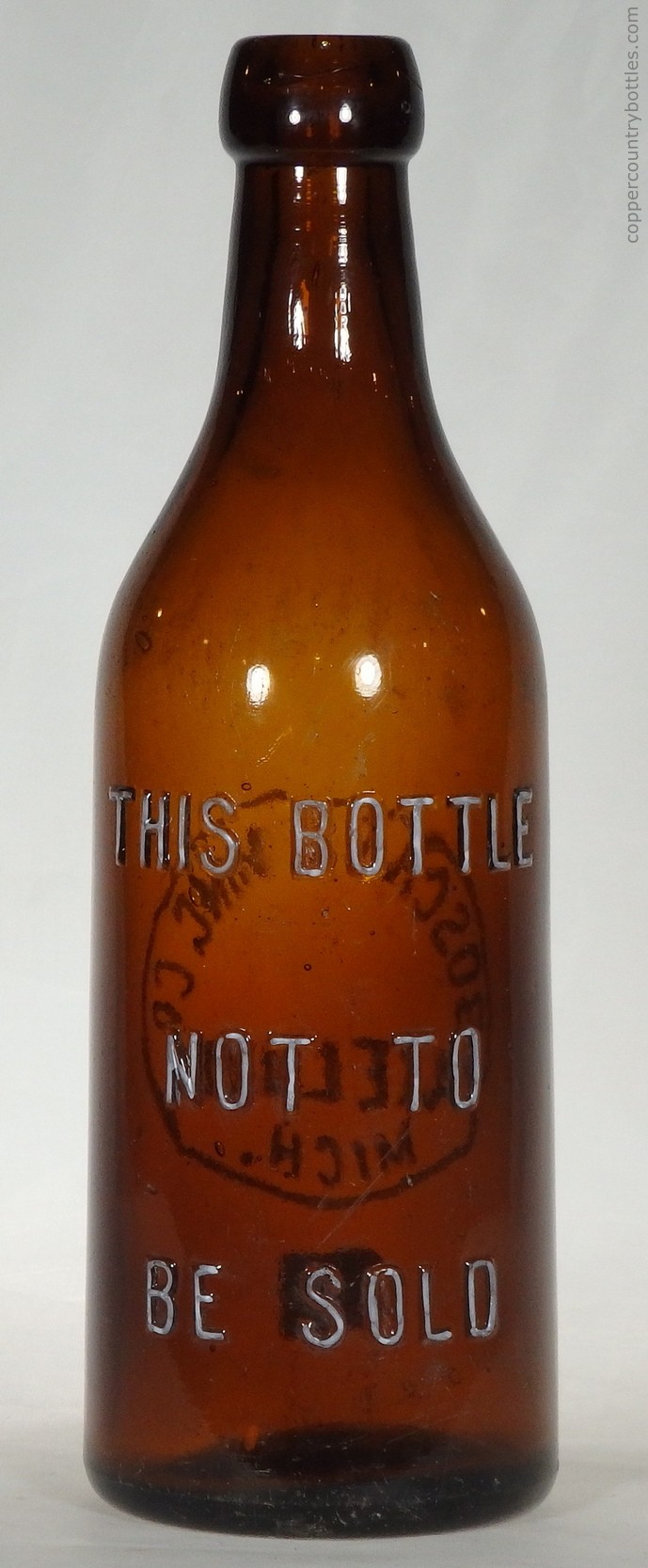
color: amber
top: lightning stopper - applied
base: cup-bottom
maker's mark: [none]
other marks: THIS BOTTLE NOT TO BE SOLD (back)
date: late 1880s
rarity: extremely rare
- different plate design
- same plate for 5, 6, and 6a
- mold has short body and short neck
- The book stated maker's mark of D S G Co.
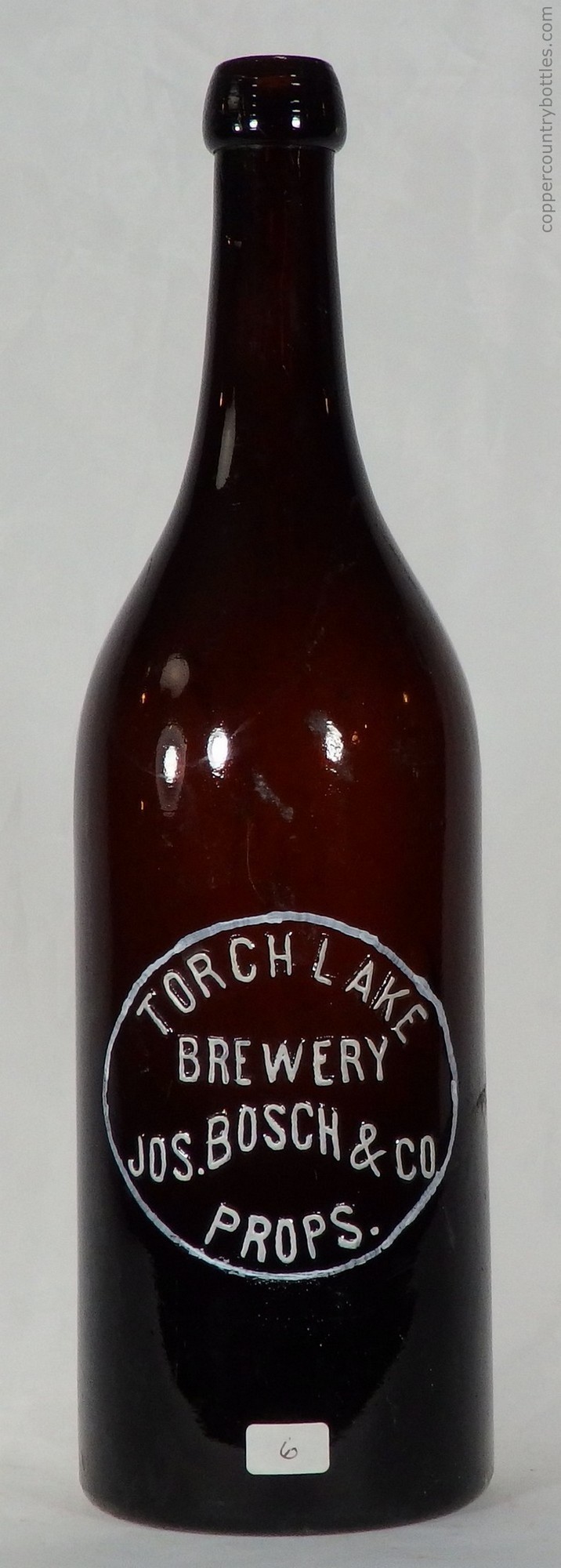
color: amber
top: Baltimore loop seal - applied
base: post-bottom
maker's mark: [none]
other marks: [none]
date: late 1880s
rarity: rare
- same plate for 5, 6, and 6a
- different top and mold from 5
- same plate for 5, 6, and 6a
- includes generic mark on back
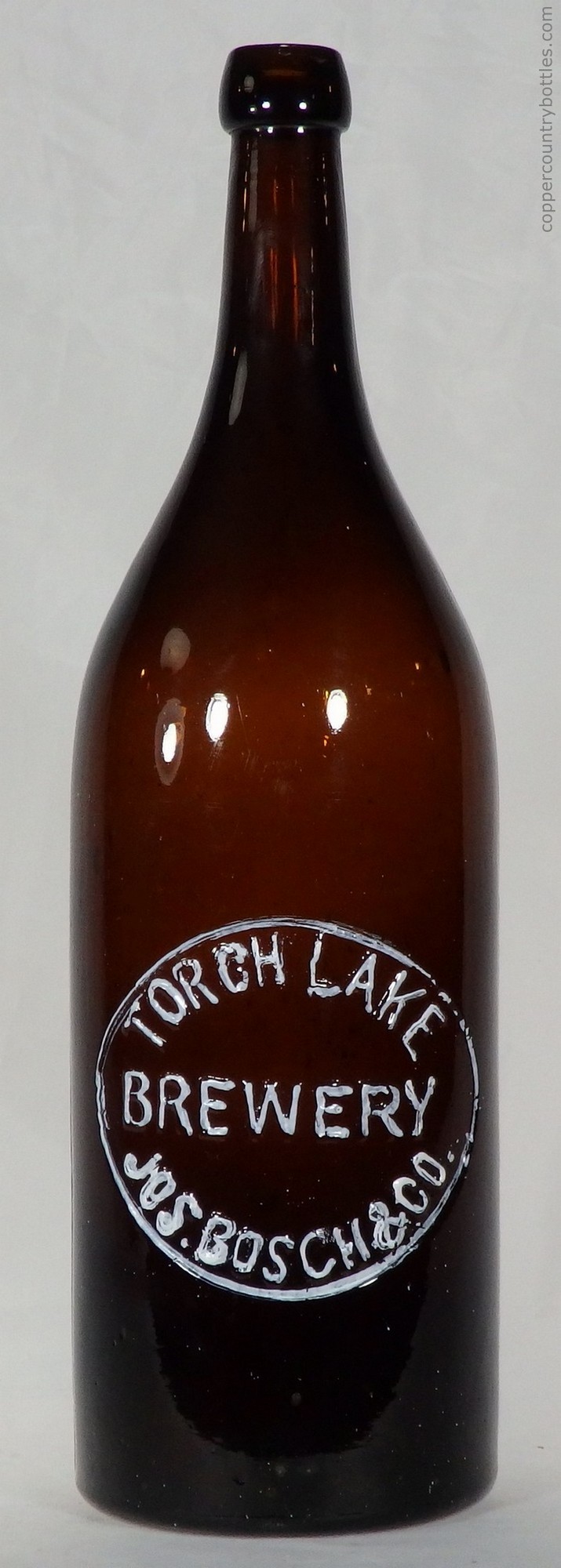
color: amber
top: Baltimore loop seal - tooled
base: post-bottom
maker's mark: [none]
other marks: [none]
date: early 1890s
rarity: rare
- different plate from 7
- no "," after BREWERY
- BREWERY closer to left edge of plate
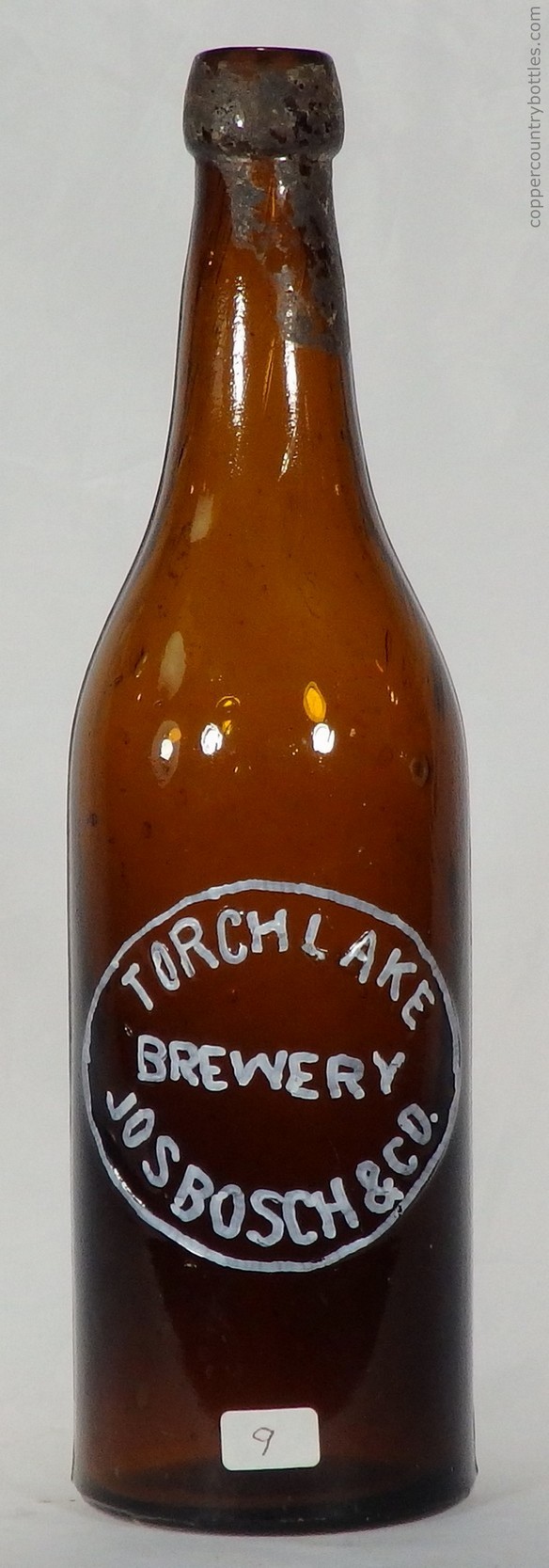
color: amber
top: Baltimore loop seal - tooled
base: cup-bottom
maker's mark: C. C. G. Co. (base)
other marks: THIS BOTTLE NOT TO BE SOLD (back), W (base), 1 (base)
date: 1893–1894
rarity: rare
- pint-sized complement to 8
- no "." after JOS, BOSCH, or CO
- same plate for 9 and 9a
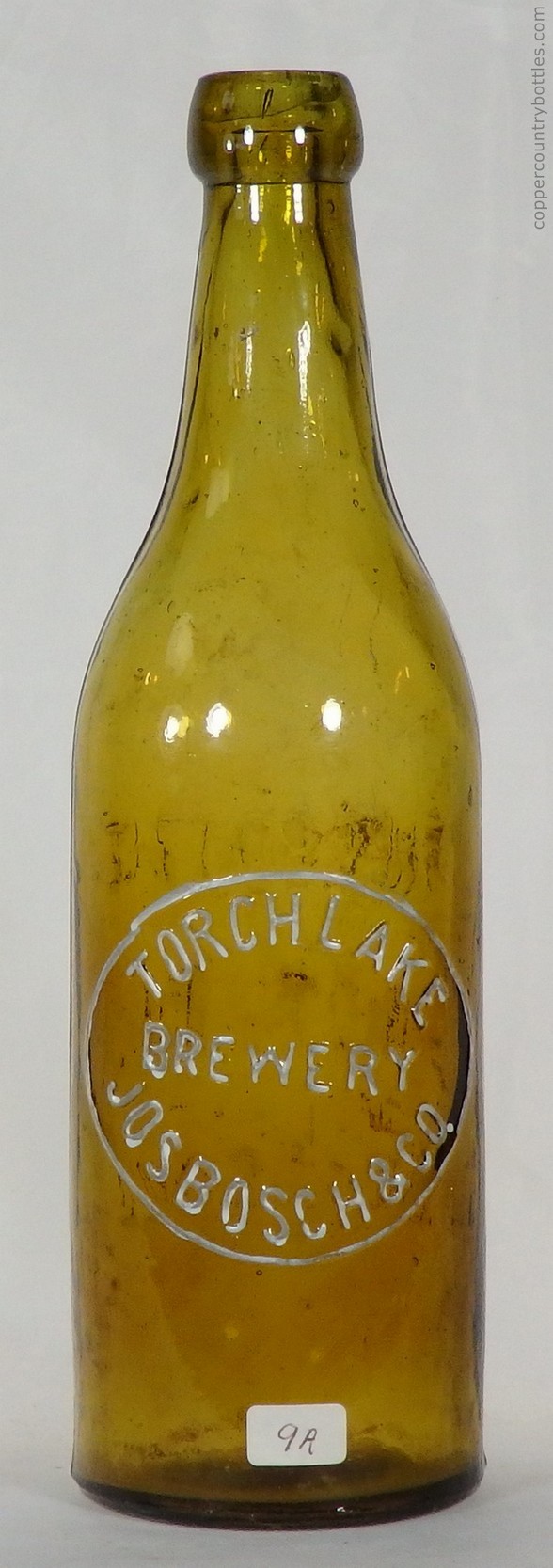
maker's mark: C. C. G. Co. (base)
other marks: THIS BOTTLE NOT TO BE SOLD (back), W (base), 1 (base)
rarity: extremely rare
- same plate for 9 and 9a
- color variant of 9
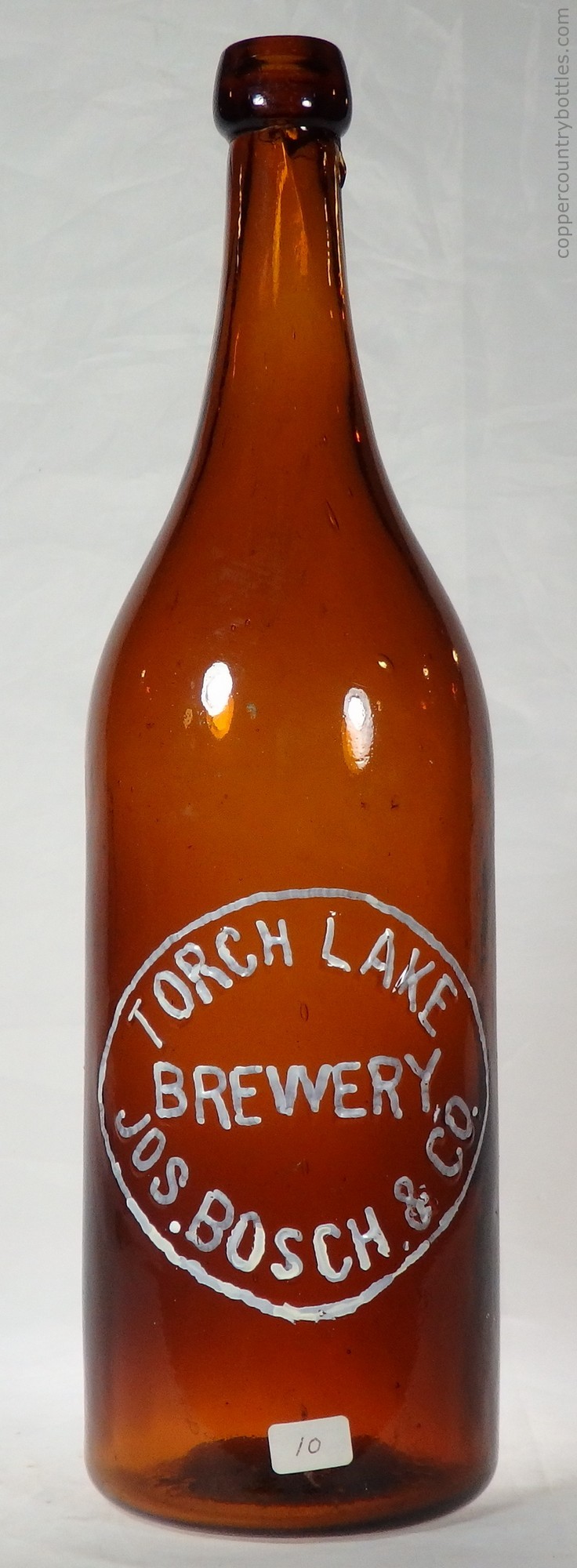
color: amber
top: Baltimore loop seal - applied
base: post-bottom
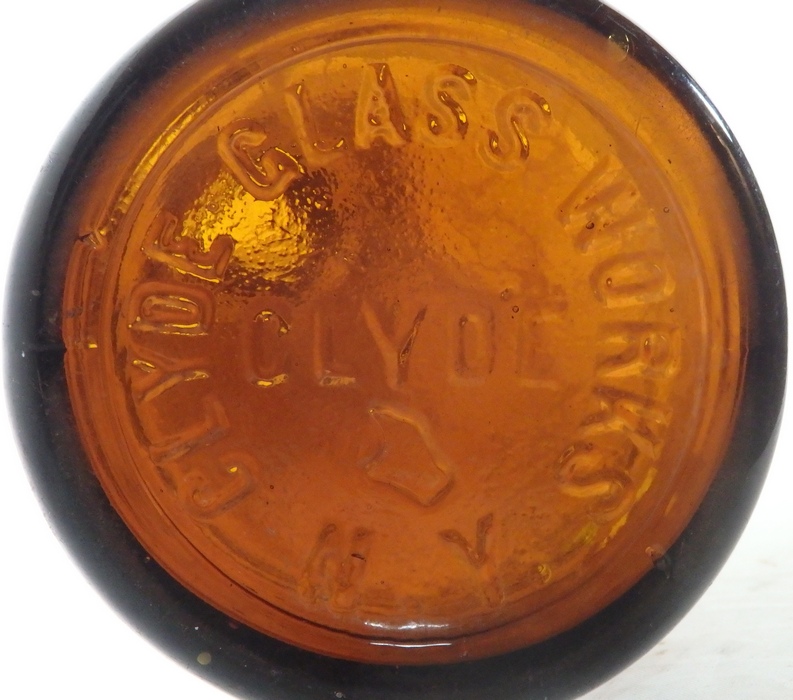
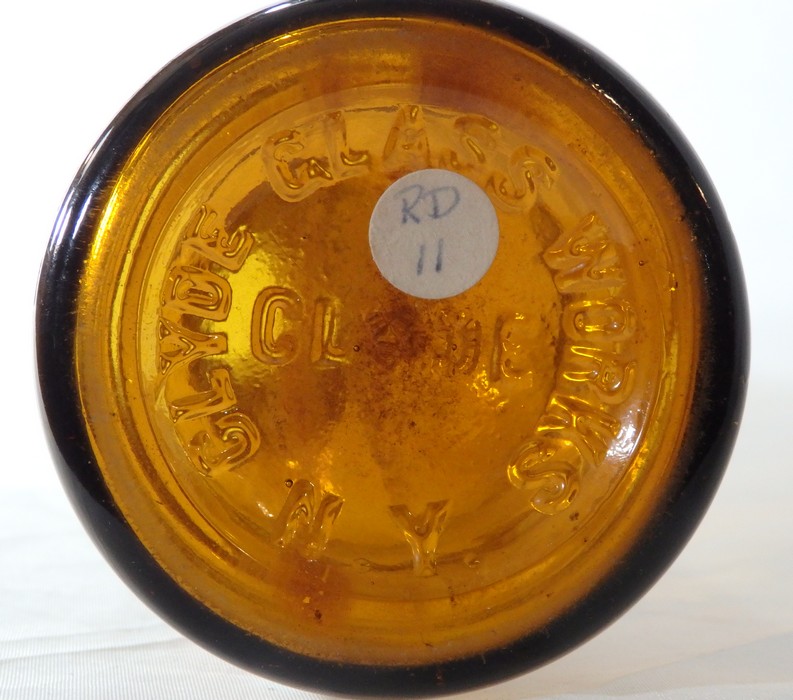
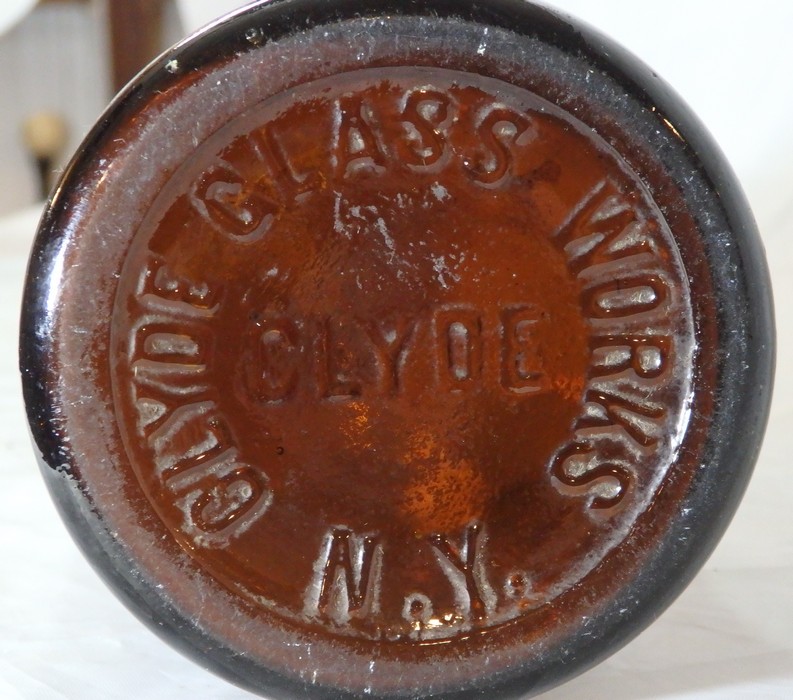
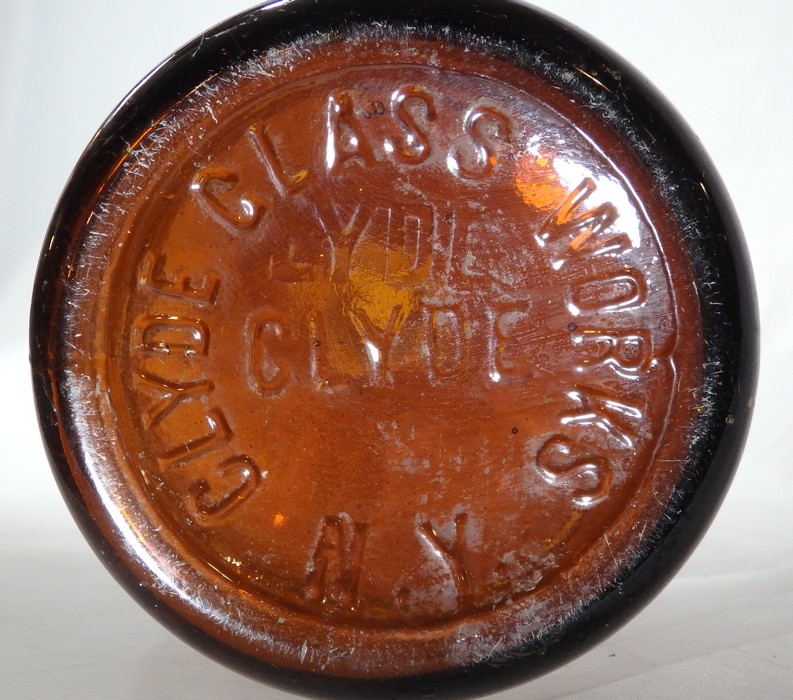
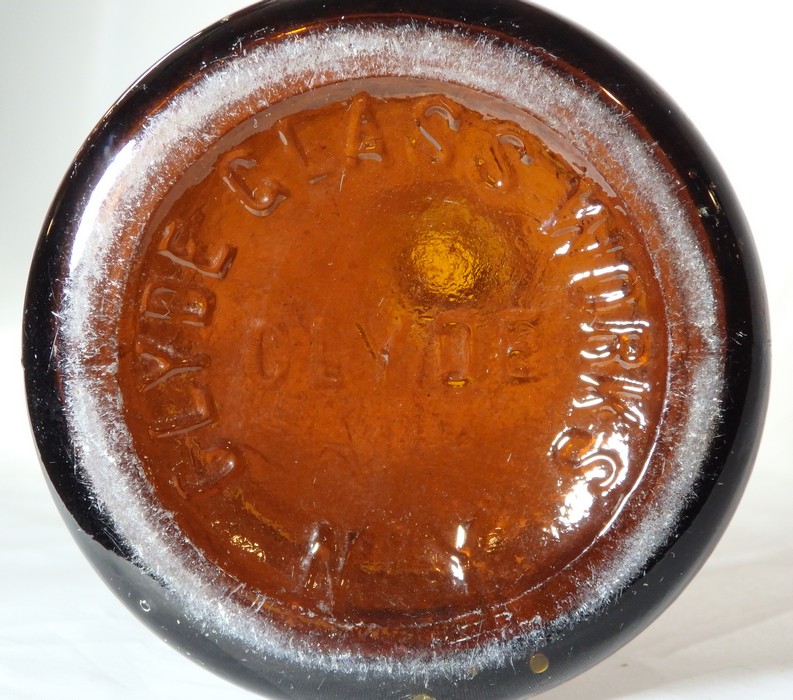
maker's mark: CLYDE GLASS WORKS CLYDE N.Y. (base)
other marks: [none]
date: 1895
rarity: scarce
- different plate from 8 and 7
- "," after BREWERY (like 7 but unlike 8)
- "." after BOSCH (unlike 7 or 8)
- top of J in JOS. in front of B in BREWERY (unlike 7 and 8)
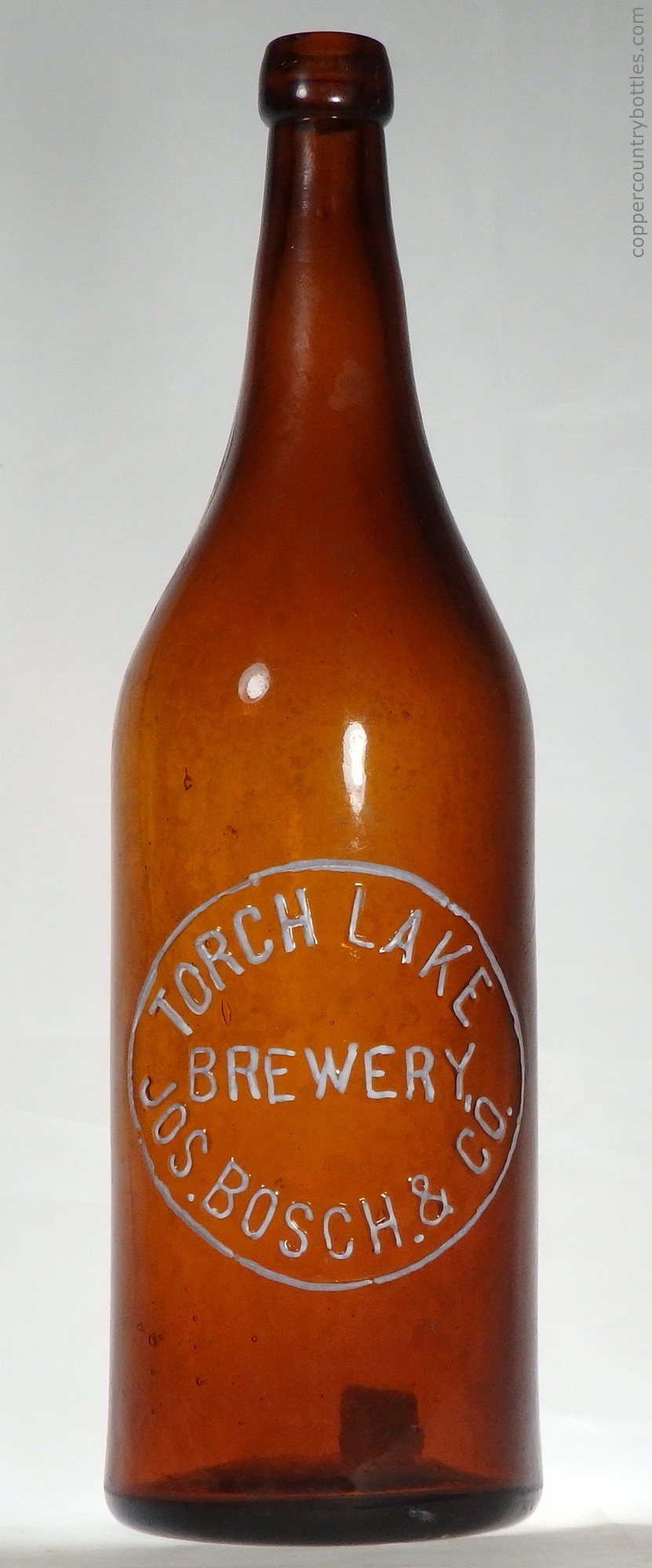
maker's mark: CLYDE GLASS WORKS CLYDE N.Y. (base)
other marks: [none]
rarity: scarce
- different plate from 10
- C in BOSCH at bottom of plate
- J in JOS. higher on plate

color: amber
top: Baltimore loop seal - applied
base: post-bottom
maker's mark: CLYDE GLASS WORKS CLYDE N.Y. (base)
other marks: [none]
date: 1895
rarity: rare
- pint-sized complement of 10
- different plate from 9
- "." after JOS, BOSCH, and CO

color: amber
top: Baltimore loop seal - tooled
base: post-bottom
maker's mark: CLYDE GLASS WORKS CLYDE N.Y. (base)
other marks: [none]
date: 1895 to c. 1897
rarity: scarce
- plate reflects change in company name
- same plate for 12, 12a, and 12b
- "." after BOSCH
- no generic marks
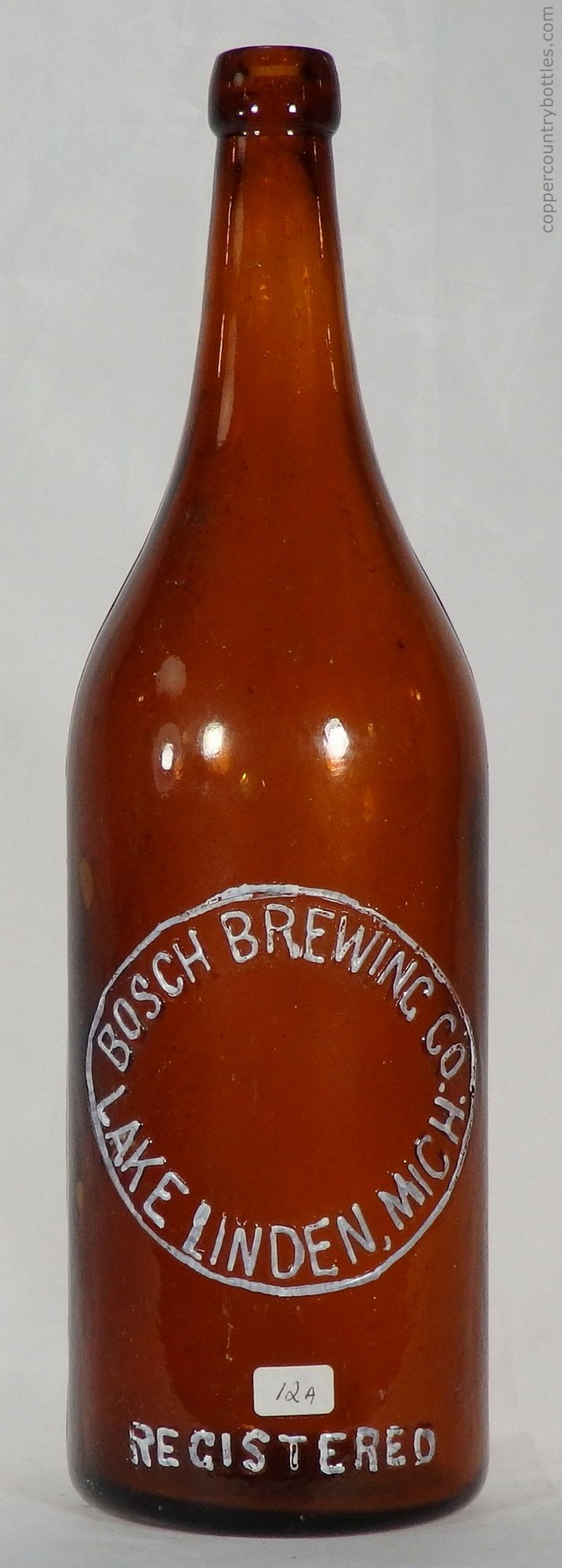
other marks: REGISTERED (lower front)
rarity: scarce
- same plate for 12, 12a, and 12b
- no "." after BOSCH
- generic mark on front
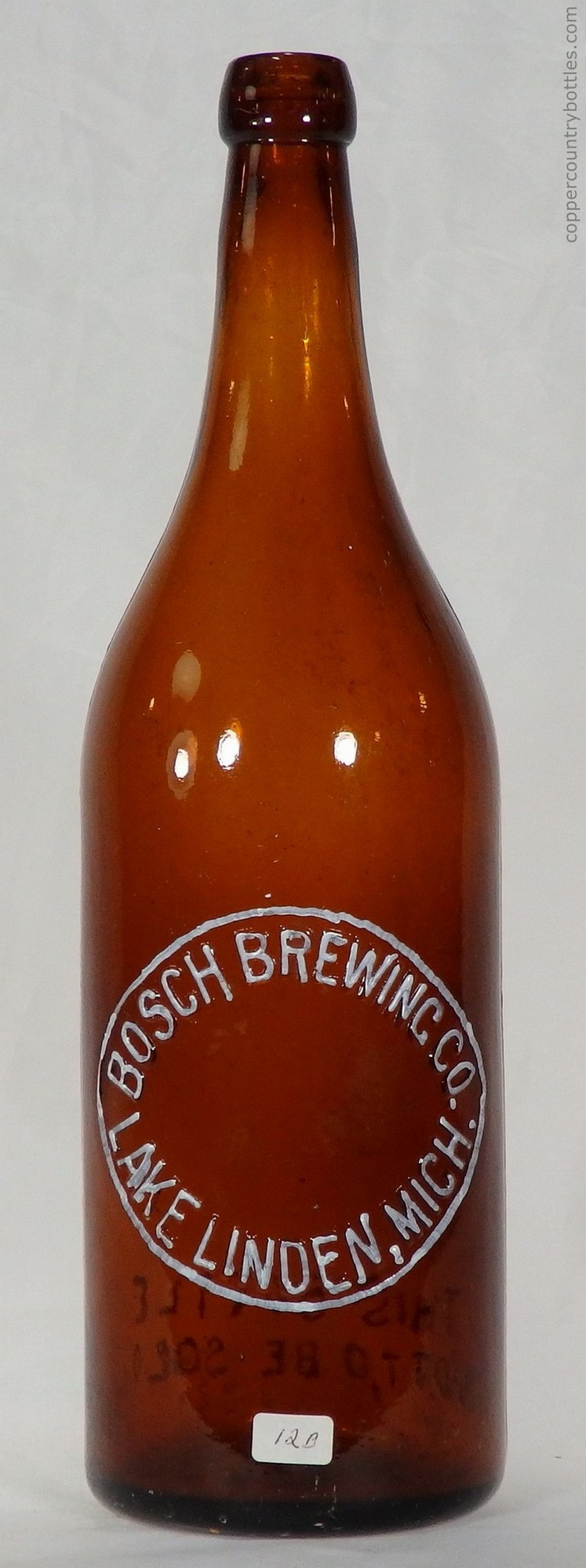
other marks: THIS BOTTLE NOT TO BE SOLD (lower back)
rarity: scarce
- same plate for 12, 12a, and 12b
- no "." after BOSCH
- generic mark on back
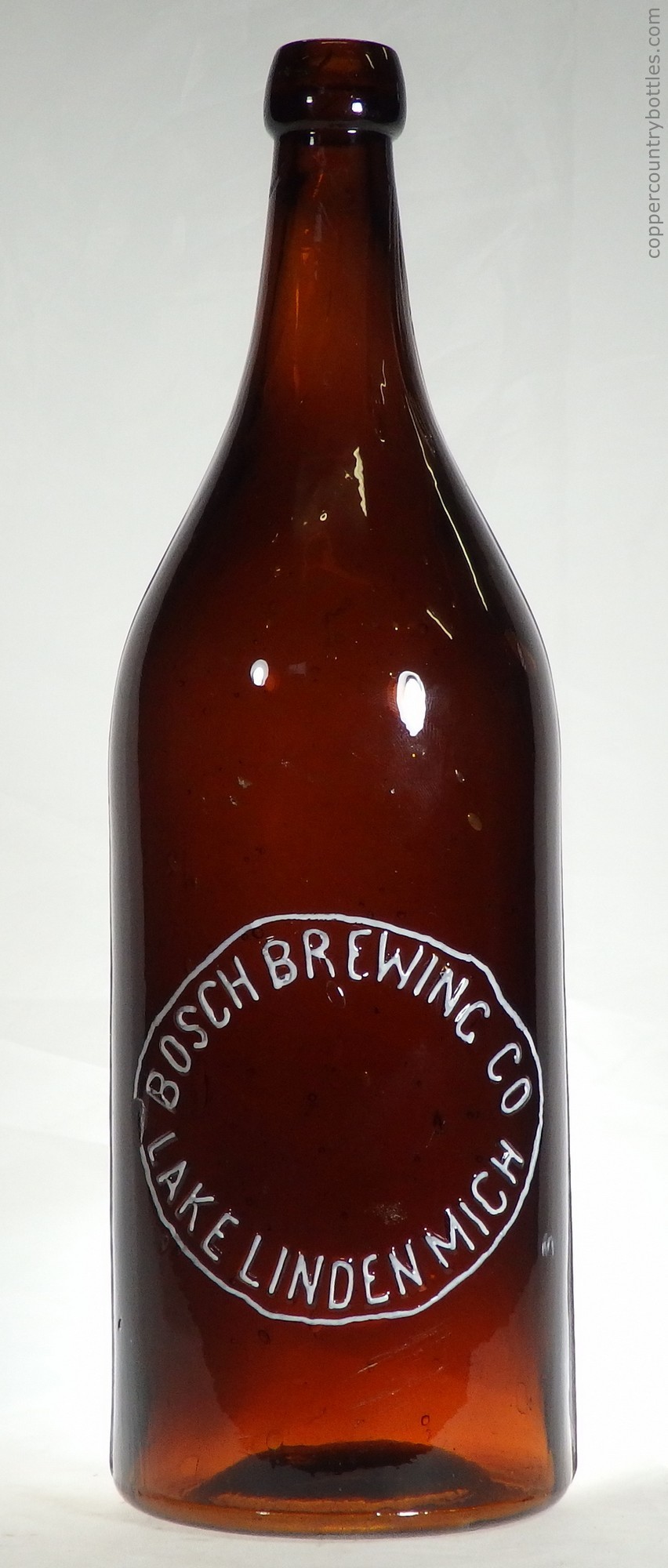
color: dark amber
top: Baltimore loop seal
base: post-bottom
maker's mark: [none]
other marks: [none]
date: 1895 to c. 1897
rarity: extremely rare
- different plate from 12
- no punctuation after CO, MICH, or LINDEN
- wider space between B in BOSCH and L in LINDEN
- plate lower on mold than 12
- no maker's mark
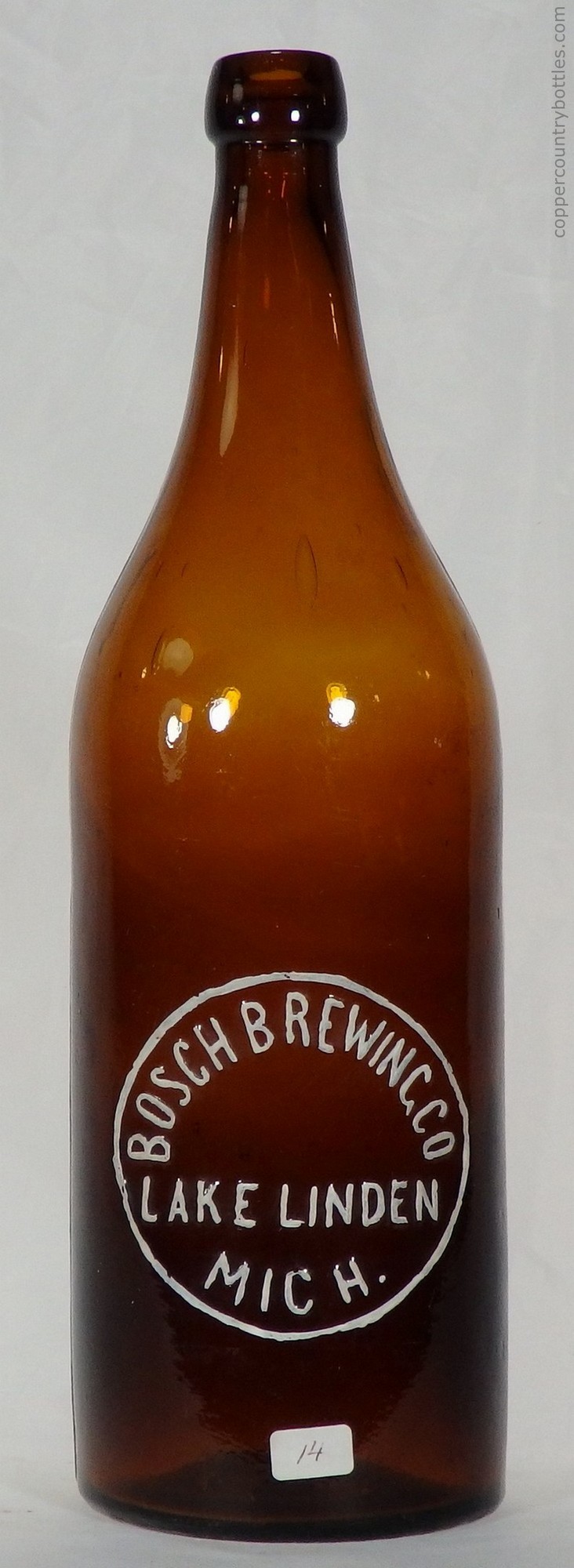
color: various shades of amber
top: Baltimore loop seal - tooled
base: post-bottom
maker's mark: [none]
other marks: [none]
date: c. 1897
rarity: scarce
- different plate design
- smaller plate size
- same plate for 14 and 14b
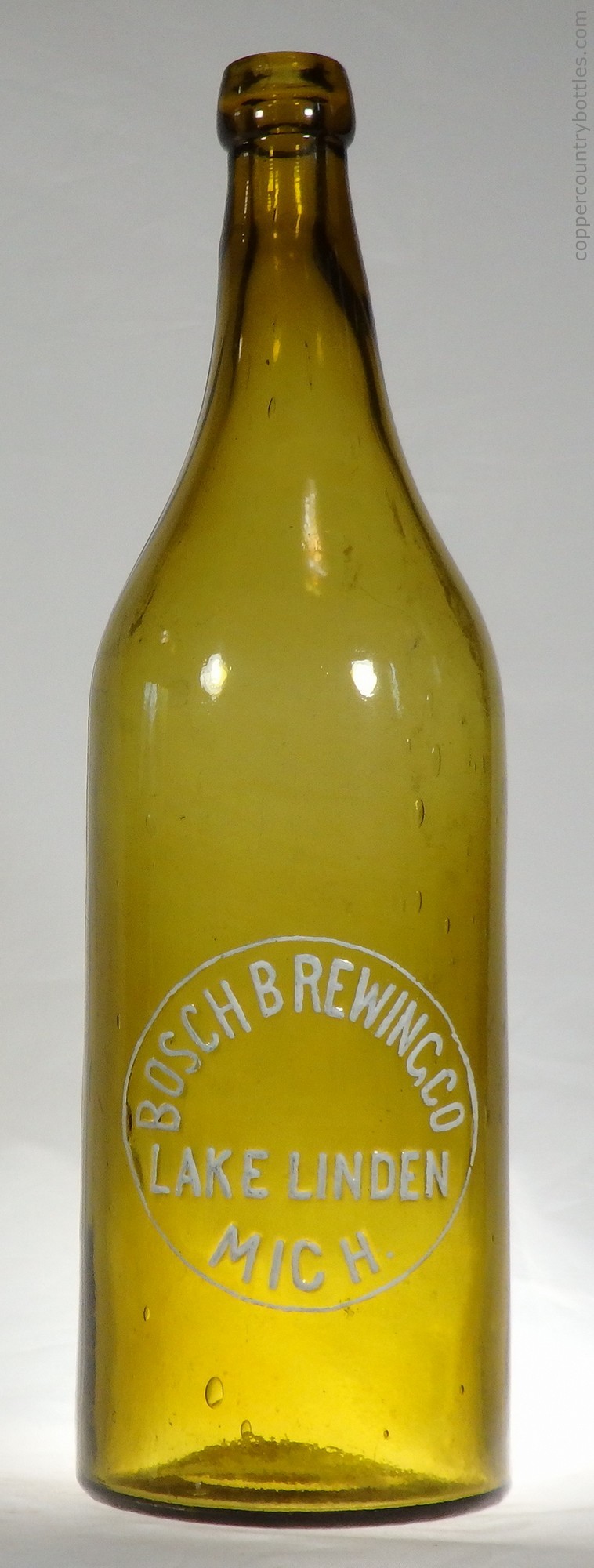
maker's mark: [none]
other marks: [none]
rarity: extremely rare
- same plate for 14 and 14b
- color variant of 14
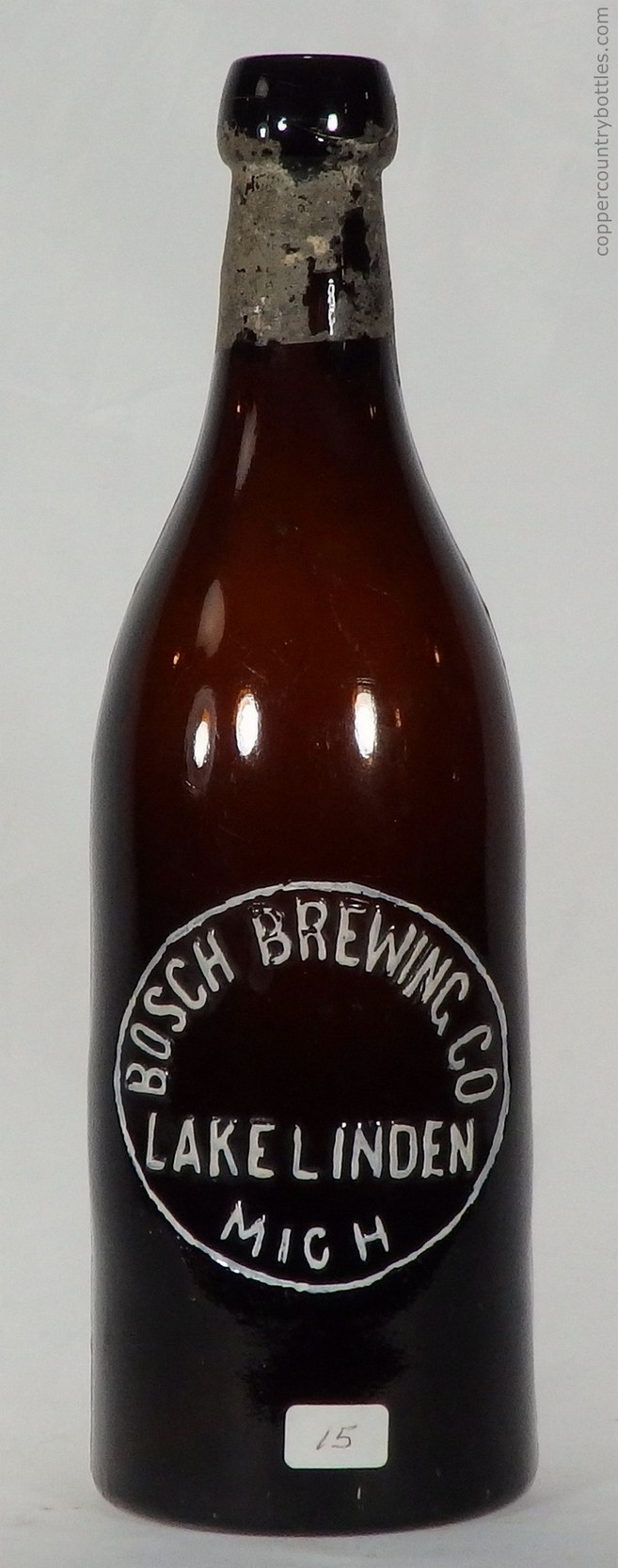
color: amber
top: Baltimore loop seal - tooled
base: post-bottom
maker's mark: [none]
other marks: [none]
date: c. 1897
rarity: scarce
- pint-sized complement to 14

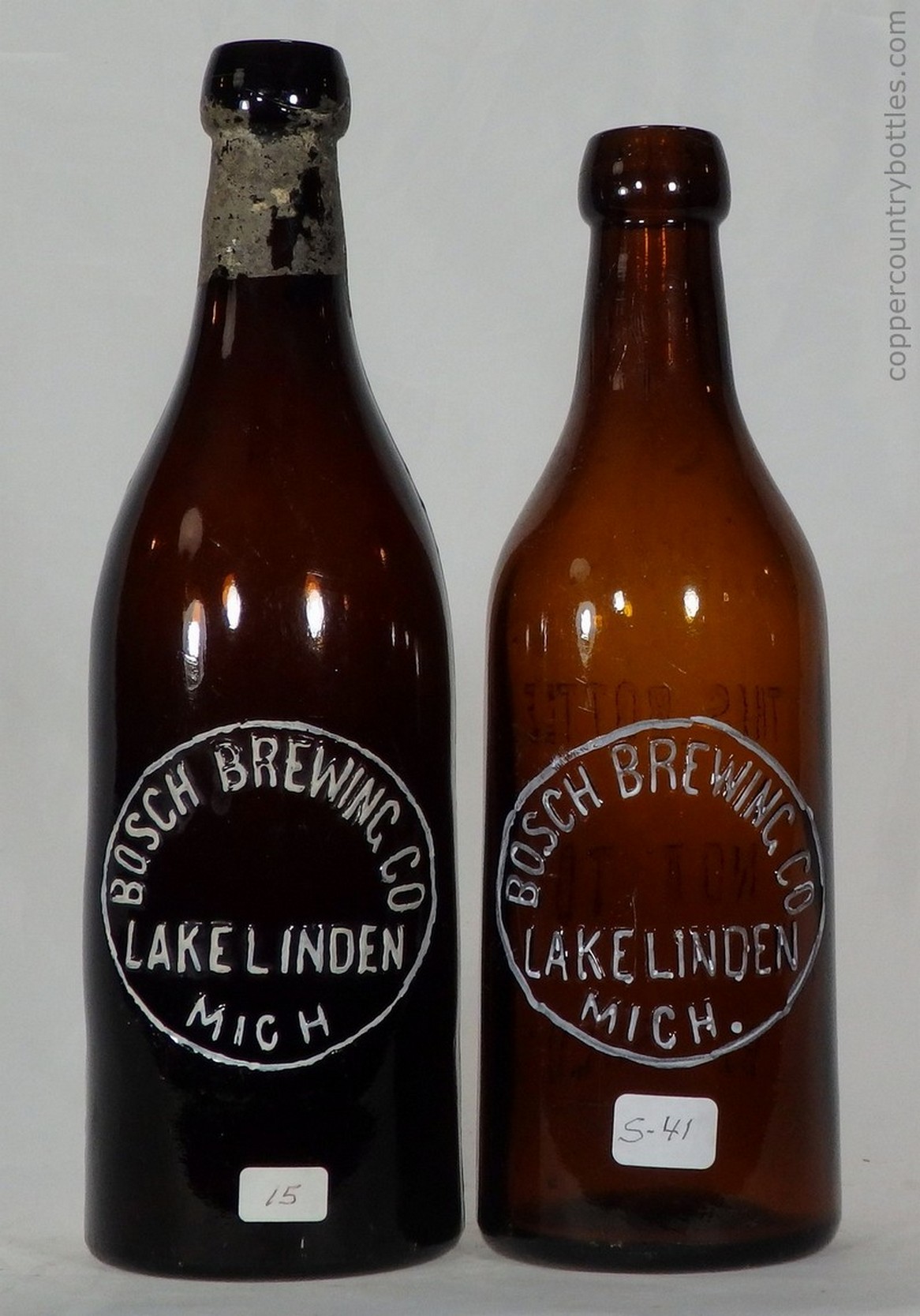
color: amber
top: Baltimore loop seal - tooled
base: post-bottom
maker's mark: [none]
other marks: THIS BOTTLE NOT TO BE SOLD (back)
date: c. 1897
rarity: extremely rare
- different plate from 15
- "." after MICH
- no gap between C and H in MICH
- mold shorter with smaller diameter compared to 15 (see comparison)
- generic mark on back
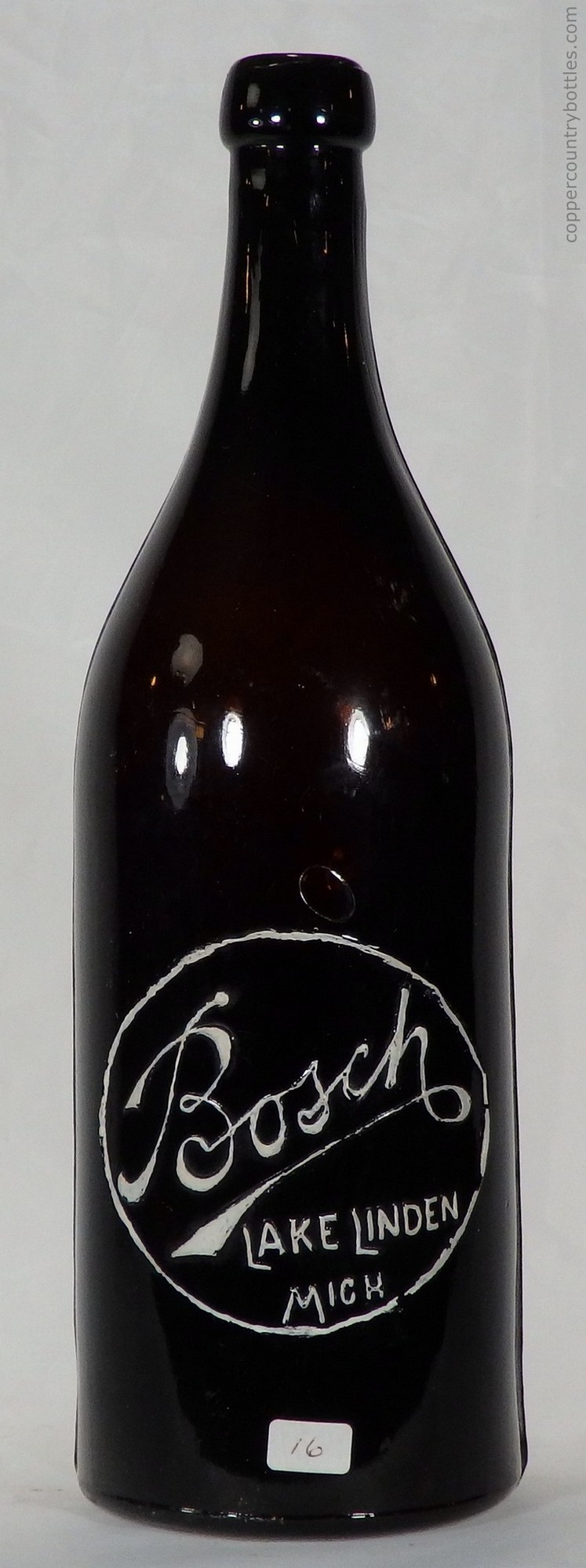
color: dark amber
top: Baltimore loop seal - tooled
base: post-bottom
maker's mark: [none]
other marks: [none]
date: c. 1898
rarity: scarce
- different plate design
- script-style embossing
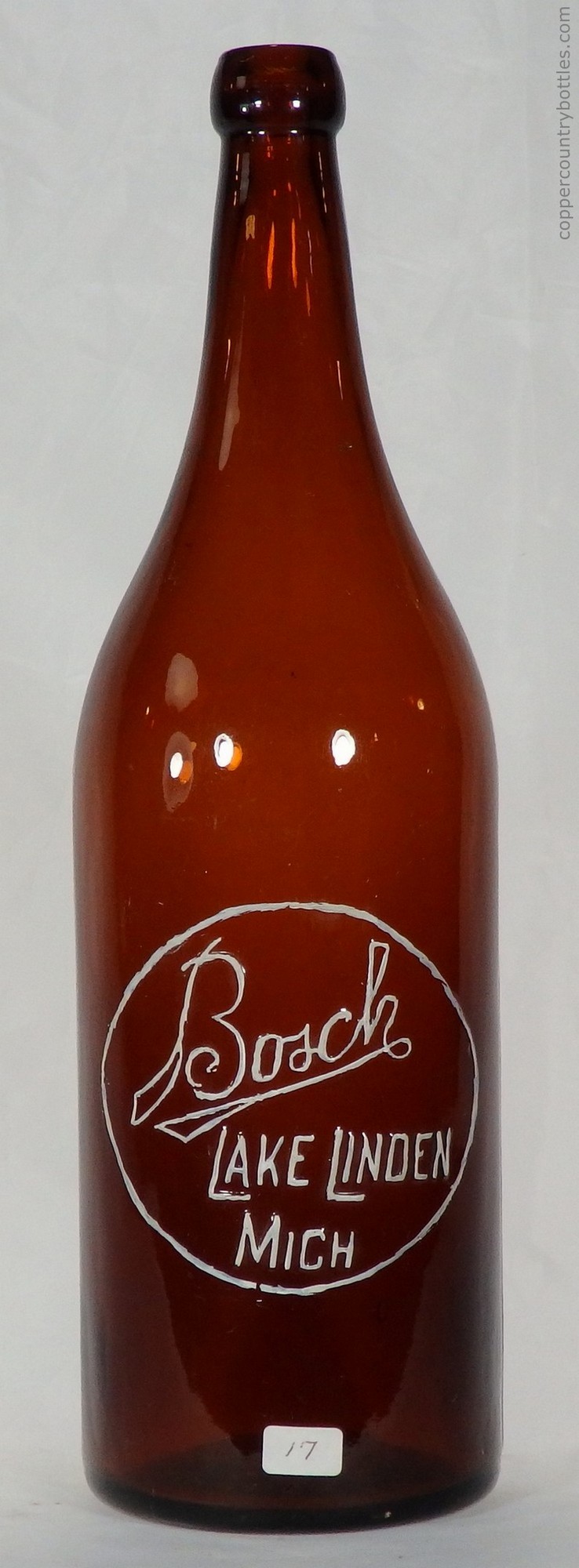
color: amber
top: Baltimore loop seal - tooled
base: post-bottom
maker's mark: [none]
other marks: THIS BOTTLE NOT TO BE SOLD (base)
date: c. 1899
rarity: common
- different plate from 16
- script unfilled
- ascender of h in Bosch almost touching plate seam line
- K in LAKE under o in Bosch
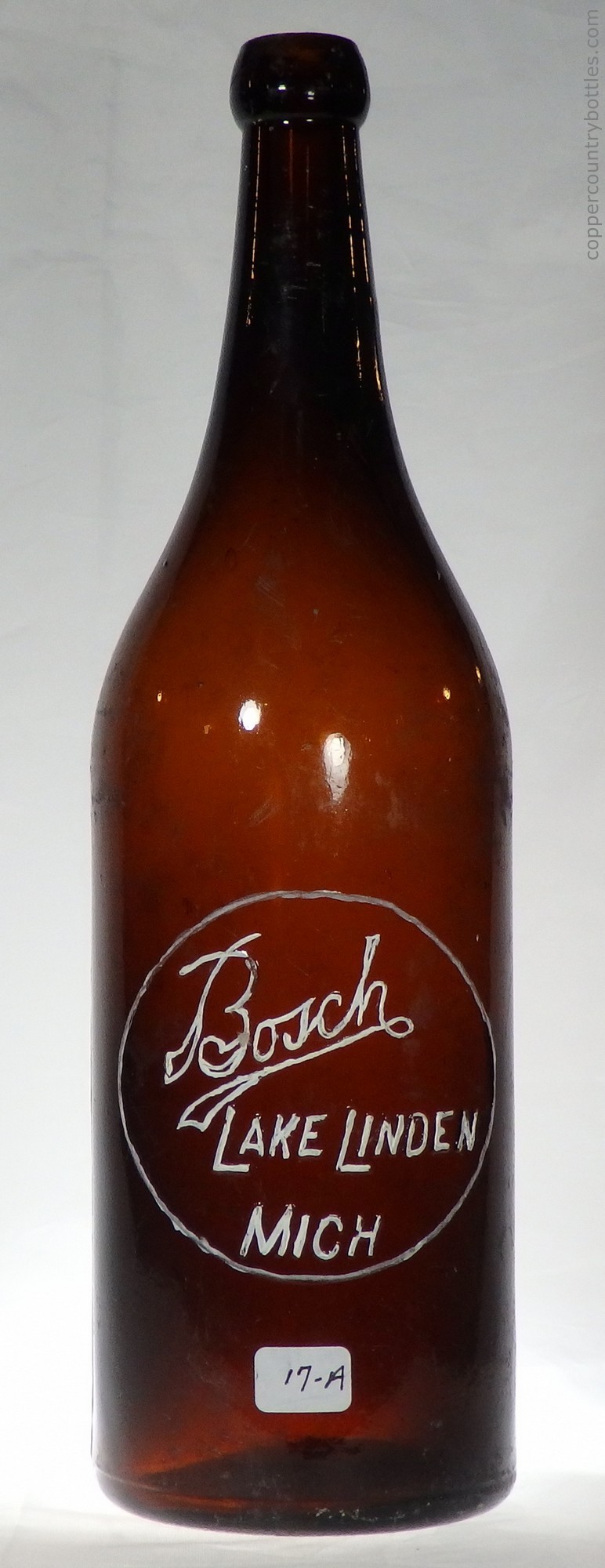
other marks: THIS BOTTLE NOT TO BE SOLD (base)
rarity: common
- different plate from 17
- ascender of h in Bosch distant from plate seam line
- K in LAKE under s in Bosch
- same plate for 17a and 27
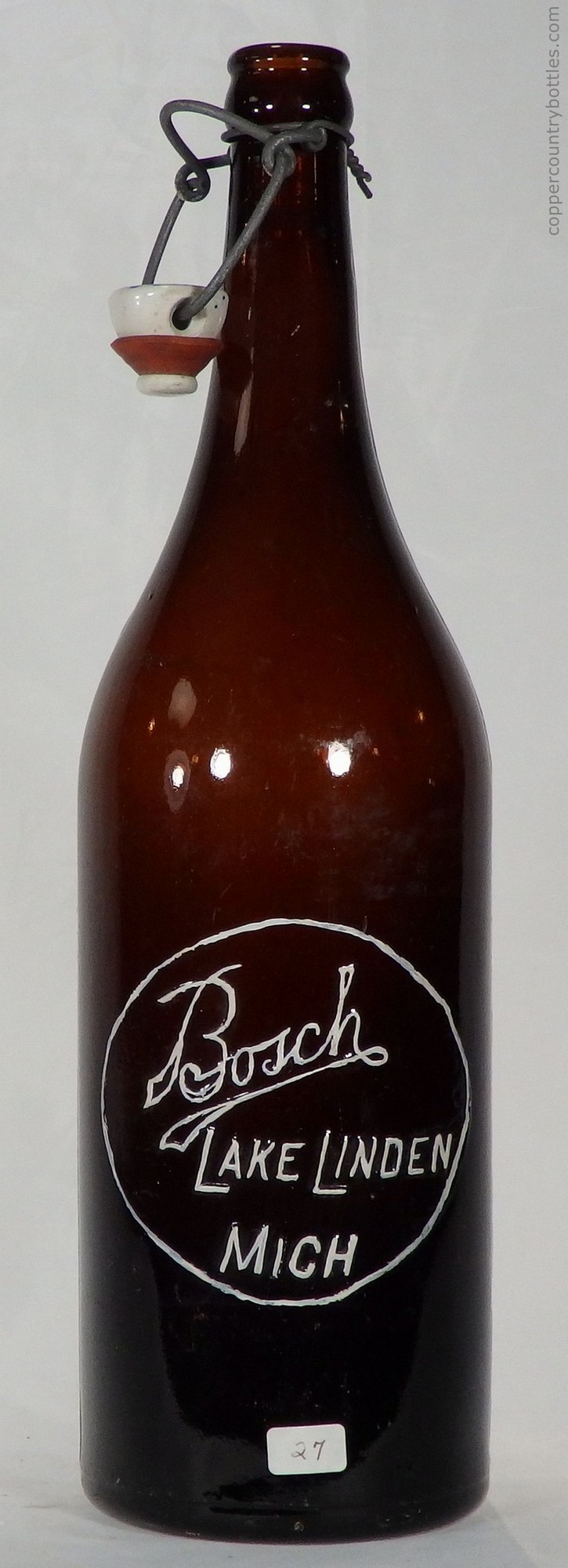
color: amber
top: crown top - tooled
base: post-bottom
maker's mark: [none]
other marks: [none]
date: c. 1900
rarity: scarce
- same plate for 17a and 27
- different top

color: amber
top: Baltimore loop seal - tooled
base: cup-bottom
maker's mark: [none]
other marks: THIS BOTTLE NOT TO BE SOLD (base)
date: c. 1899
rarity: scarce
- pint-sized complement to 17
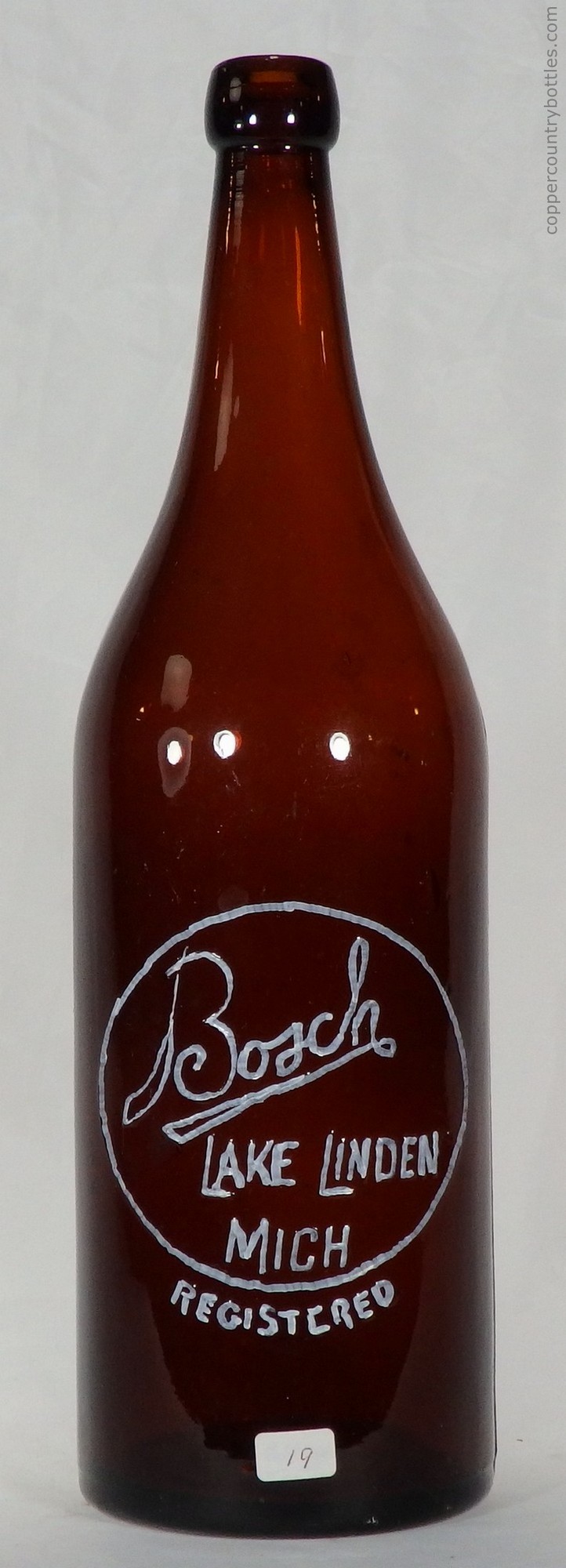
color: amber
top: Baltimore loop seal - tooled
base: post-bottom
maker's mark: [none]
other marks: REGISTERED (under plate), THIS BOTTLE NOT TO BE SOLD (base)
date: 1900–1905
rarity: common
- different plate from 17
- top of h is rounded
- I in MICH directly under E in LAKE
- REGISTERED on front
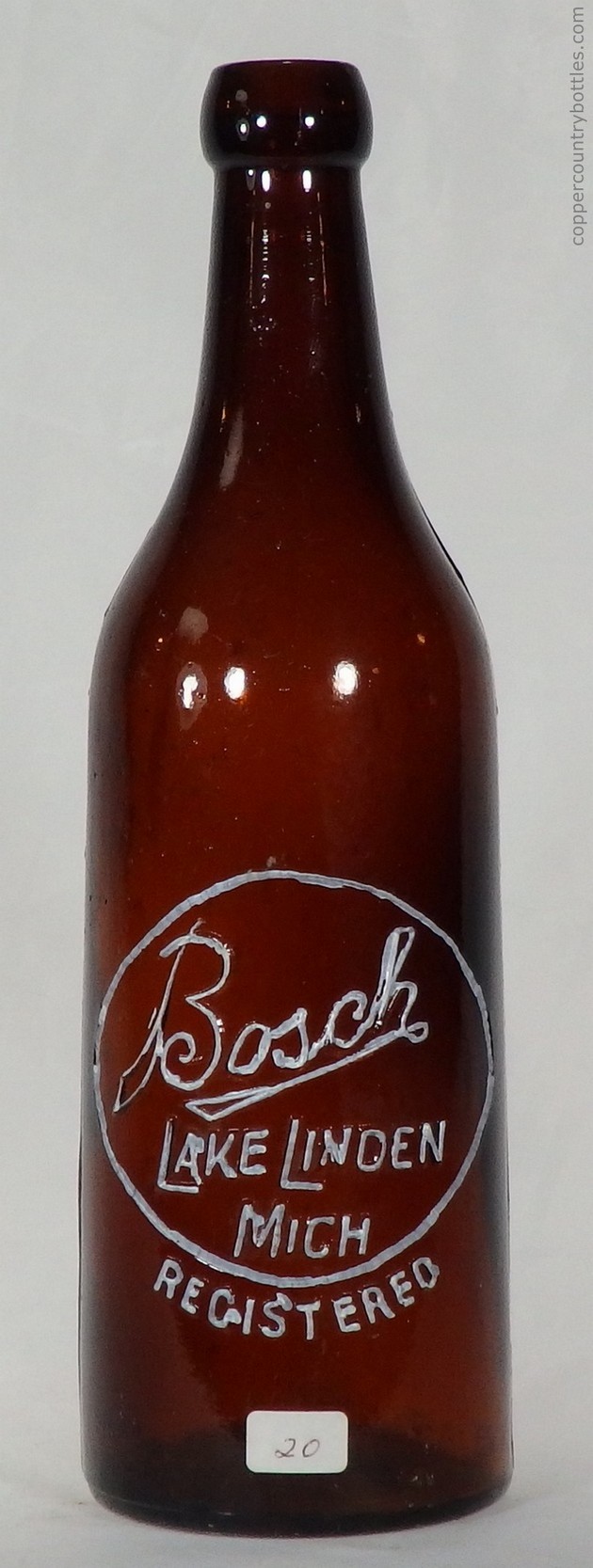
color: amber
top: Baltimore loop seal - tooled
base: post-bottom
maker's mark: [none]
other marks: REGISTERED (under plate), THIS BOTTTLE NOT TO BE SOLD (base)
date: 1900–1905
rarity: common
- pint-sized complement to 19
- different plate from 18
- underscore extends only halfway under B in Bosch
- C in MICH right of I in LINDEN
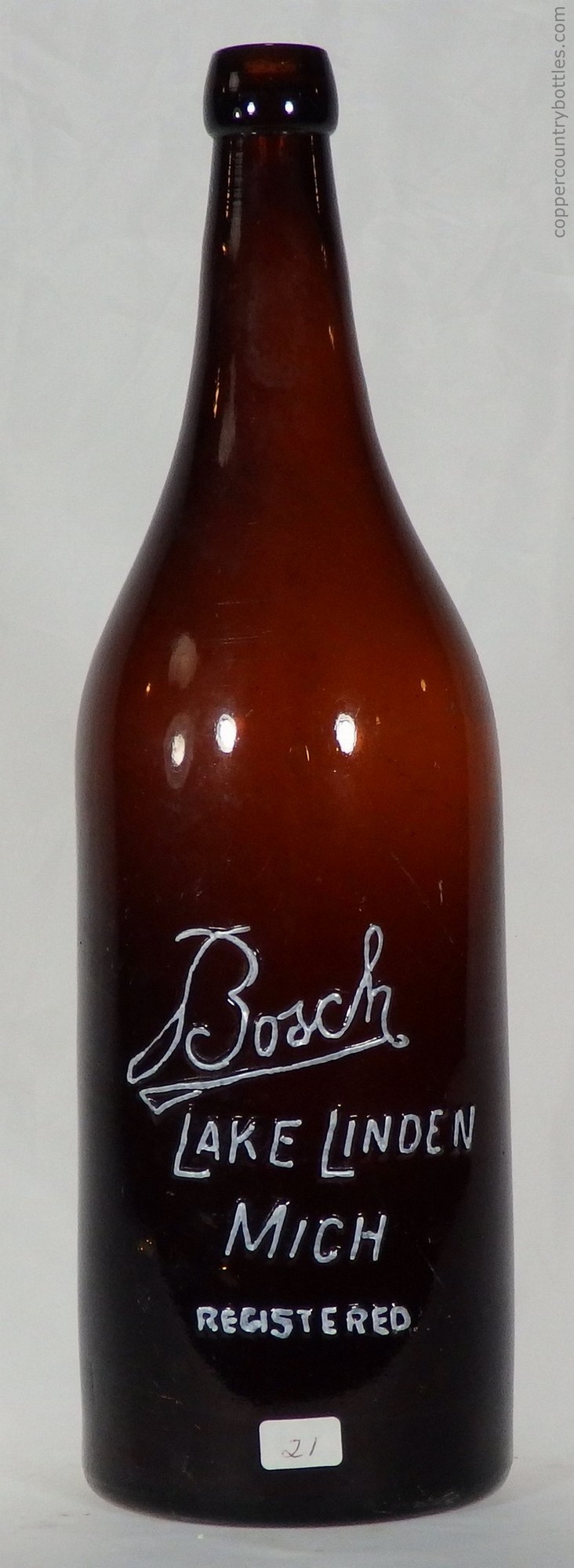
color: amber
top: Baltimore loop seal - tooled
base: cup-bottom
maker's mark: [none]
other marks: THIS BOTTLE NOT TO BE SOLD (base)
date: c. 1905
rarity: scarce
- full-mold plate
- straight REGISTERED
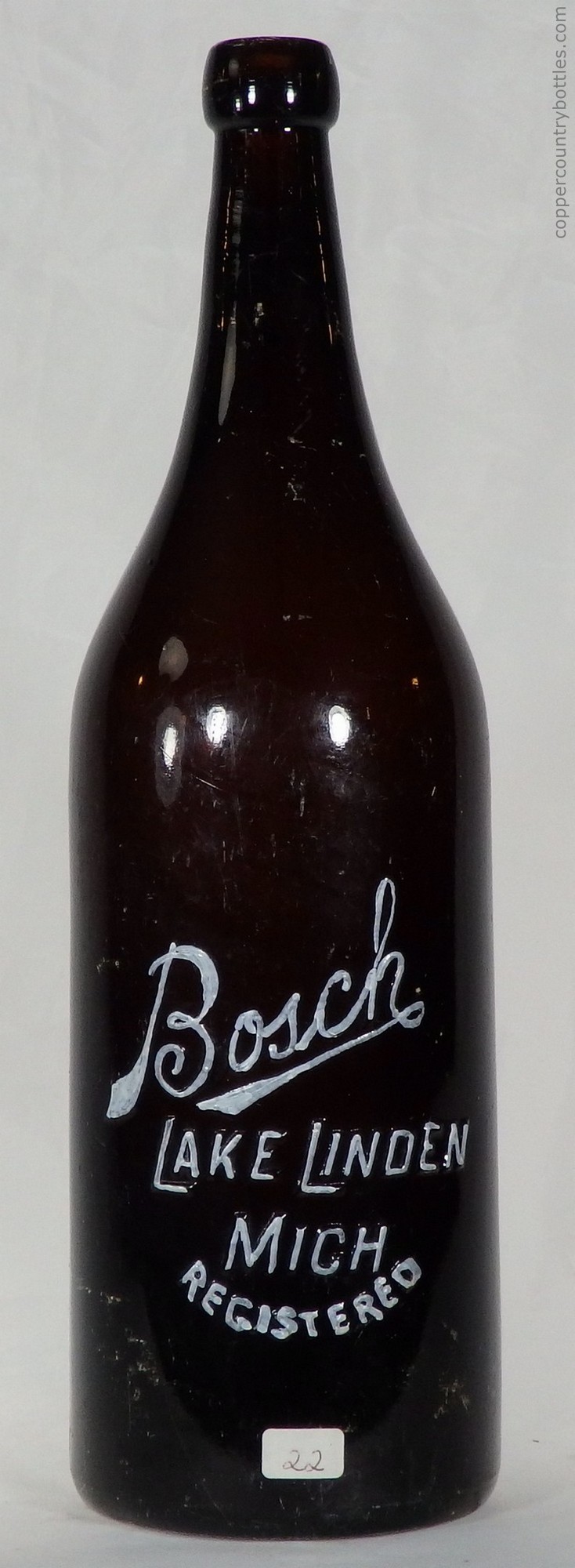
color: amber
top: Baltimore loop seal - tooled
base: post-bottom
maker's mark: A B CO (heel)
other marks: THIS BOTTLE NOT TO BE SOLD (base)
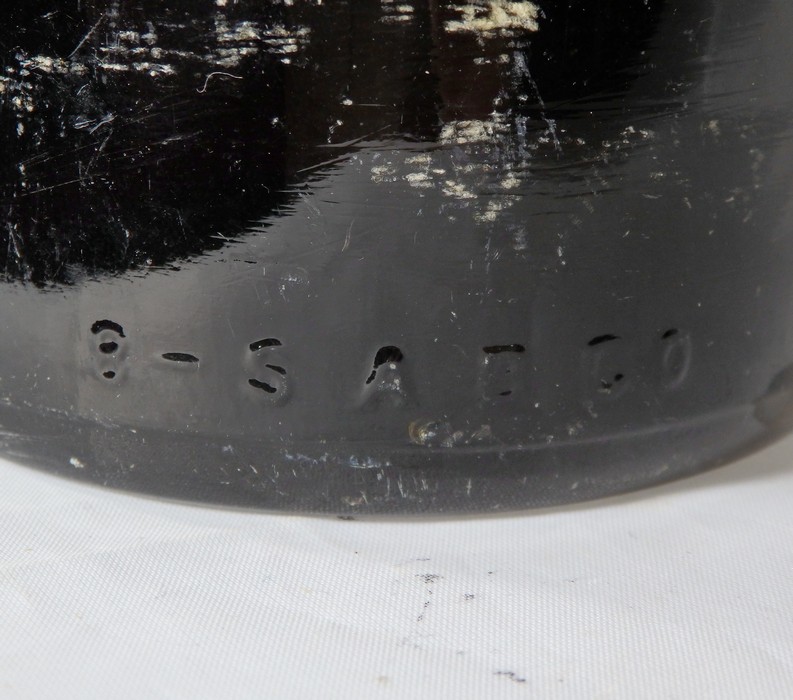
dated: 1908
rarity: common
- different plate from 21
- curved REGISTERED
- E in REGISTERED under left edge of M in MICH
- short tails at the top of B in Bosch
- base has date code 8 - S
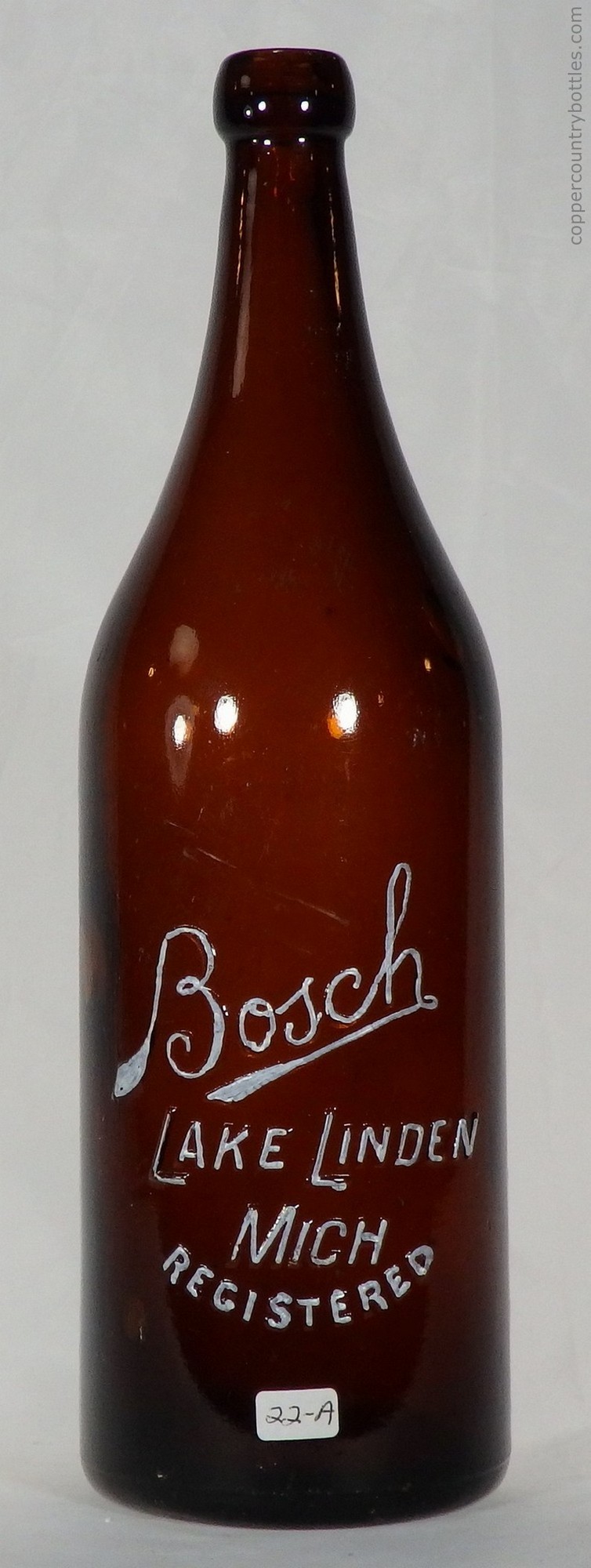
- different plate from other variants
- E in REGISTERED far left of M in MICH
- no tails at top of B in Bosch
- different maker's mark
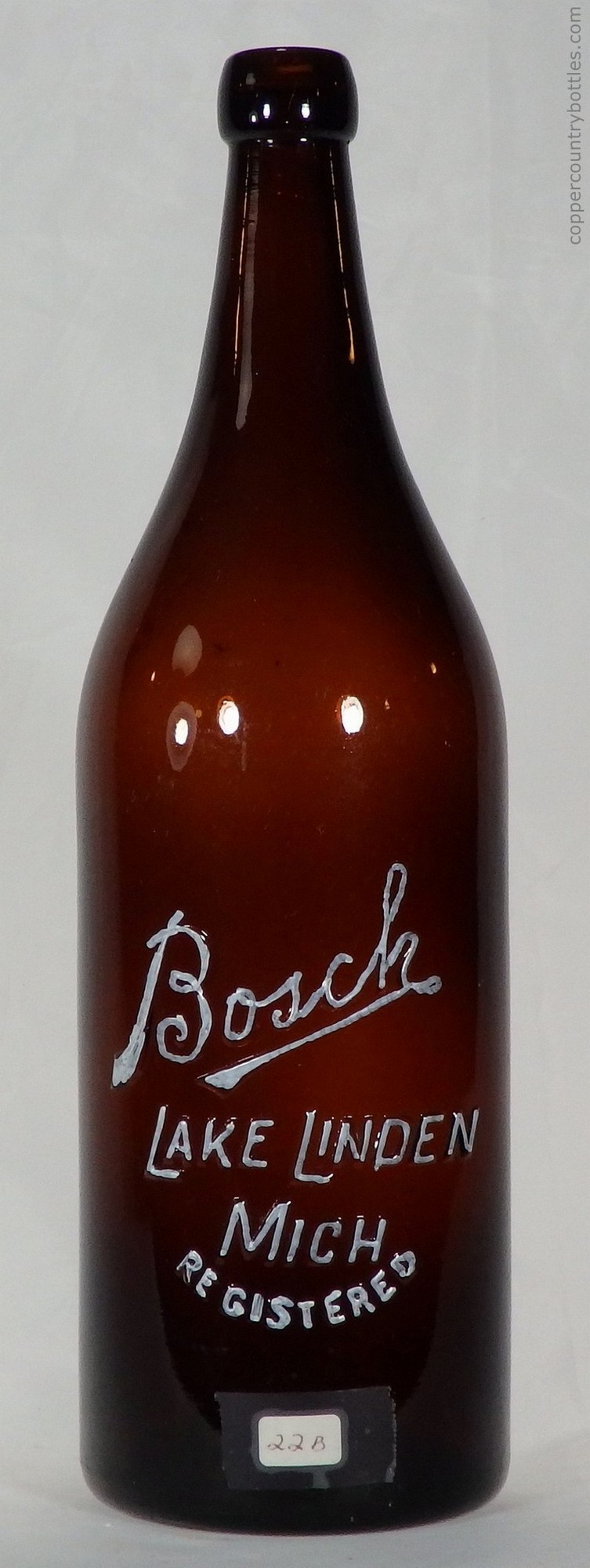
other marks: [none]
date: 1905–1910
rarity: common
- different plate from other variants
- like 22 but M in MICH slightly right of E in LAKE
- no maker's mark
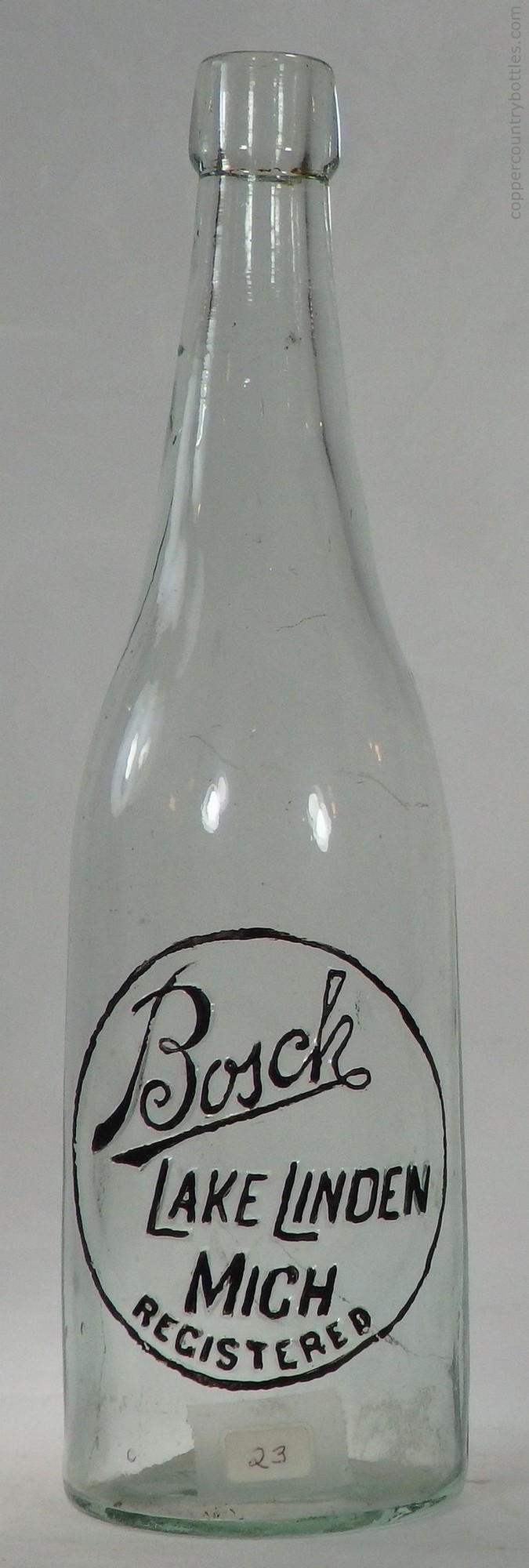
color: aqua
top: cork seal - tooled
base: post-bottom
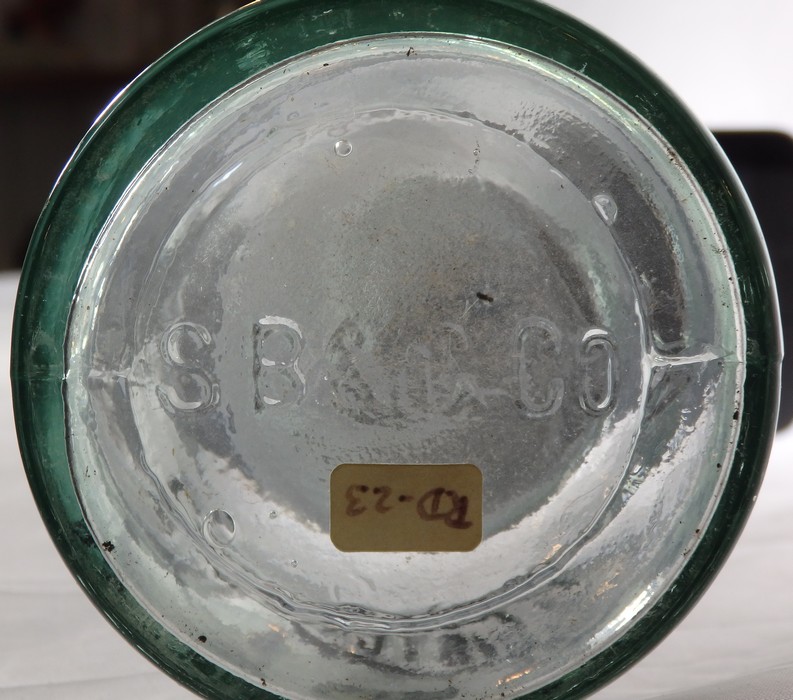
maker's mark: S B & G CO (base)
other marks: [none]
date: 1899 to c. 1904
rarity: scarce
- oval plate
- REGISTERED within the plate
- held Gilt Edge Premium Beer
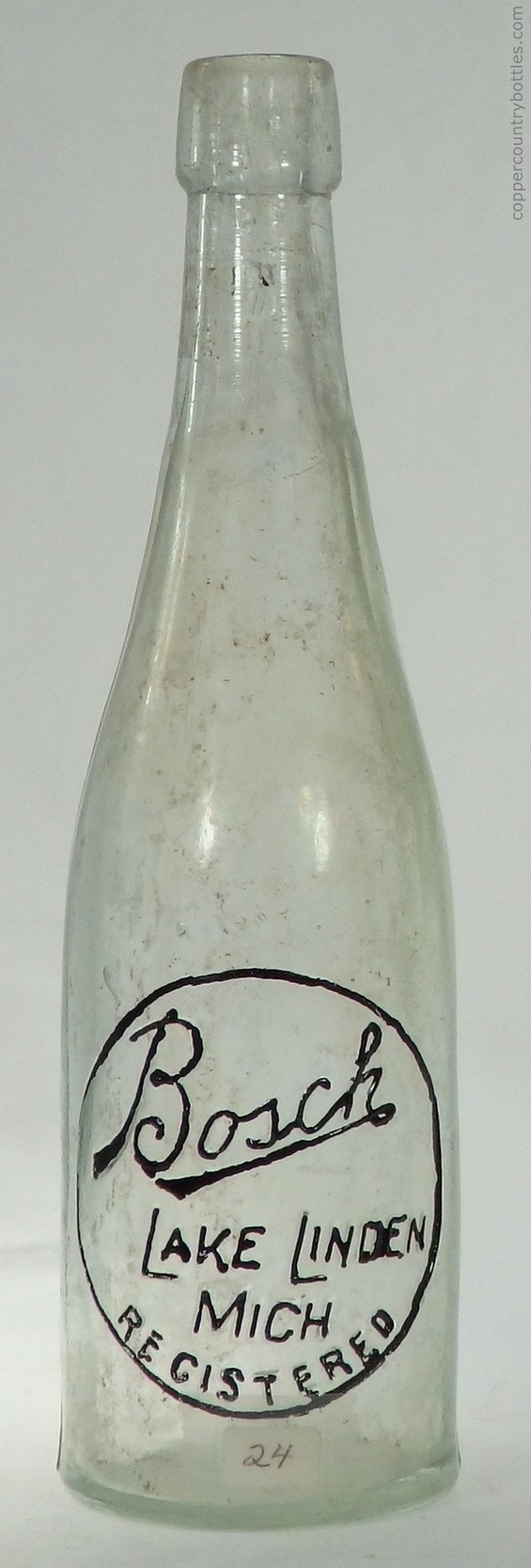
color: aqua
top: cork seal - tooled
base: cup-bottom
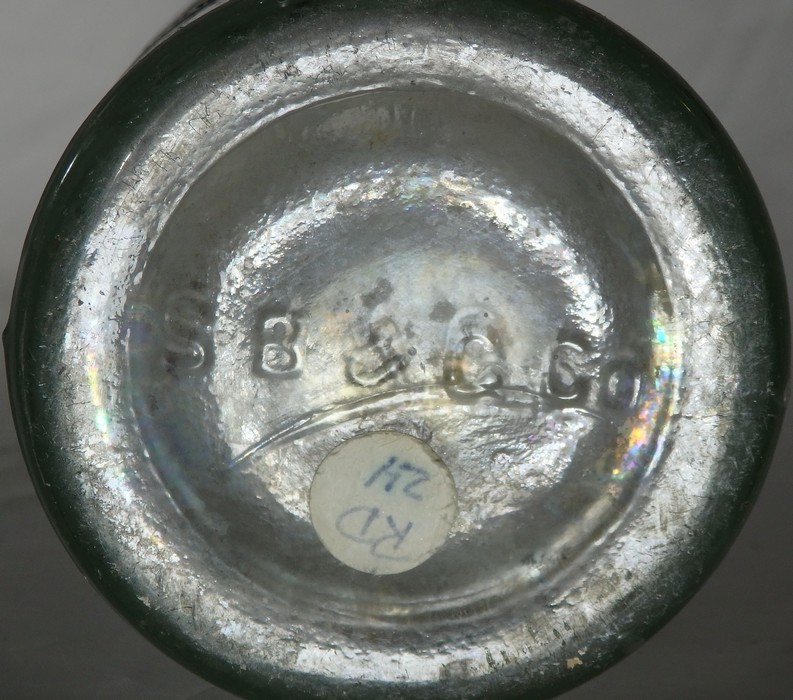
maker's mark: S B & G Co (base)
other marks: [none]
date: 1899 to c. 1904
rarity: scarce
- pint-sized complement to 23
- held Gilt Edge Premium Beer
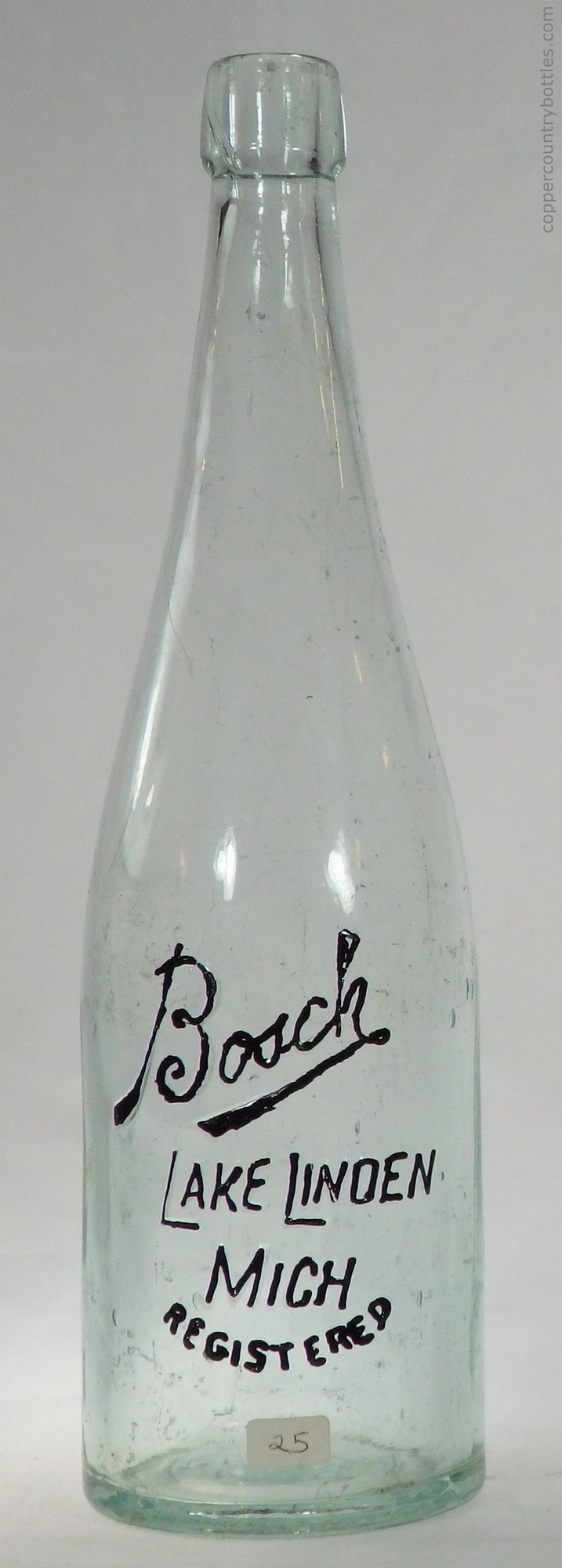
color: aqua
top: cork seal - tooled
base: post-bottom
maker's mark: S B & G Co (base)
other marks: [none]
date: 1905
rarity: extremely rare
- full-mold plate
- held Gilt Edge Premium Beer
- same plate for 25 and 25a
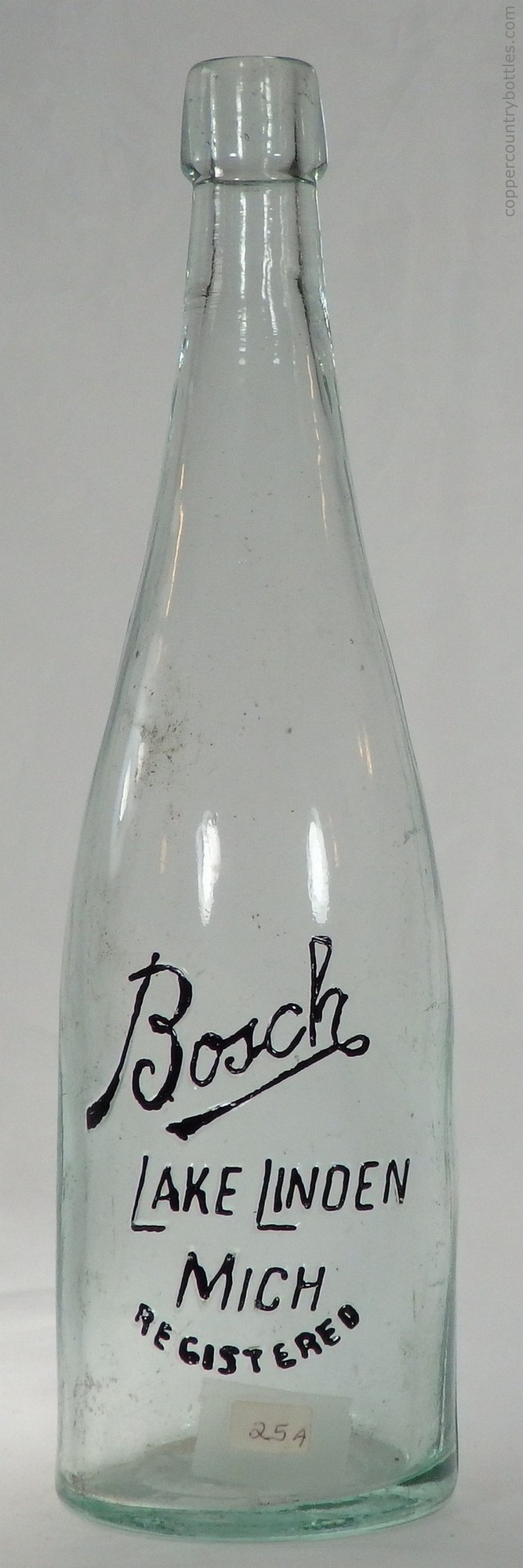
- same plate for 25 and 25a
- different maker's mark
- date code unclear -- appears to be 5 - S or 6 - S
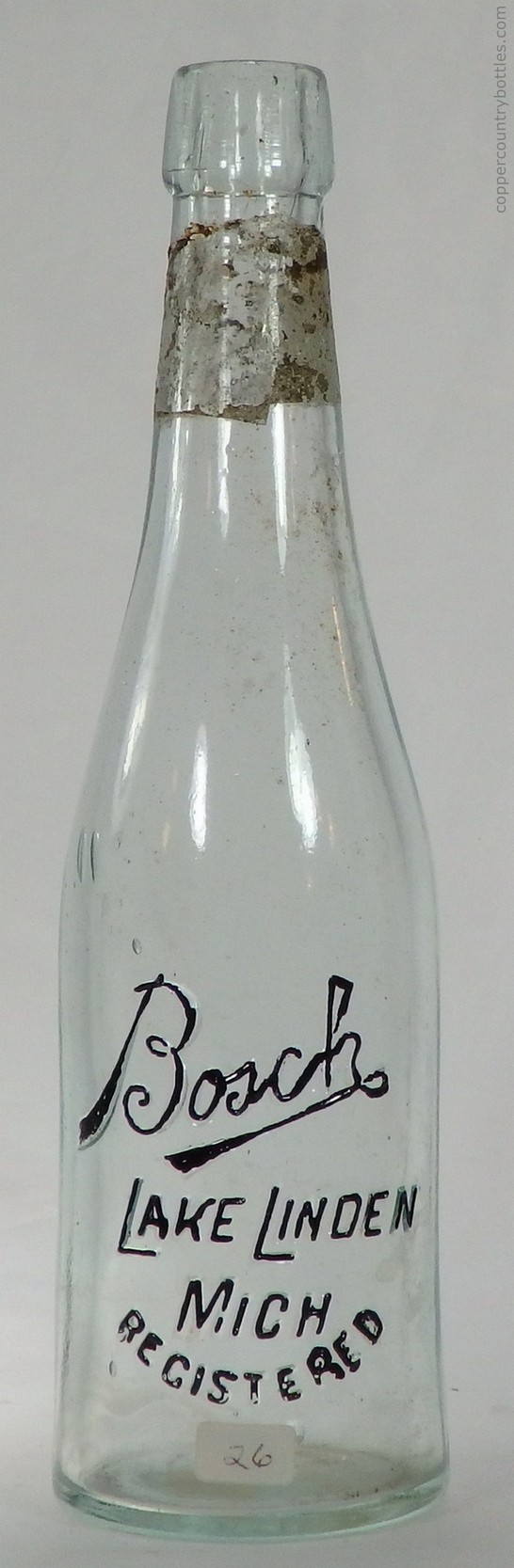
color: aqua
top: cork seal - tooled
base: post-bottom
maker's mark: S B & G Co (base)
other marks: [none]
date: 1905
rarity: scarce
- pint-sized complement to 25
- same plate for 26 and 26a
- held Gilt Edge Premium Beer
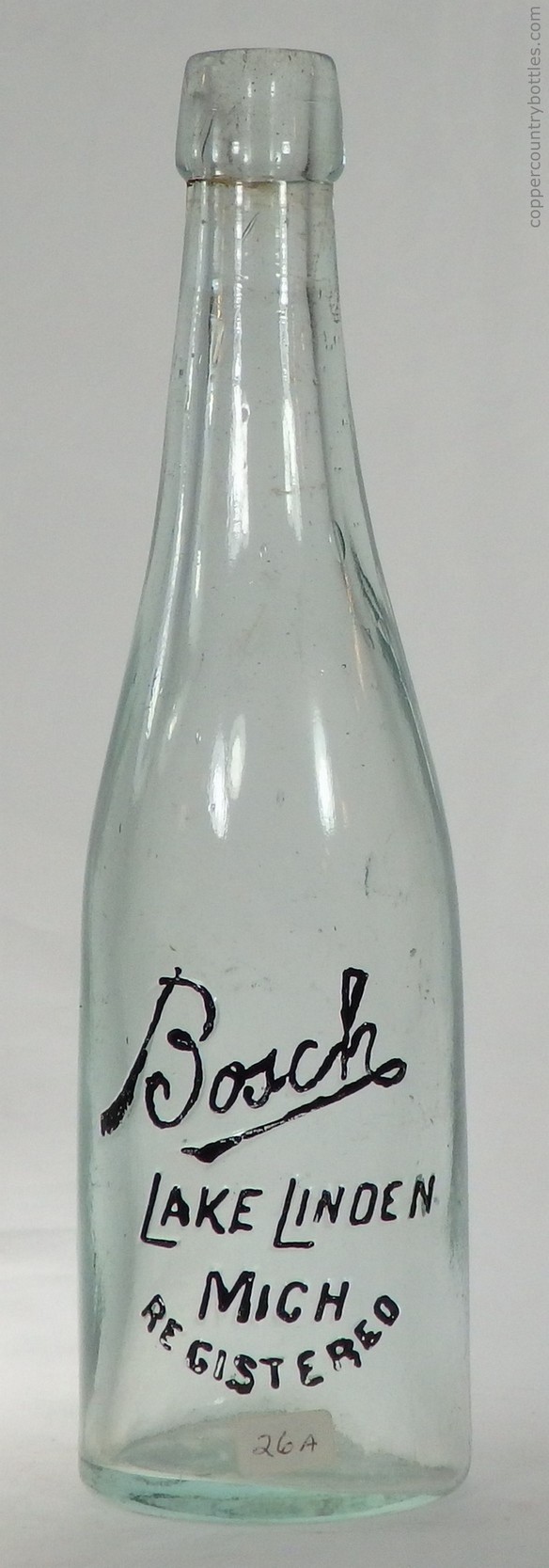
- pint-sized complement to 25a
- same plate for 26 and 26a
- different maker's mark
- back heel has date code 7 - S
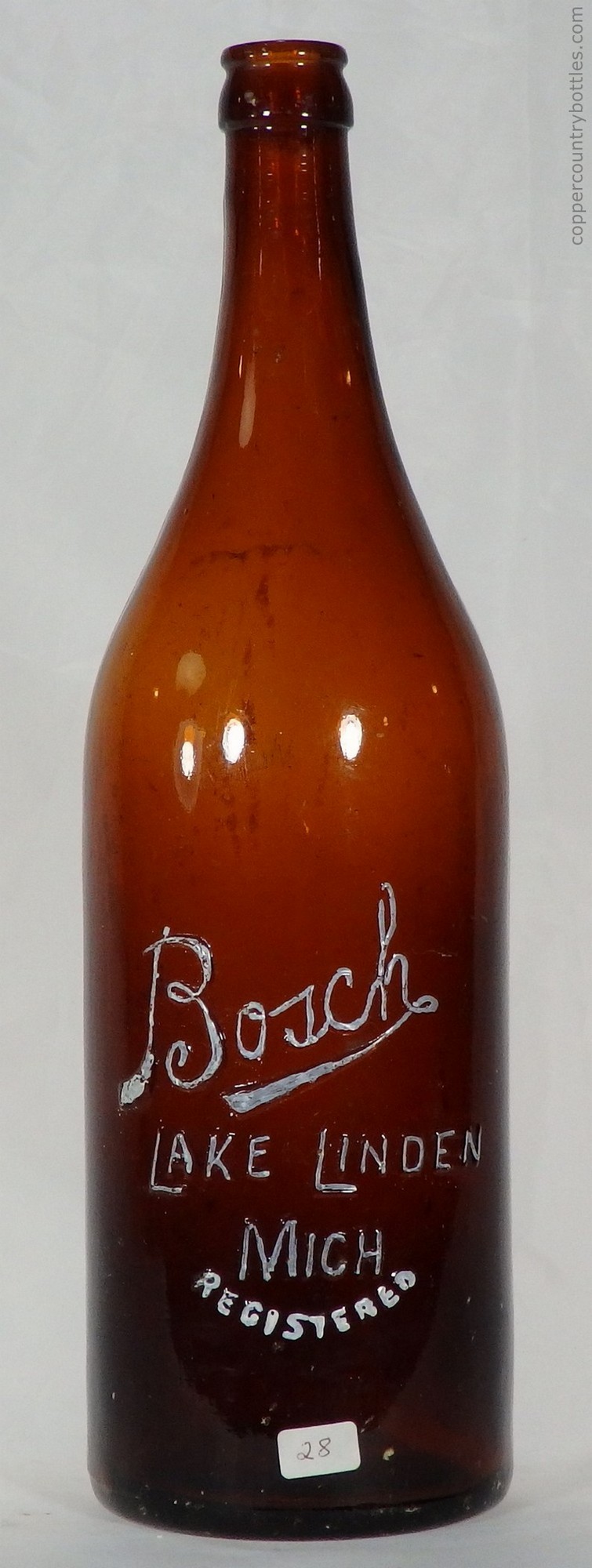
color: amber
top: crown top - tooled
base: post-bottom
maker's mark: [none]
other marks: THIS BOTTLE IS NOT TO BE SOLD (base)
dated: 1912
rarity: common
- different plate from 22 and its variants
- M in MICH not tilted
- different top
- The book stated a maker's mark of A B Co.
- back heel has A B Co. date code S - 12

other marks: THIS BOTTLE NOT TO BE SOLD (base)
date: 1910–1912
rarity: common
- different plate from 22 and its variants and 28
- underscore does not extend beyond o in Bosch
- "," after LINDEN and "." after MICH
- different maker's mark
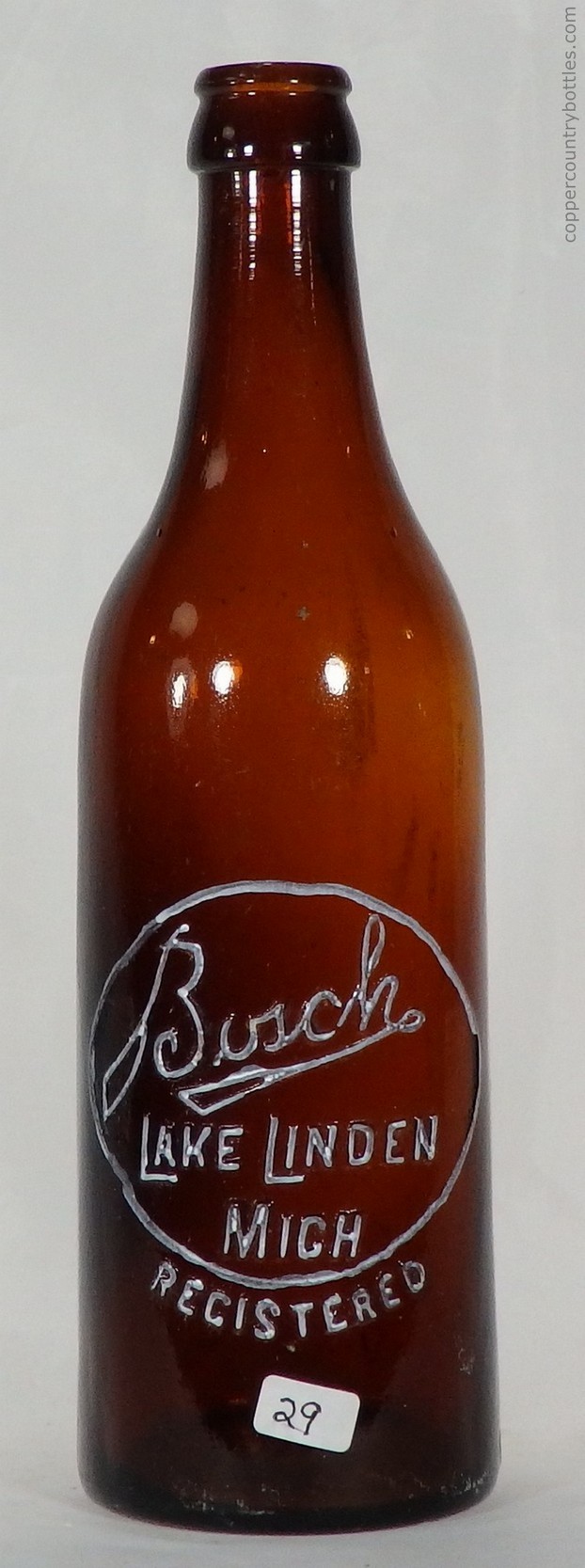
color: amber
top: crown top - tooled
base: post-bottom
maker's mark: [none]
other marks: REGISTERED (under plate), THIS BOTTLE IS NOT TO BE SOLD (base)
dated: 1912
rarity: common
- different plate from 18 and 20
- underscore ends above K in LAKE
- different top
- The book stated a maker's mark of A B Co.
- back heel has A B Co. date code S - 12
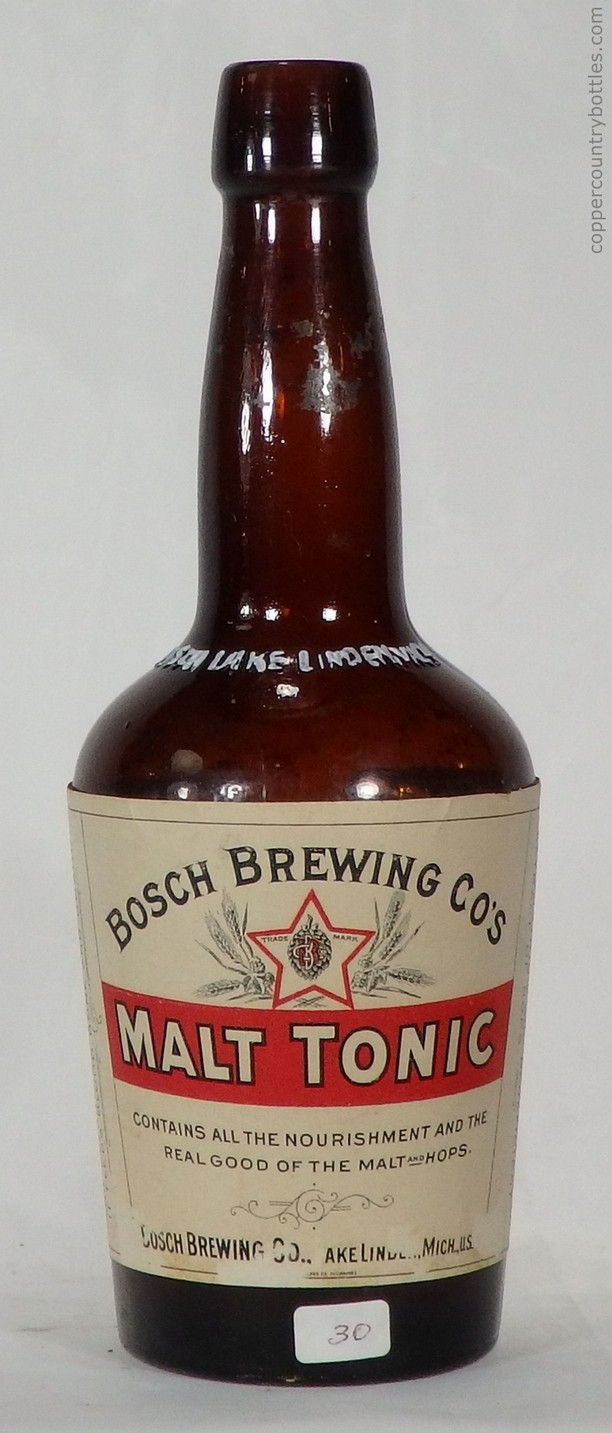
color: amber
top: cork seal - tooled
base: post-bottom
maker's mark: S B & G Co (base)
other marks: (paper label)
date: 1903
rarity: rare
- shoulder embossing
- The paper label was added later.
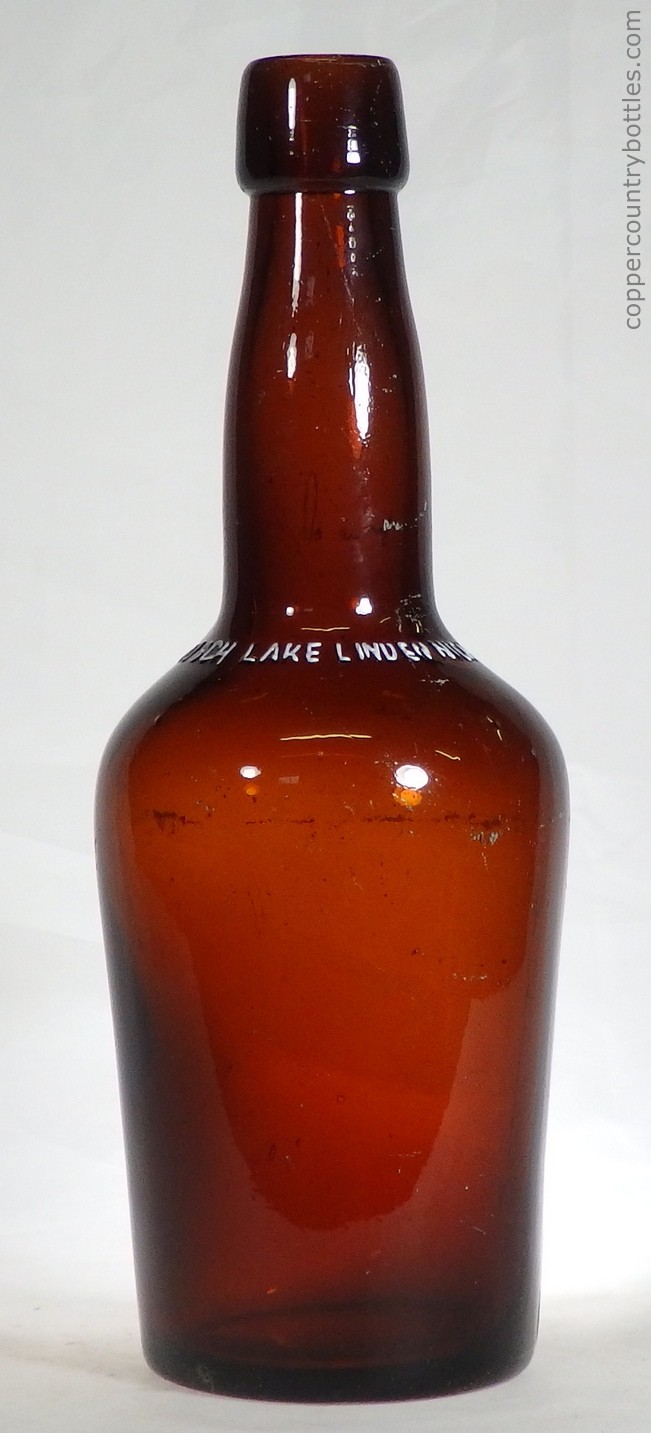


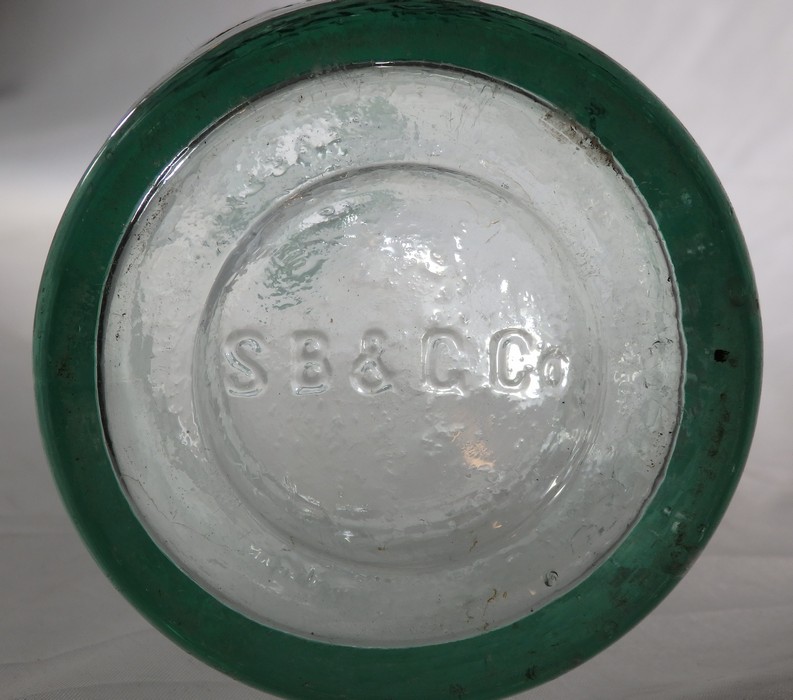
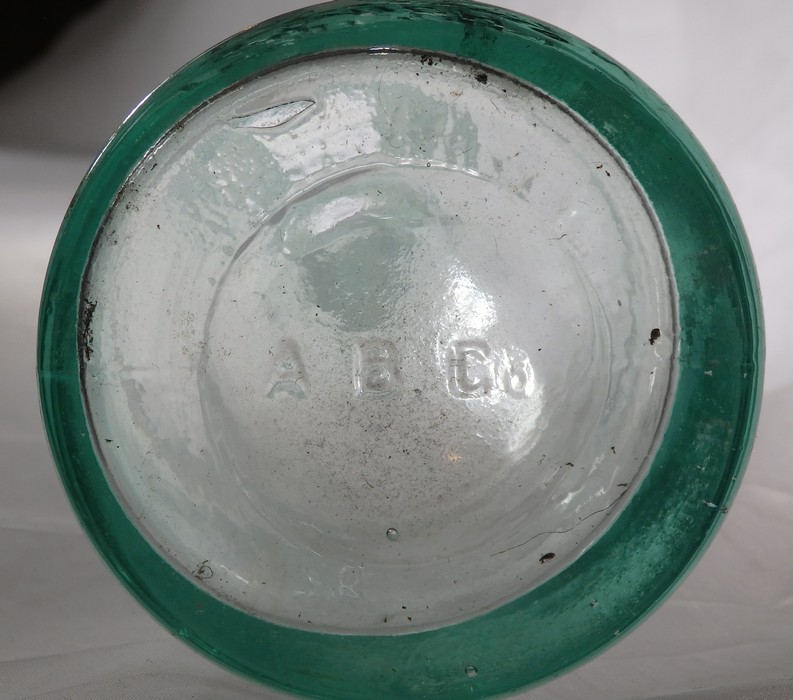
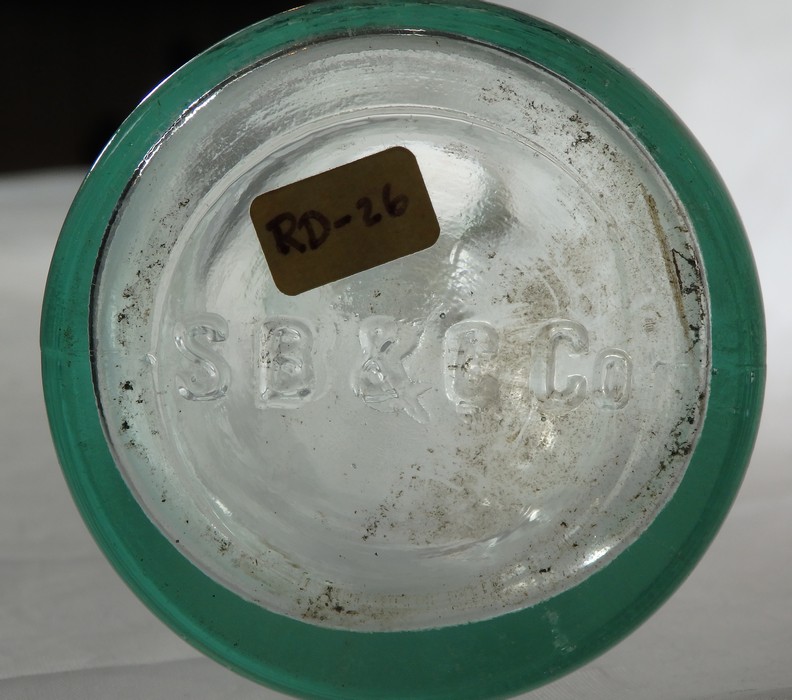
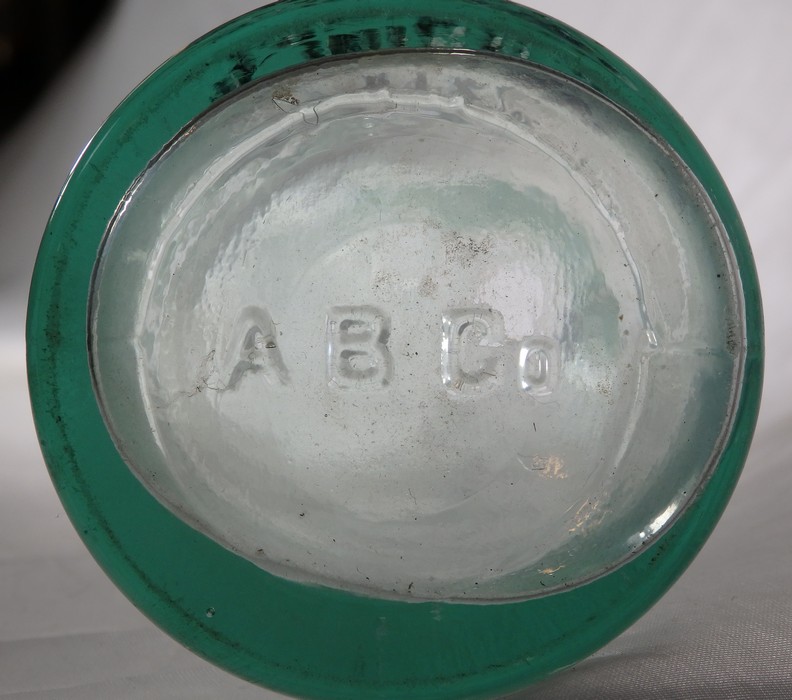
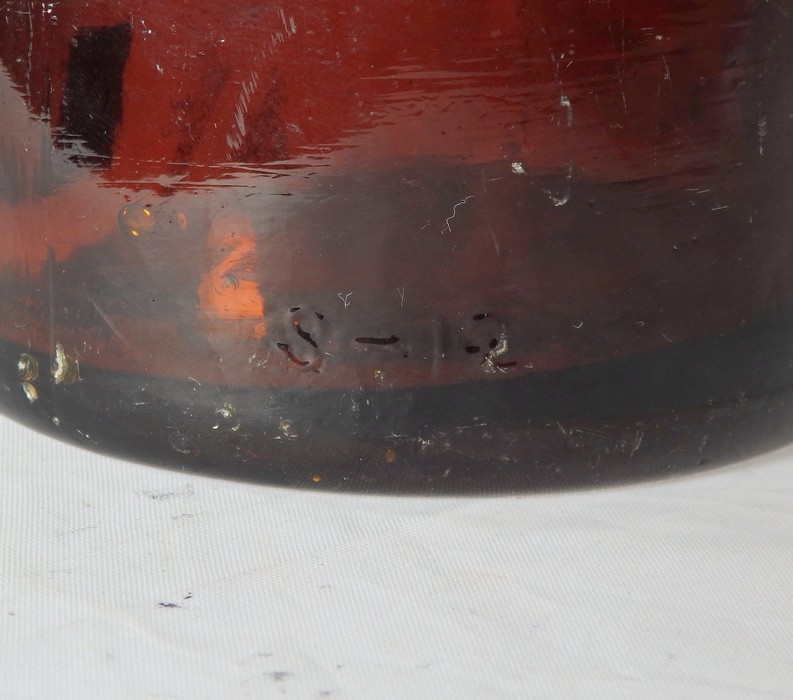
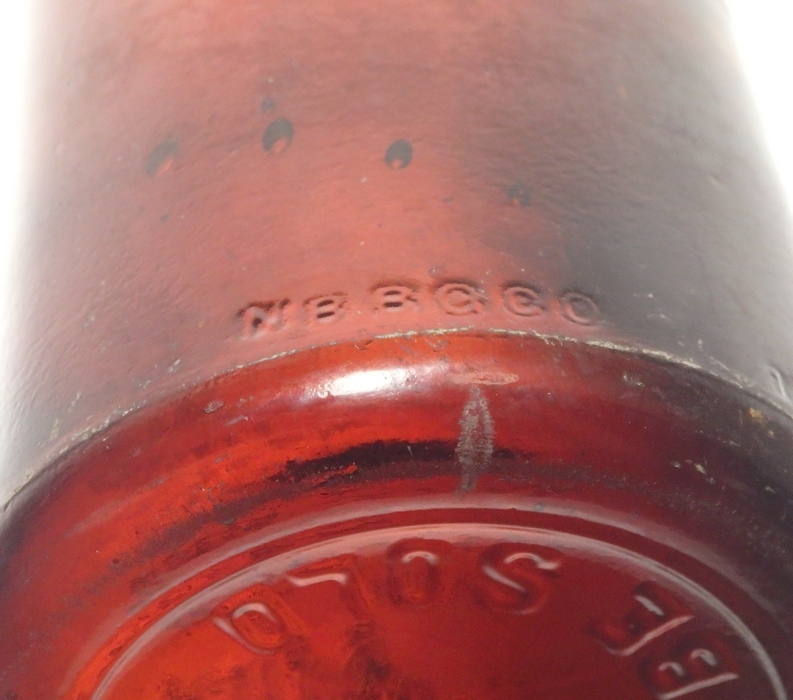
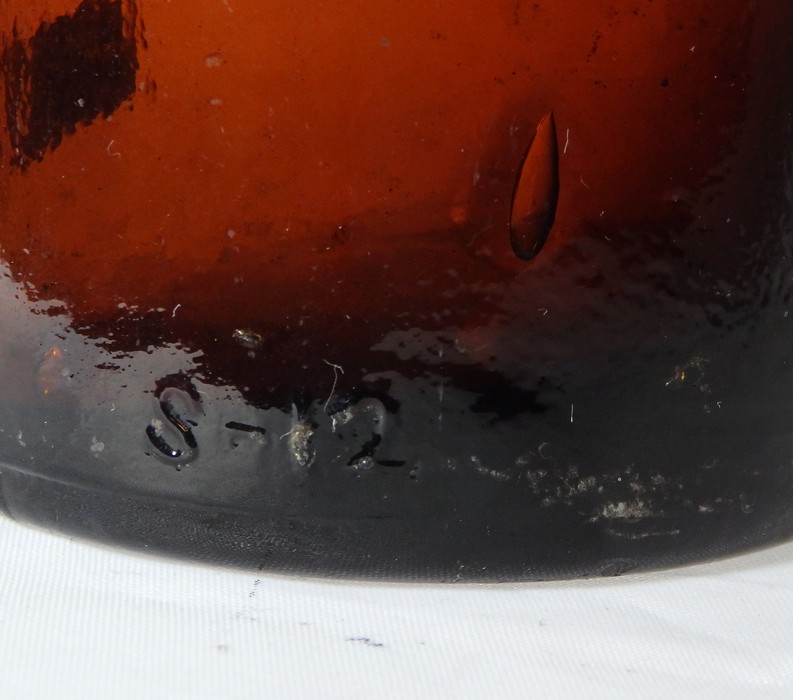
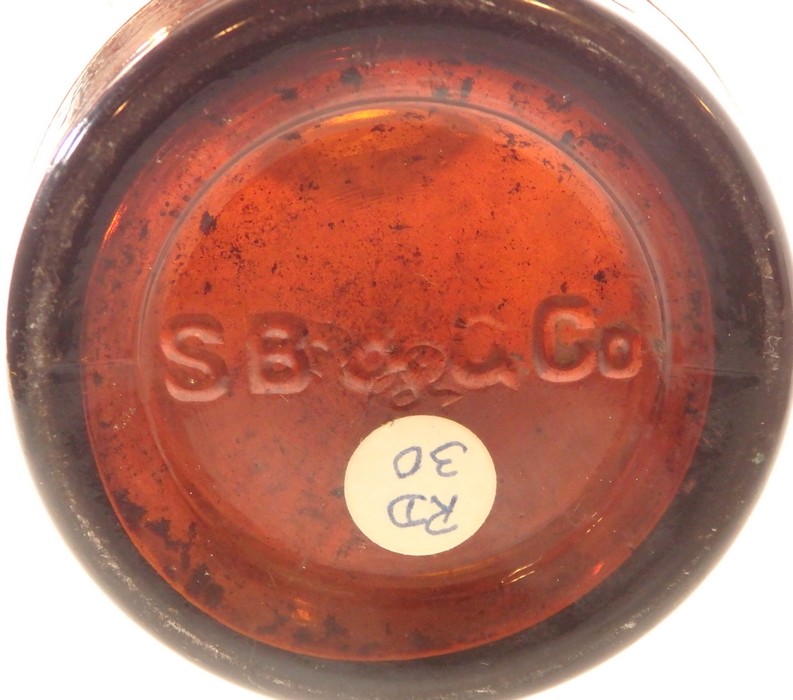
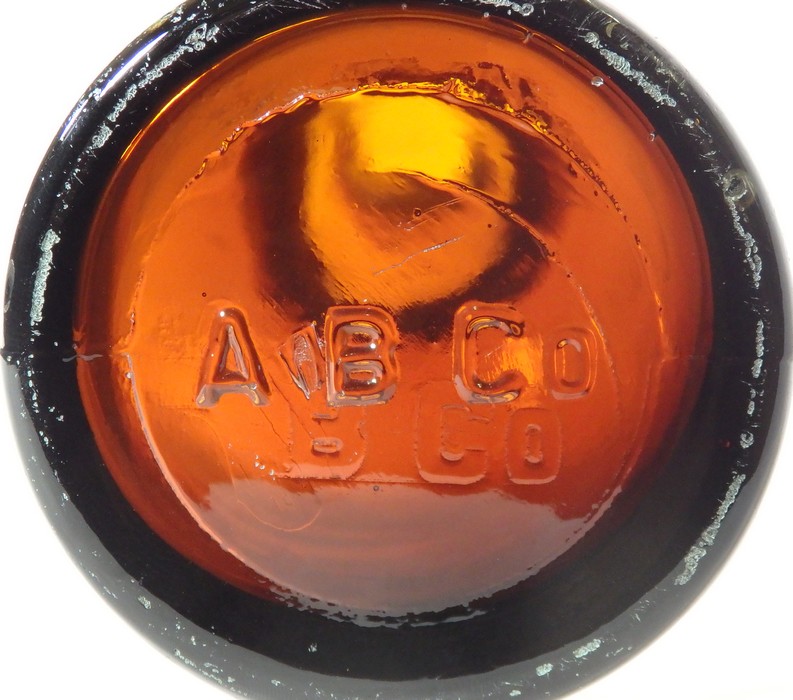
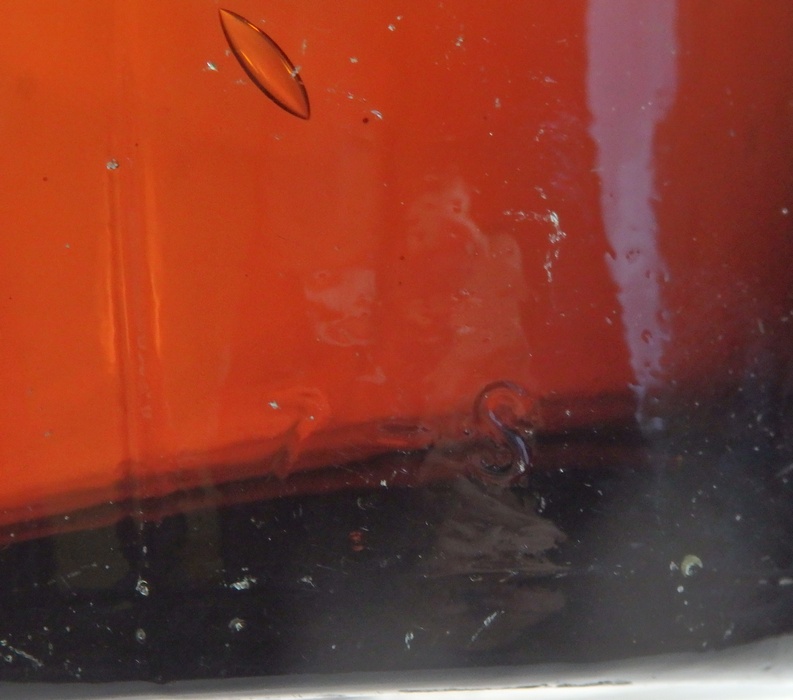
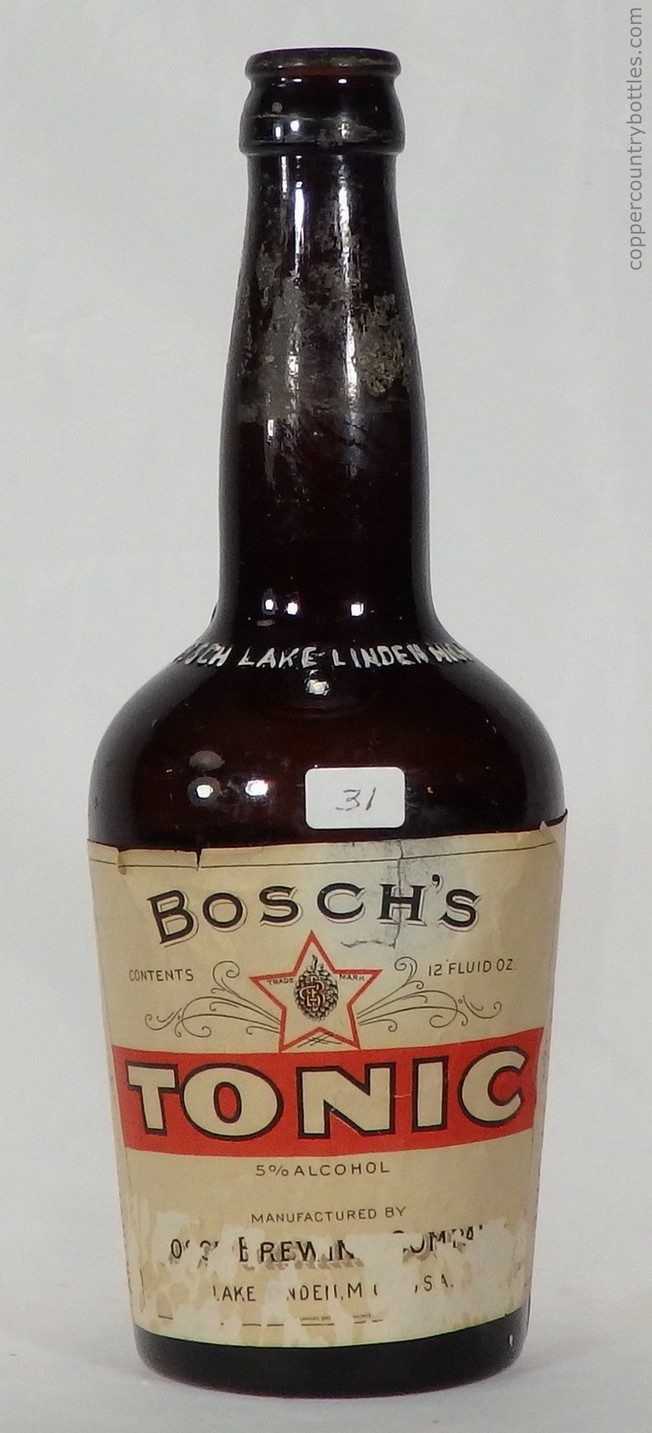
color: amber
top: crown top - tooled
base: post-bottom
maker's mark: A B Co (base)
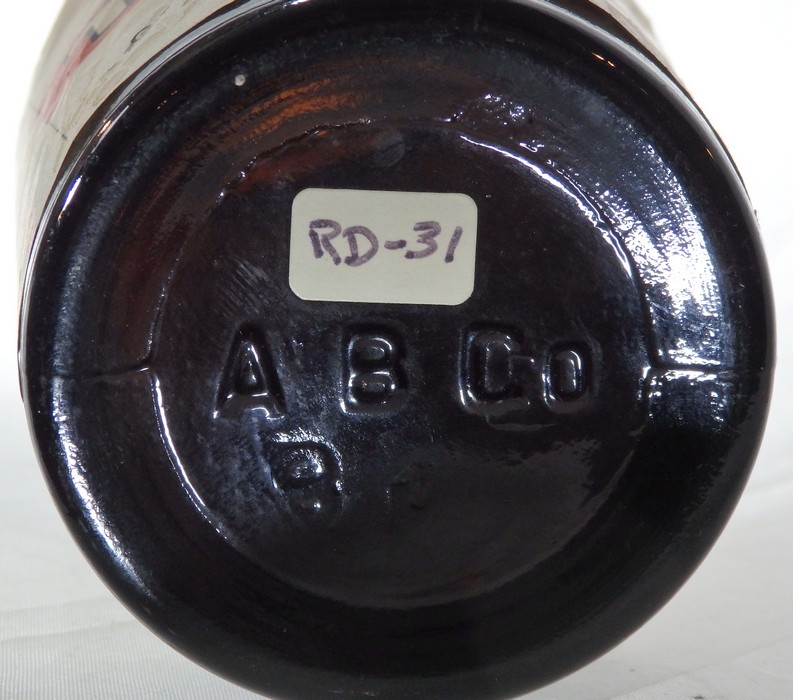
other marks: (paper label)
dated: 1914
rarity: rare
- similar embossing as 30a
- different top
- These labels were added later.
- back heel has date code 14 - S
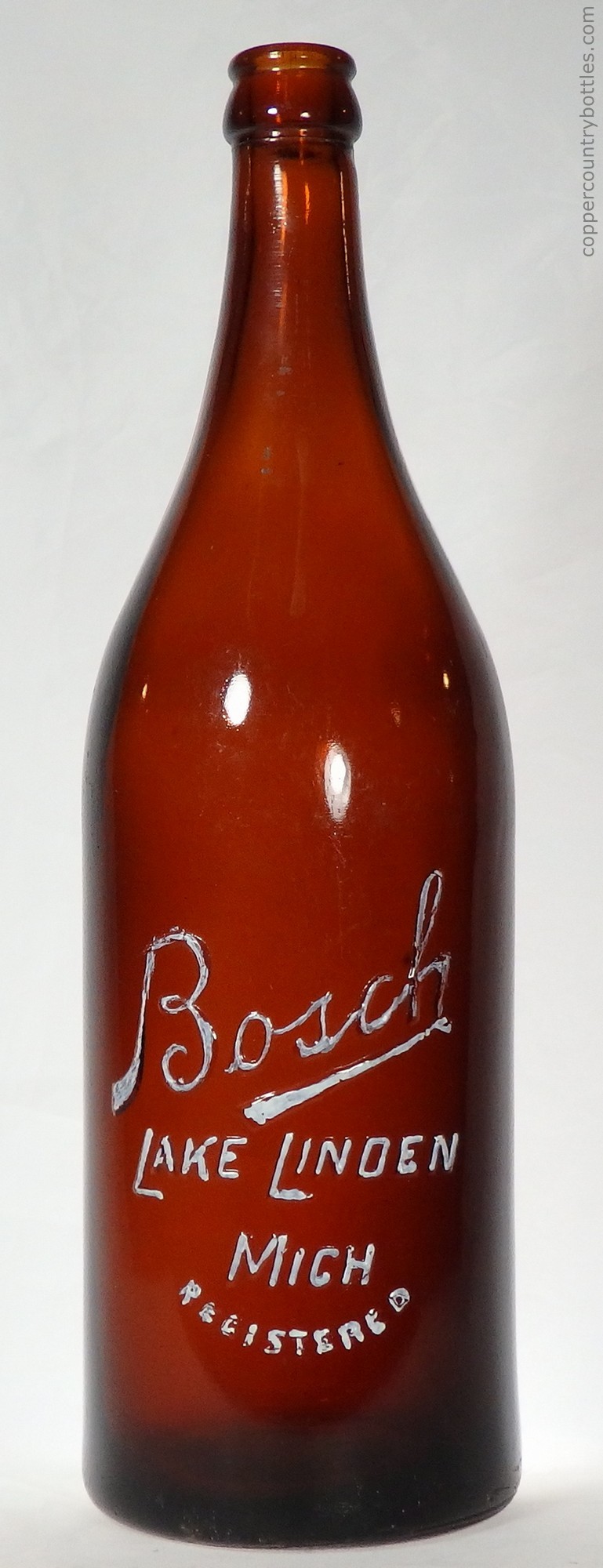
color: amber
top: crown top - ABM
base: post-bottom
maker's mark: [none]
other marks: THIS BOTTLE NOT TO BE SOLD (base)
dated: 1916
rarity: common
- different plate from other variants
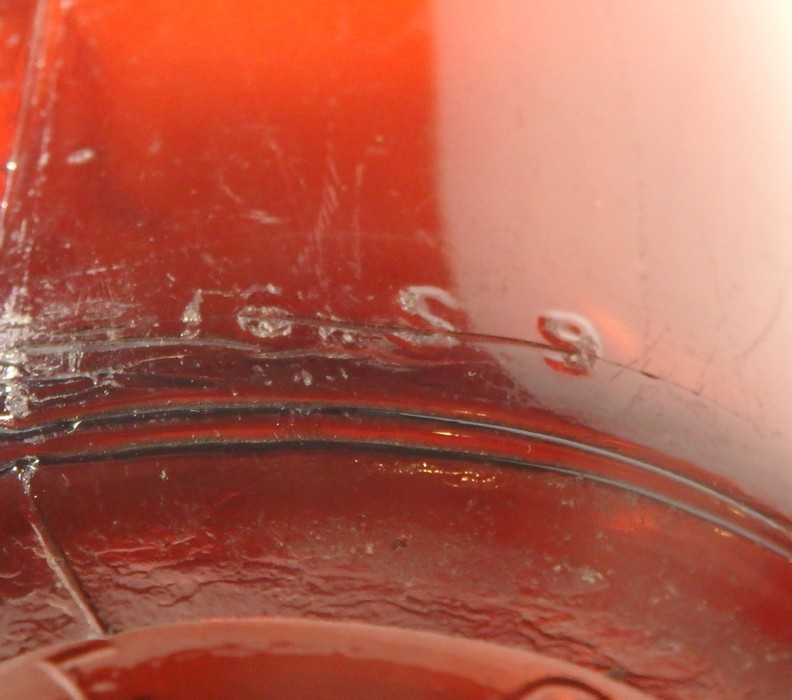
- back heel has A B Co. date code 16 S 9
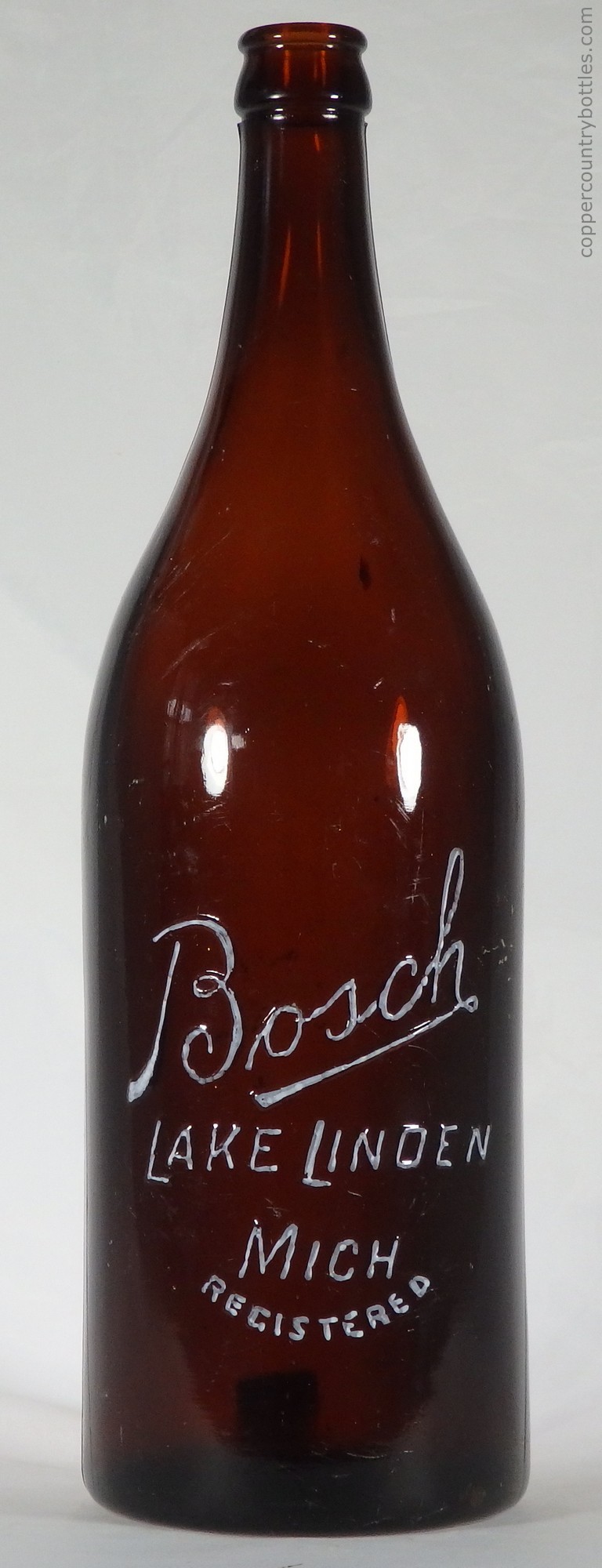
other marks: THIS BOTTLE NOT TO BE SOLD (base)
dated: 1913
rarity: common
- different plate from other variants
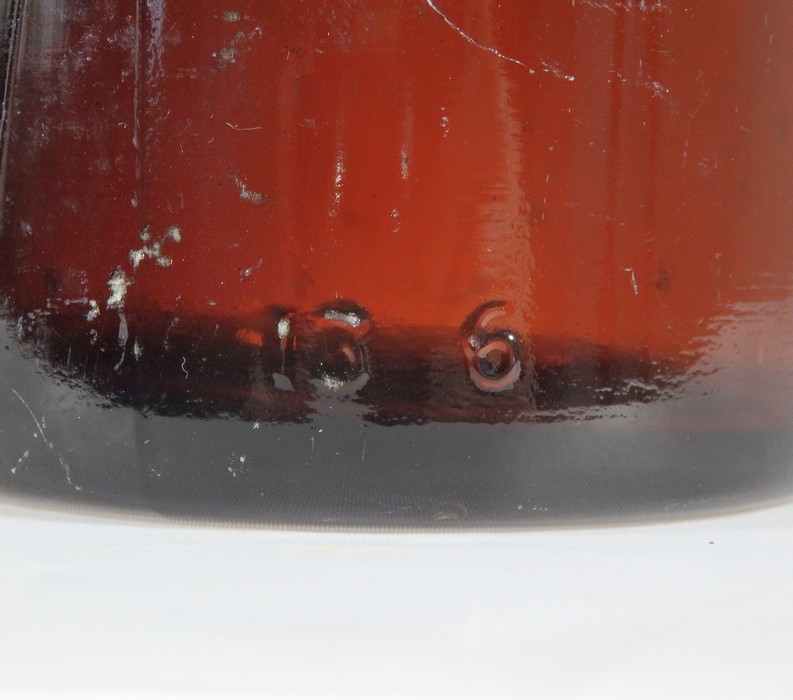
- Heel has "13 6", which appears to be a date code.
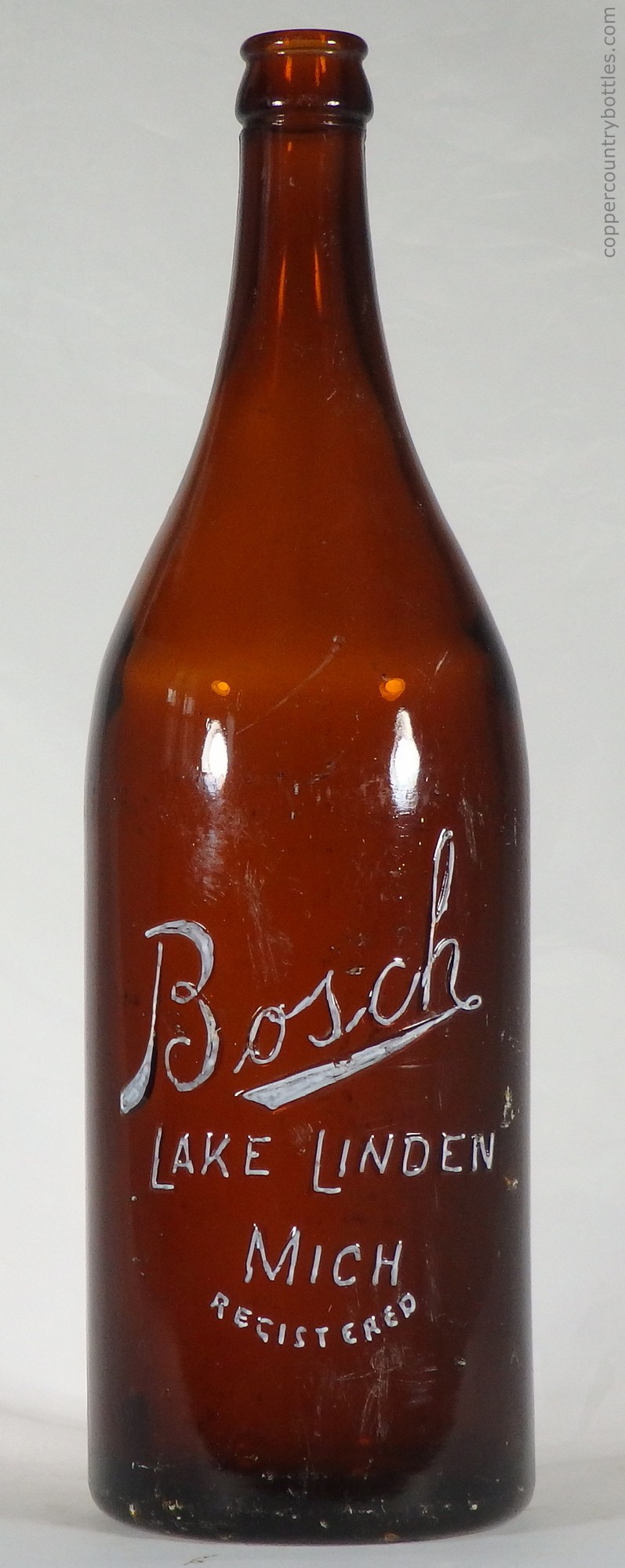
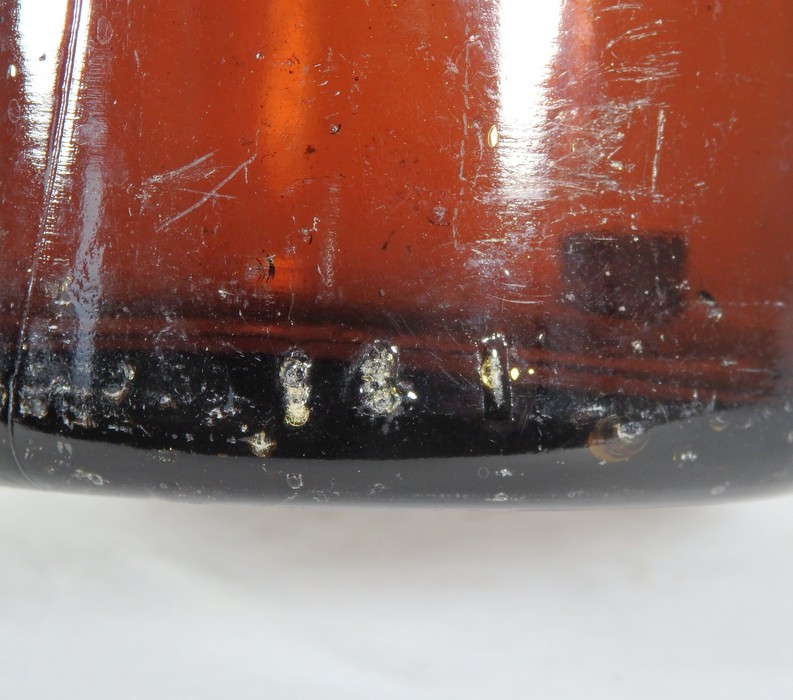
other marks: THIS BOTTLE NOT TO BE SOLD (base)
dated: 1914
rarity: common
- different plate from other variants
- Heel has "14 1", which appears to be a date code.
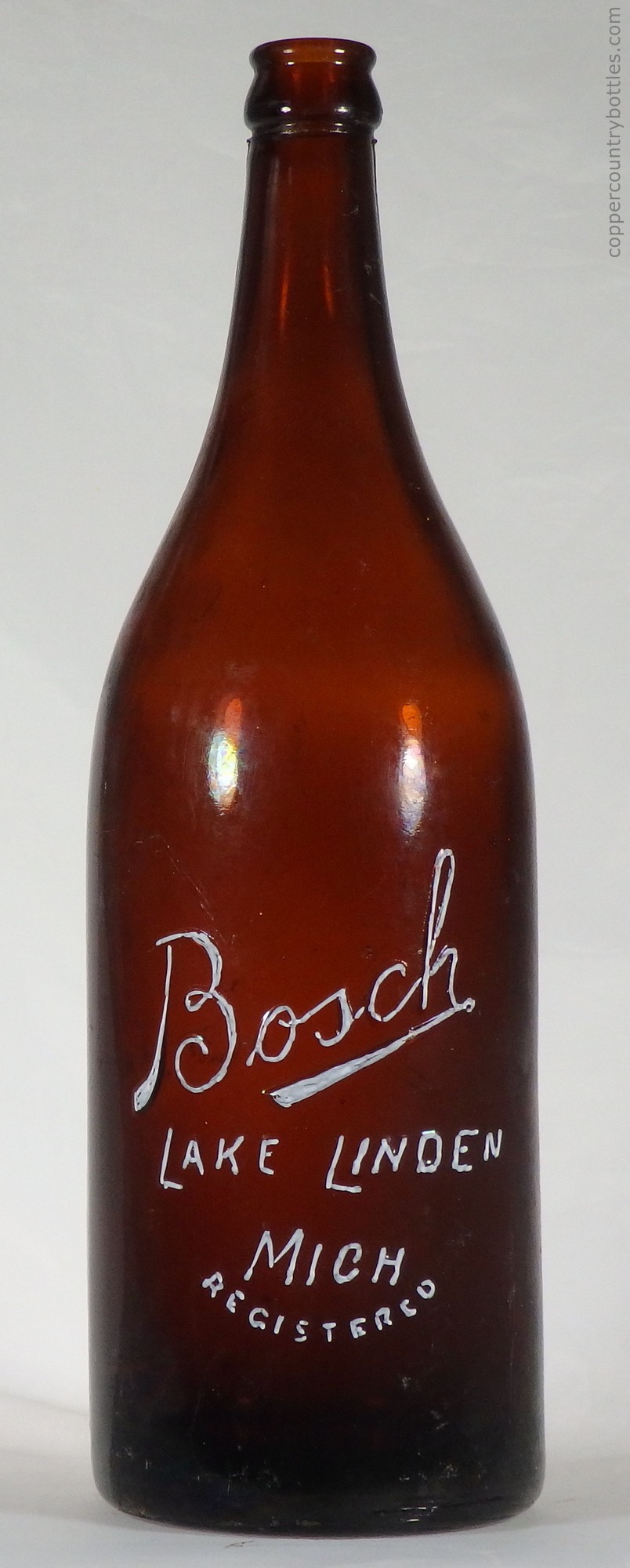
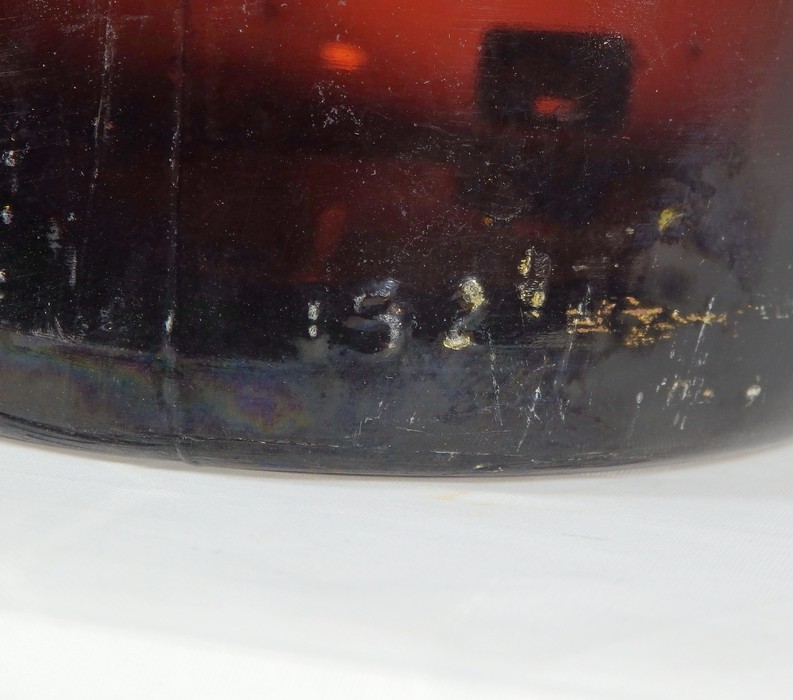
other marks: THIS BOTTLE NOT TO BE SOLD (base)
dated: 1915
rarity: common
- different plate from other variants
- Heel has "15 2", which appears to be a date code.
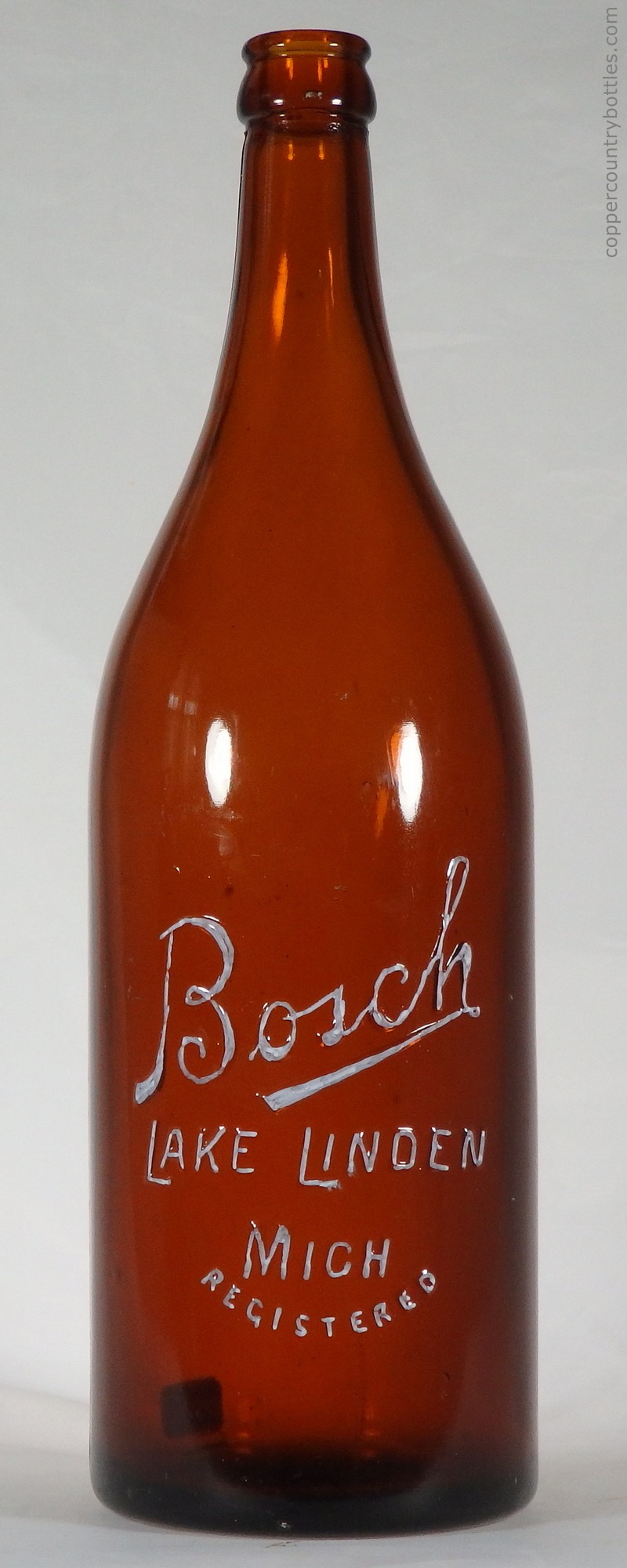
other marks: THIS BOTTLE NOT TO BE SOLD (base)
dated: 1917
rarity: common
- different plate from other variants
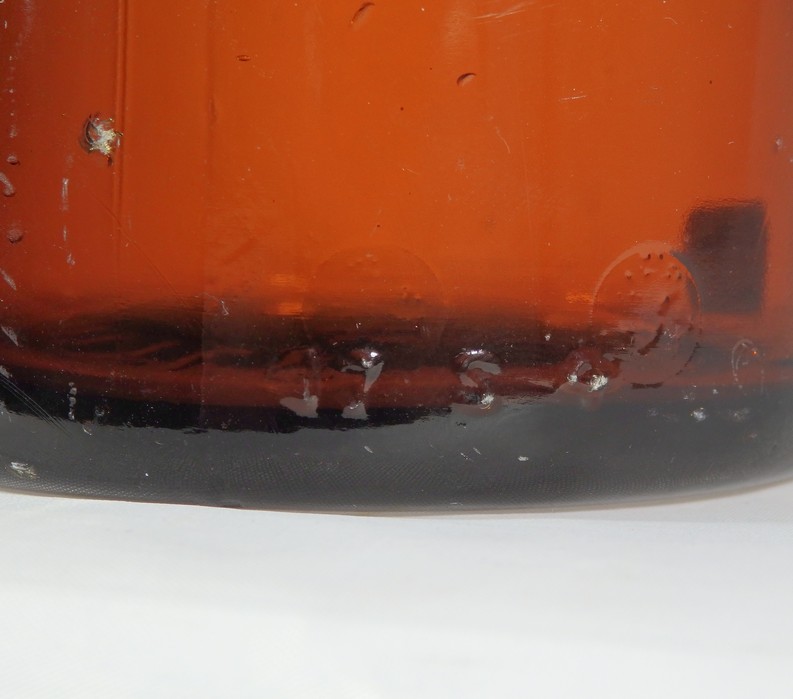
- back heel has A B Co. data code 17 S 4
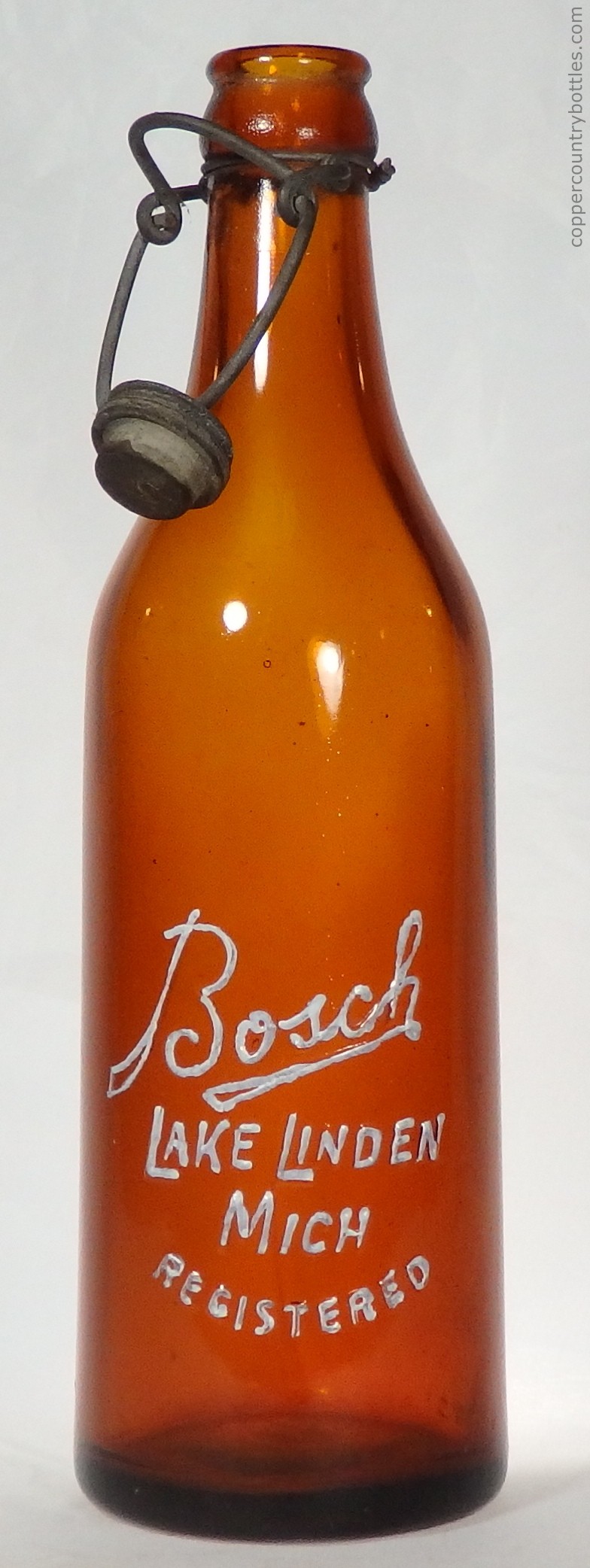
color: amber
top: crown top - ABM
base: post-bottom
maker's mark: [none]
other marks: THIS BOTTLE NOT TO BE SOLD (base)
dated: 1920
rarity: common
- back heel has an A B Co. date code 20 S 2
- prohibition bottle that contained near-beer

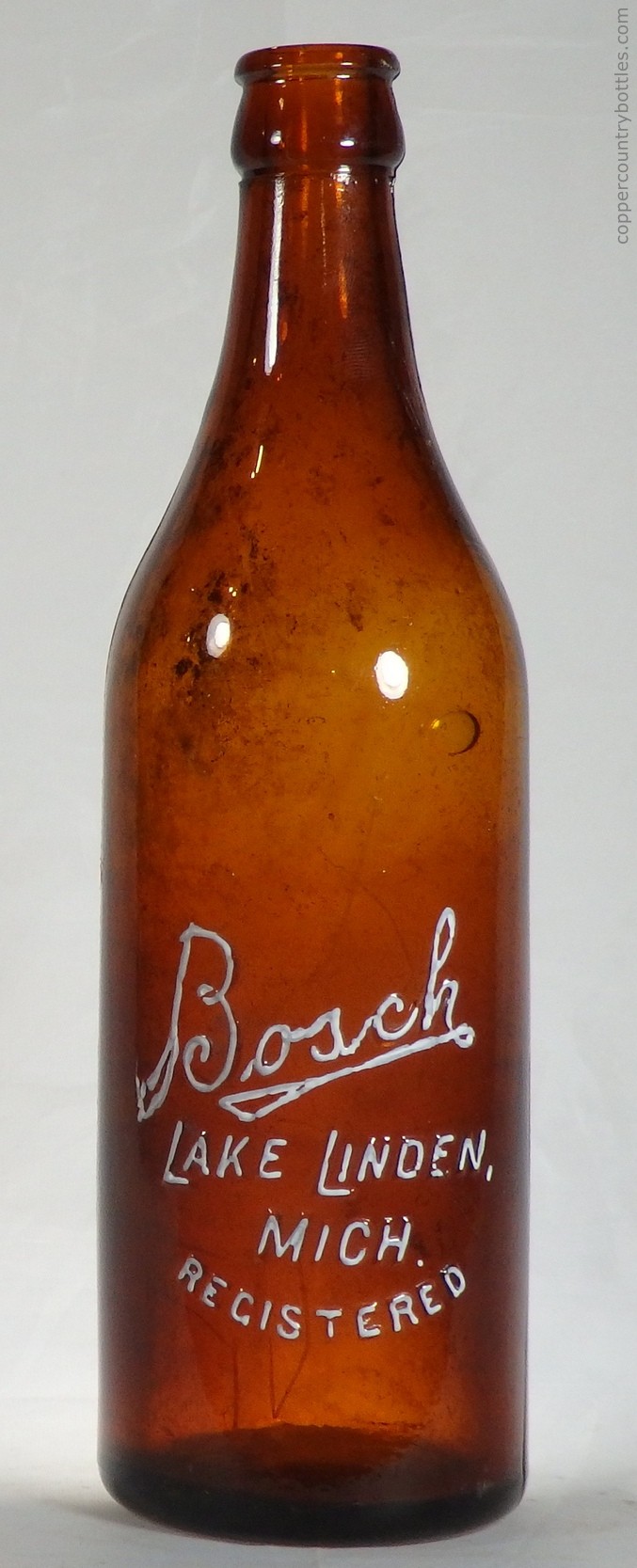
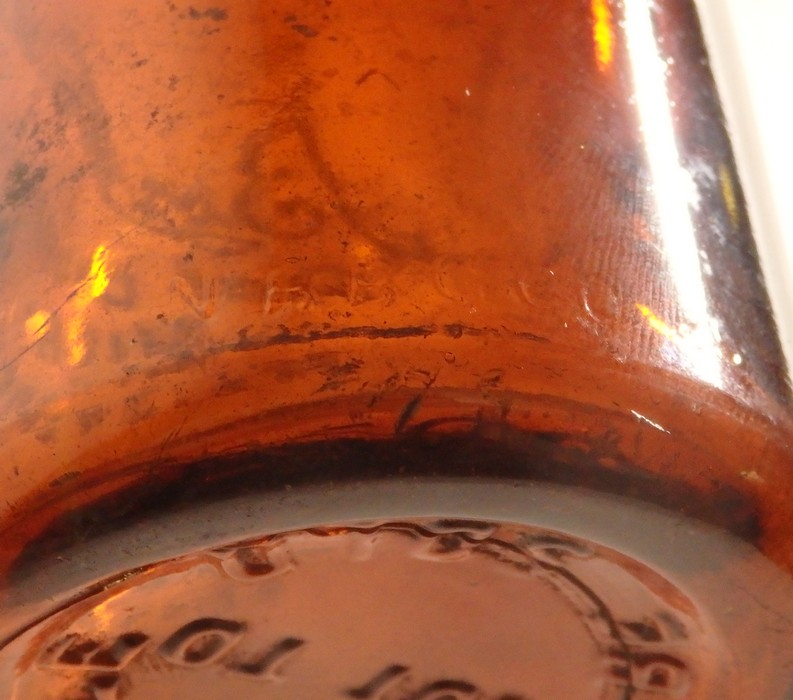
other marks: THIS BOTTLE NOT TO BE SOLD (base)
date: c. 1915
rarity: common
- different plate from abm-2
- M in MICH right of E in LAKE
- "," after LINDEN and "." after MICH
- has a maker's mark
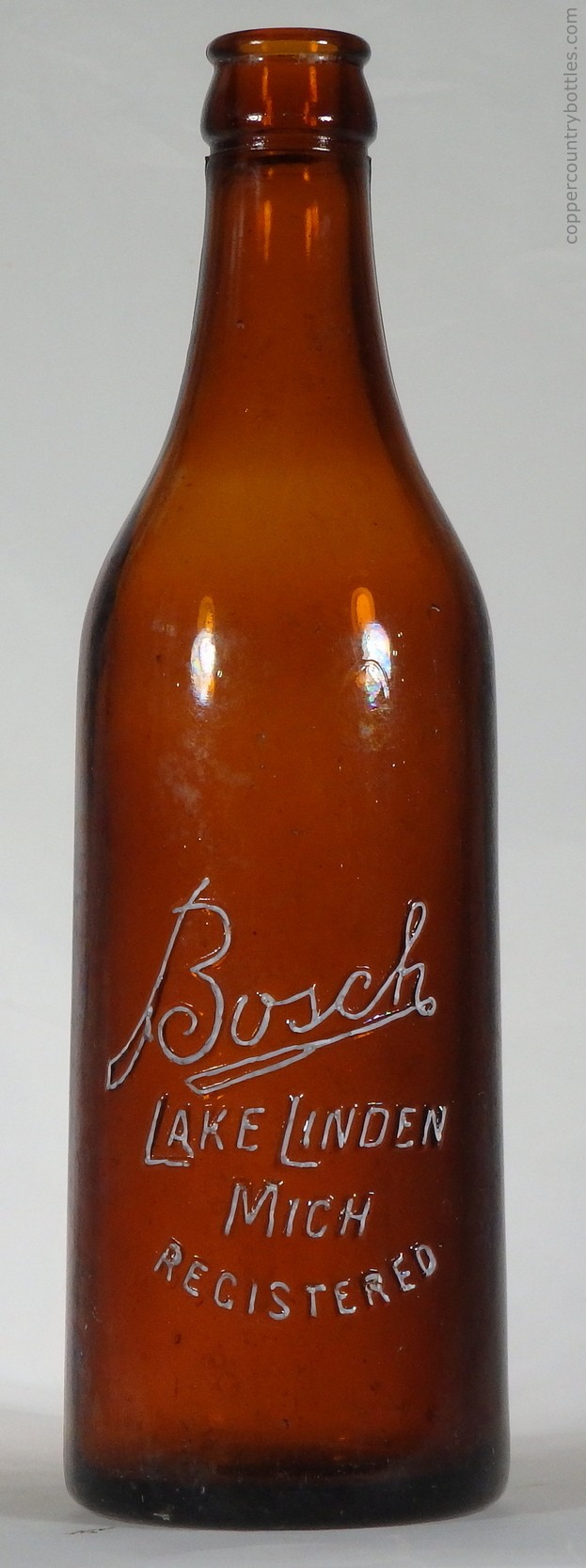
other marks: THIS BOTTLE NOT TO BE SOLD (base)
dated: 1914
rarity: common
- different plate from other variants
- Heel has "14 1", which appears to be a date code.

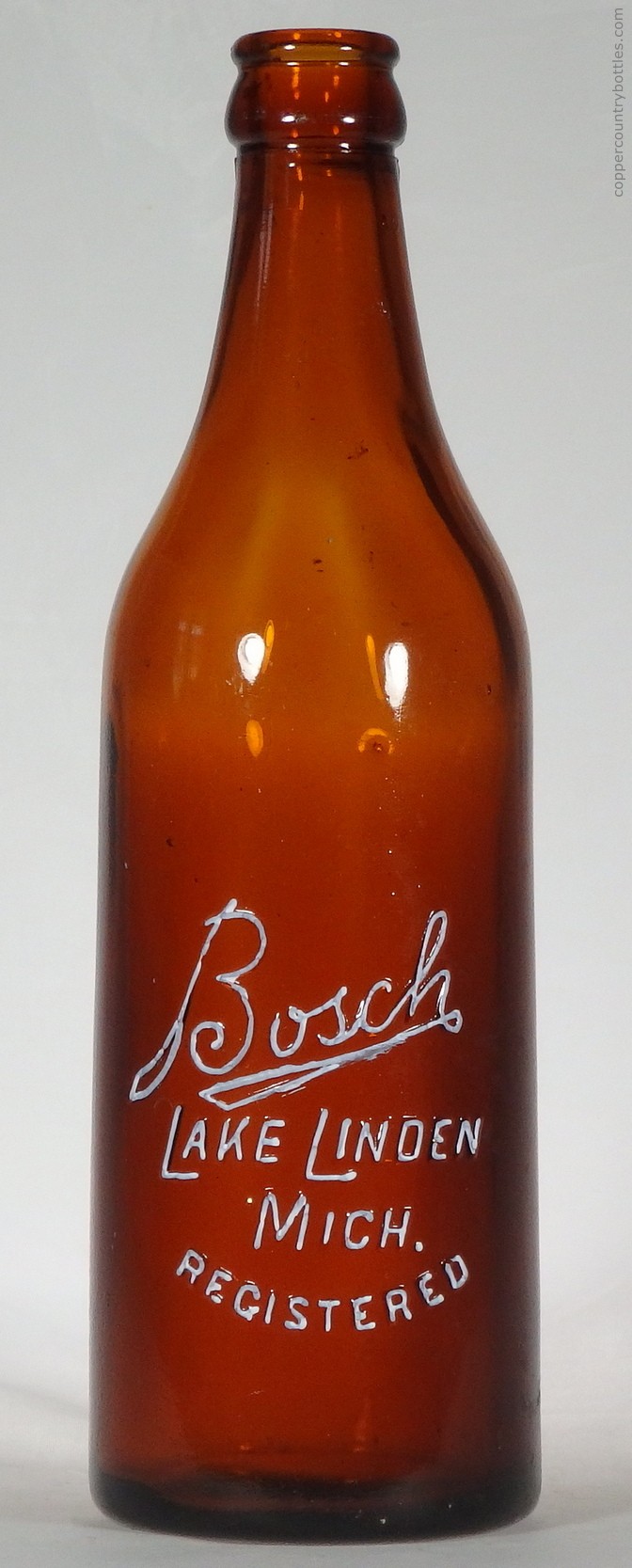
other marks: THIS BOTTLE NOT TO BE SOLD (base)
dated: 1916
rarity: common
- different plate from other variants
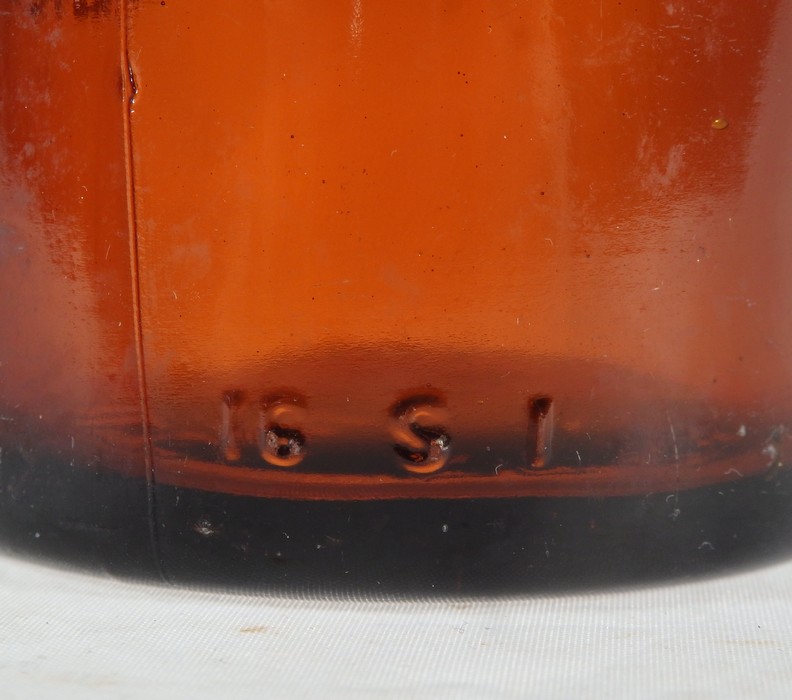
- back heel has an A B Co. date code 16 S 1
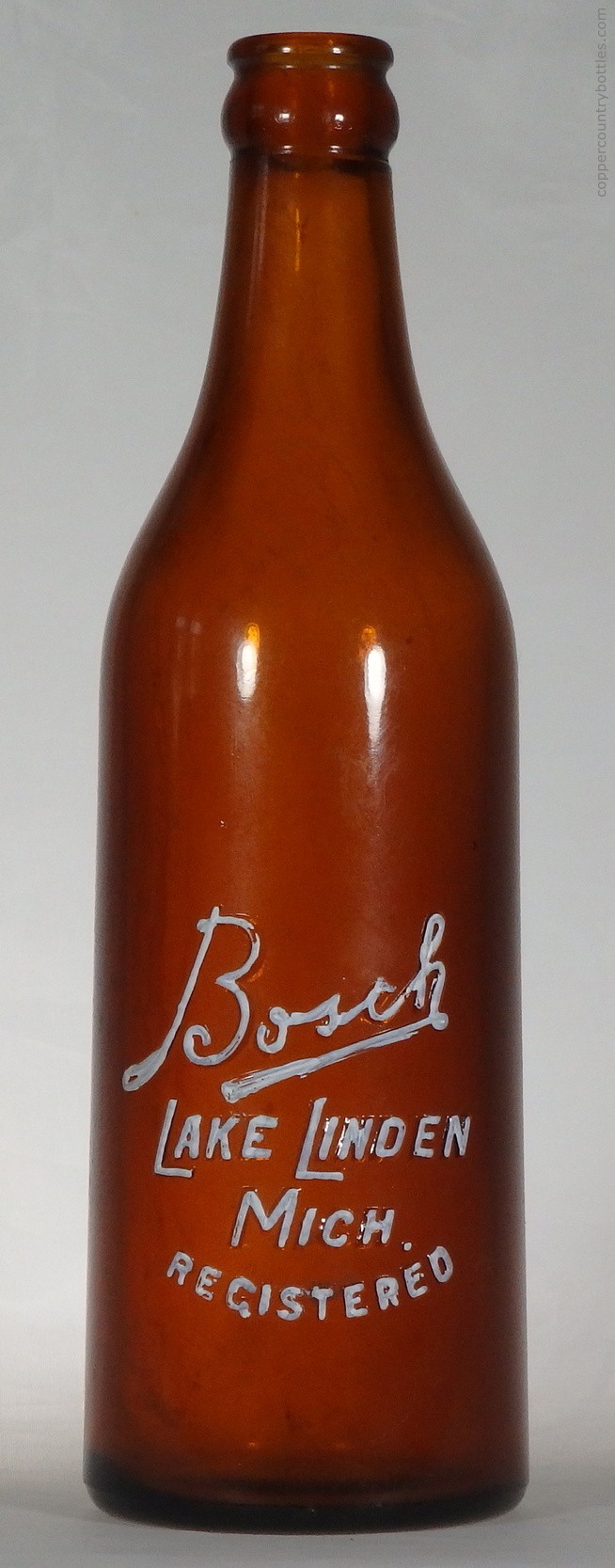
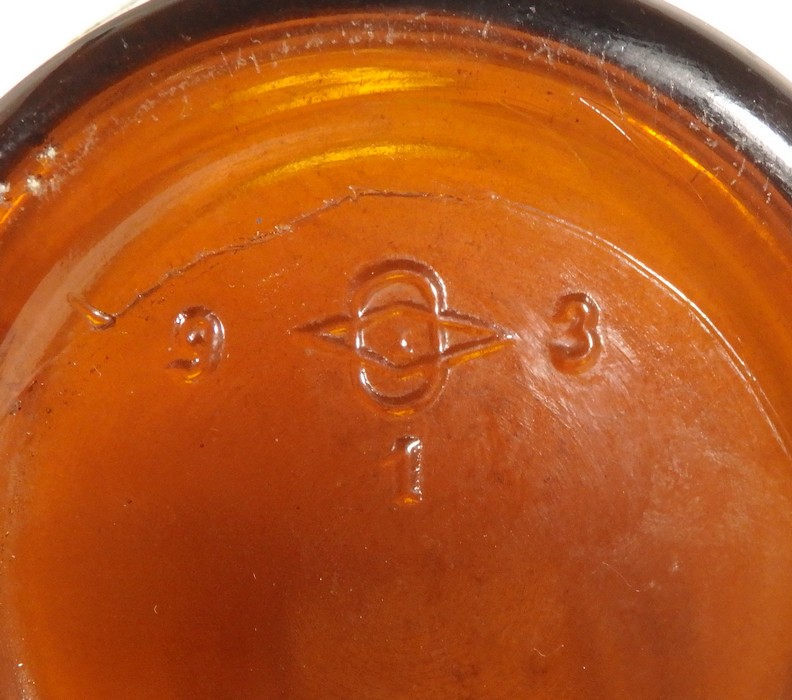 (base)
other marks: [none]
dated: 1933
rarity: scarce
- different plate from other variants
- post-prohibition botttle
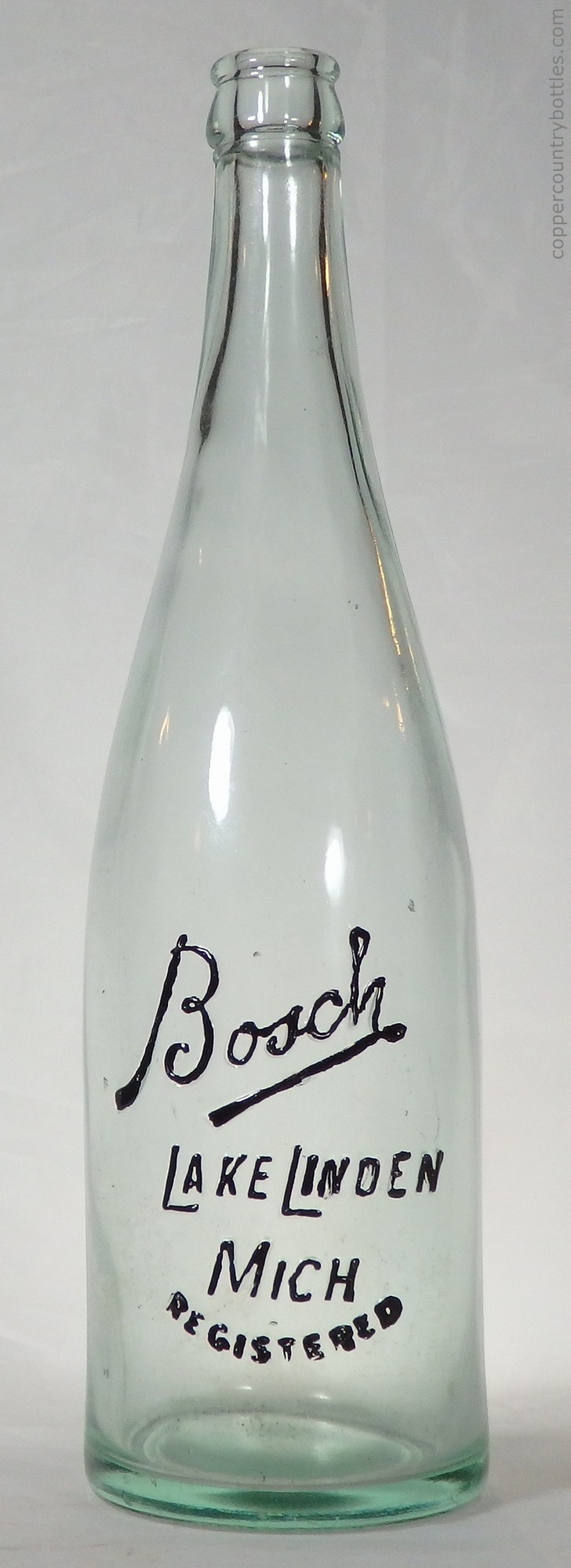
color: aqua
top: crown top - ABM
base: post-bottom
maker's mark: [none]
other marks: [none]
dated: 1913
rarity: scarce
- Heel has "13 1", which appears to be a date code.
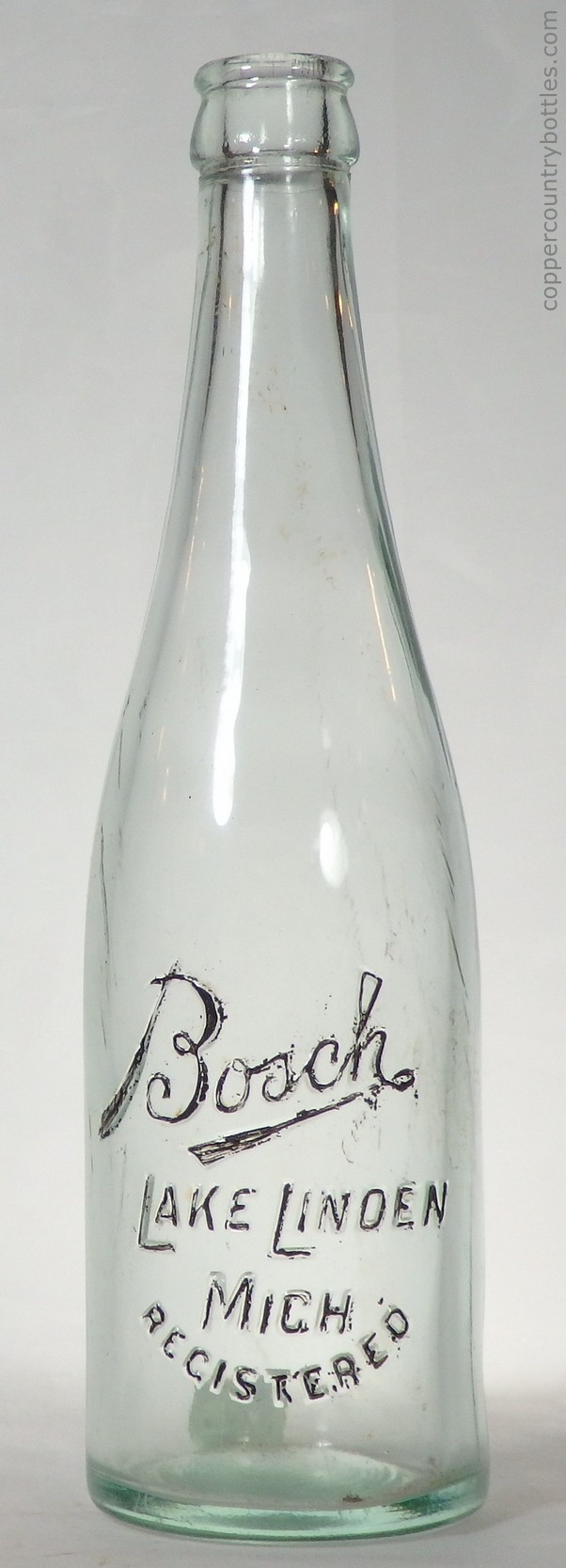
color: aqua
top: crown top - ABM
base: post-bottom
maker's mark: [none]
other marks: [none]
dated: 1913
rarity: rare
- pint-sized complement of abm-3
- back heel has 13 1 which appears to be a date code
- Other examples with nearly identical plates have A B Co. date codes 16 S 1 and 17 S 1.
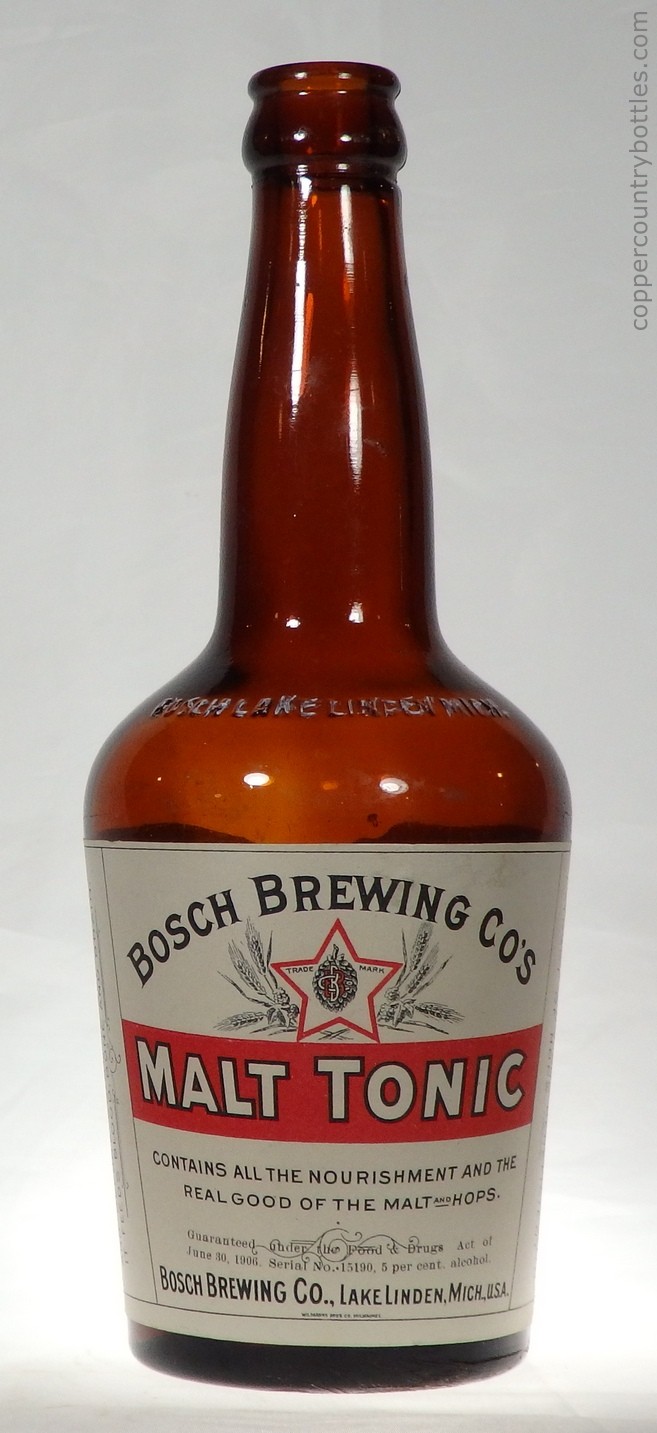
color: amber
top: crown top - ABM
base: post-bottom
maker's mark: [none]
other marks: [none]
date: c. 1915
rarity: rare
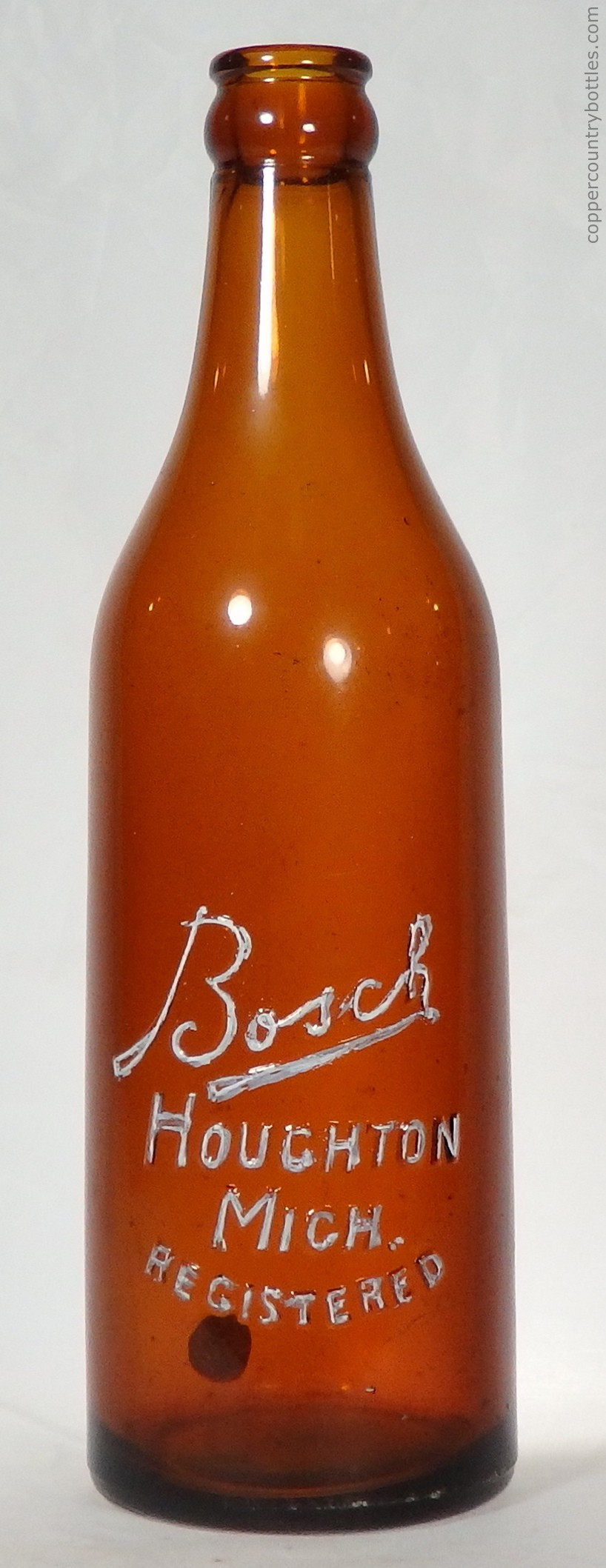
color: amber
top: crown top - ABM
base: cup-bottom
maker's mark:
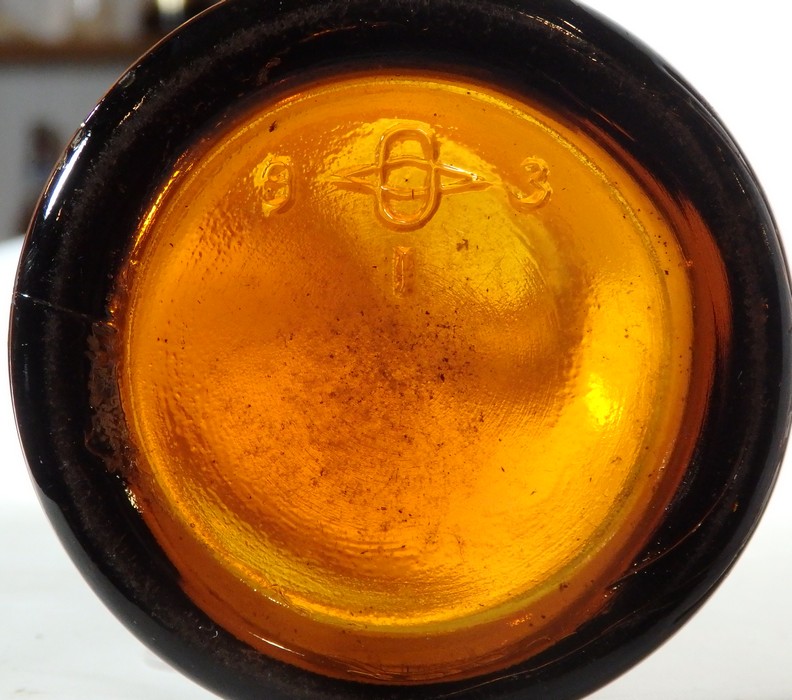 (base)
other marks: [none]
dated: 1933
rarity: extremely rare
- location changed to Houghton post-Prohibition
- base has date code for 1933
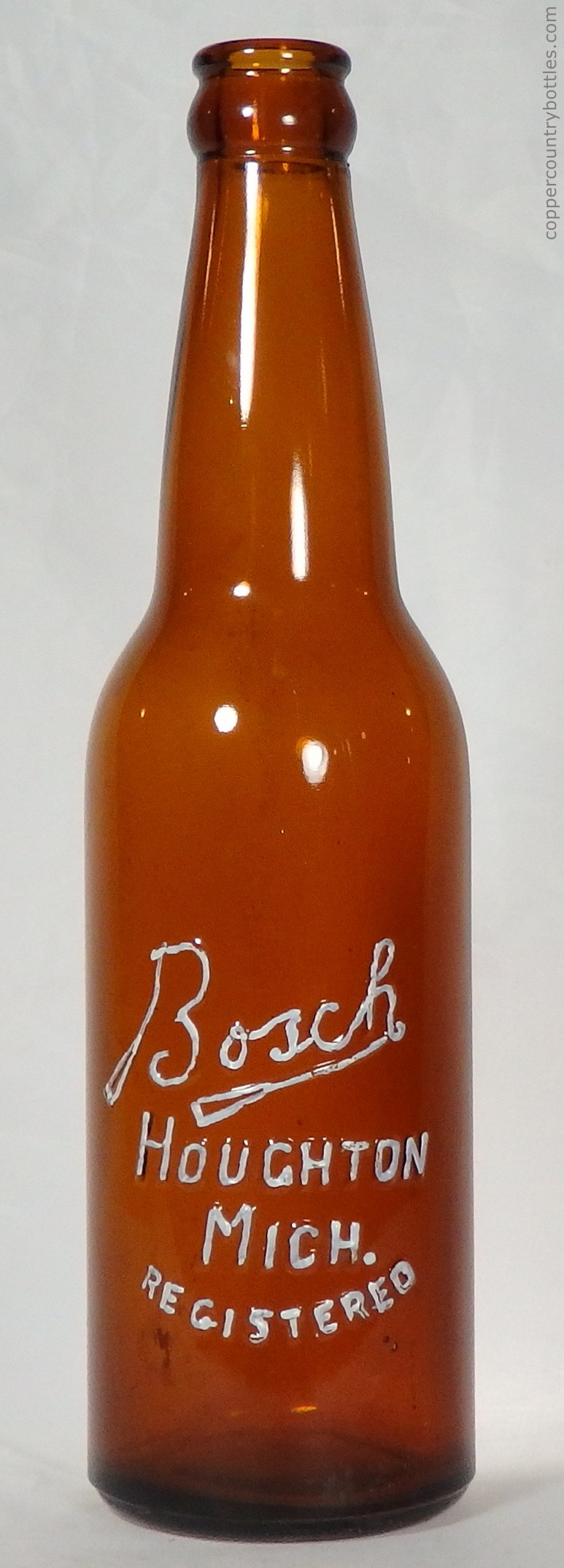
color: amber
top: crown top - ABM
base: cup-bottom
maker's mark:
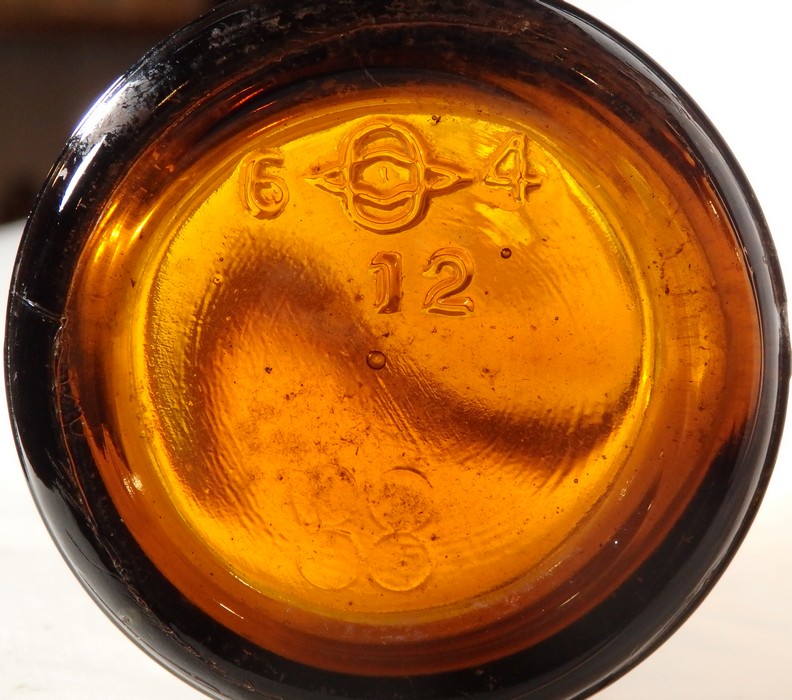 (base)
other marks: [none]
dated: 1934
rarity: extremely rare
- export-shape
- base has date code for 1934

color: amber
top: crown top - ABM
base: cup-bottom
maker's mark:
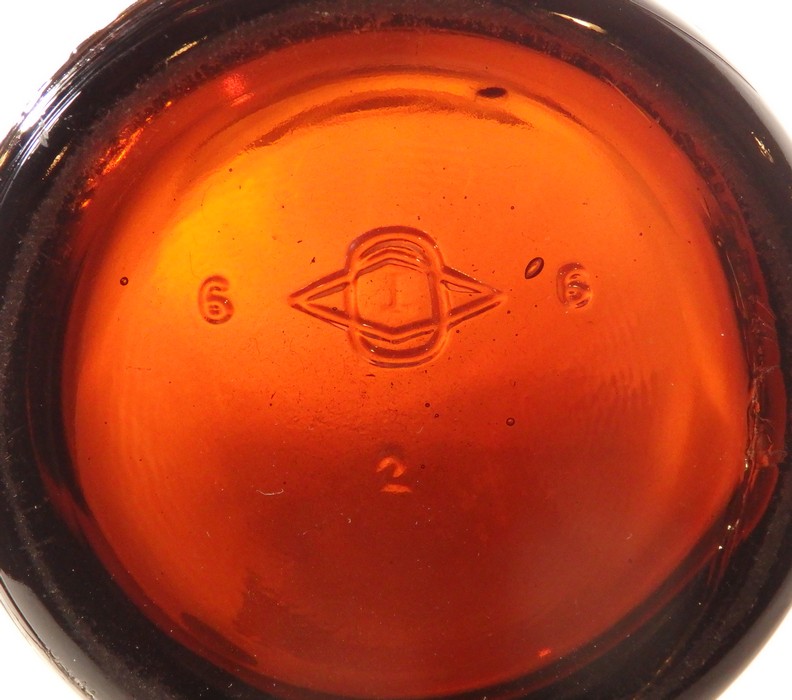 (base)
other marks: [none]
dated: 1936
rarity: extremely rare
- base has date code for 1936
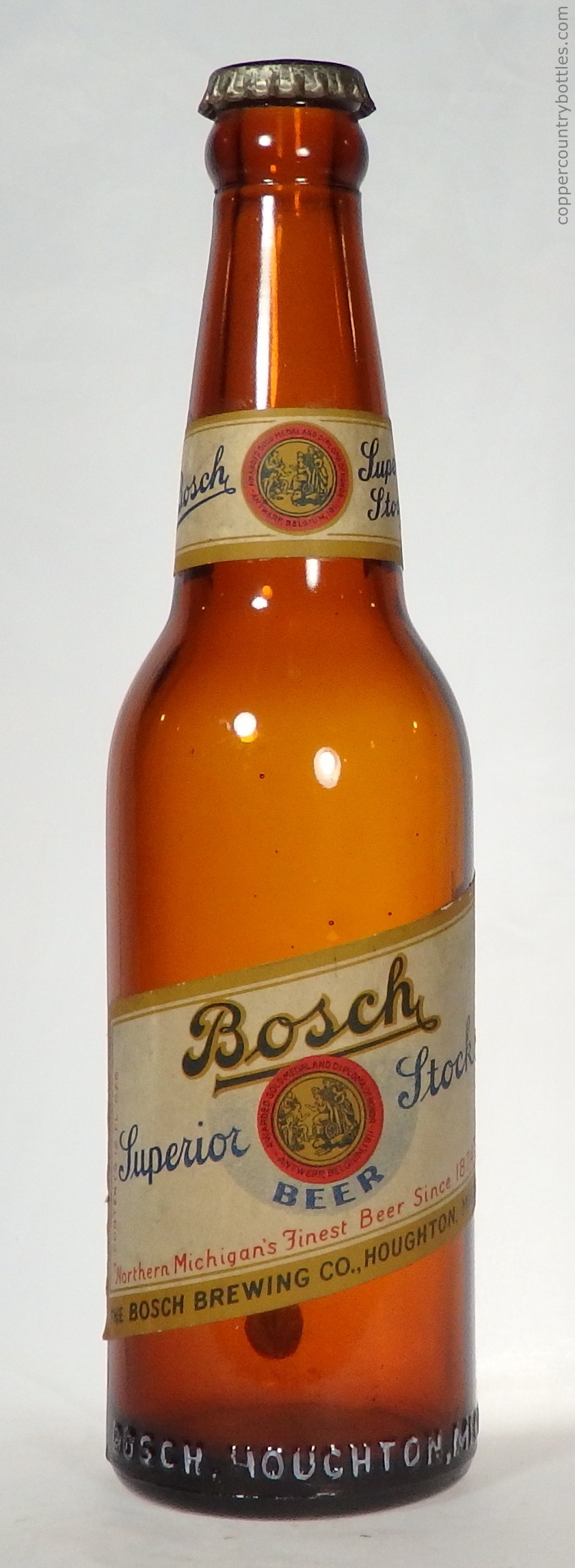
color: amber
top: crown top - ABM
base: cup-bottom
maker's mark:
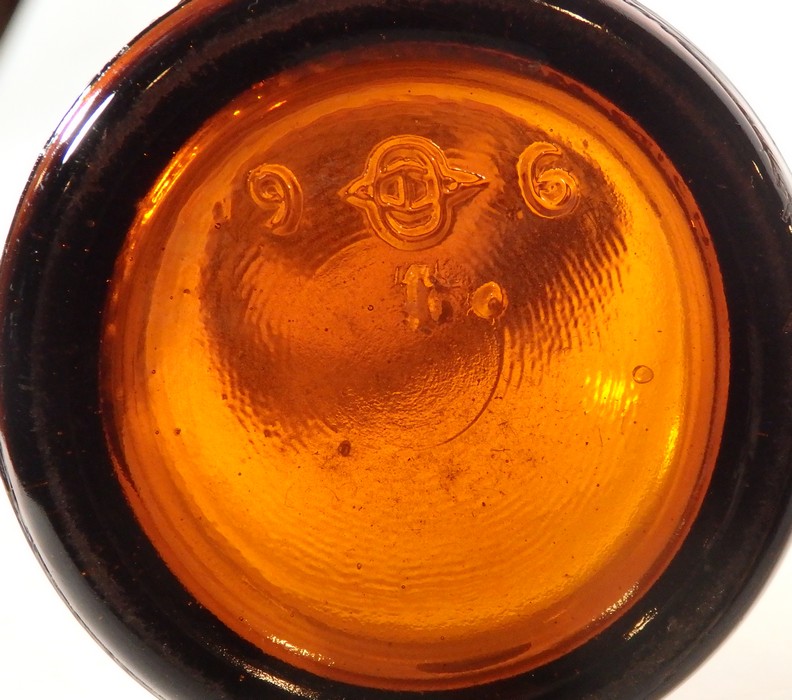 (base)
other marks: [none]
dated: 1936
rarity: rare
- base has date code for 1936